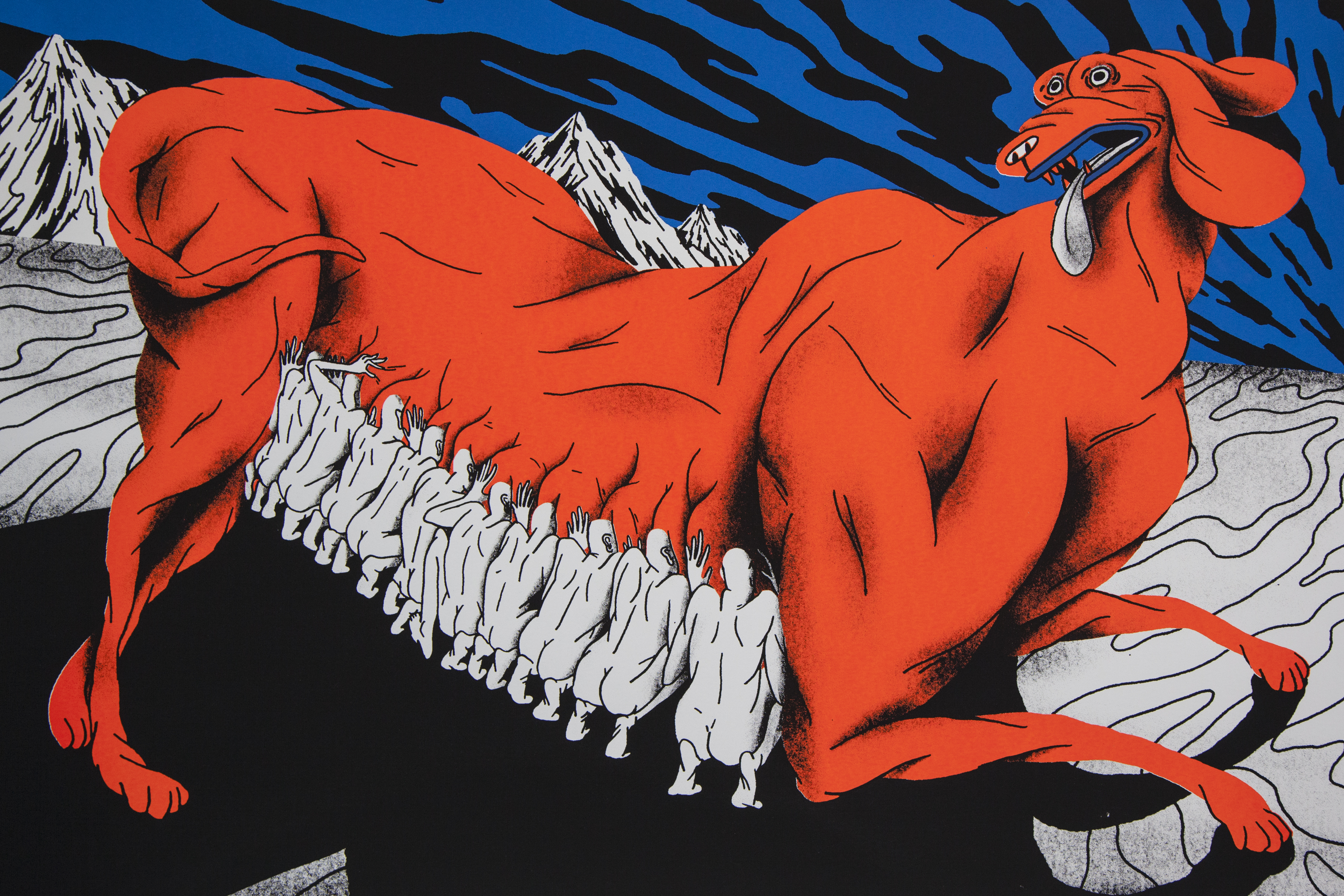
Andrew Tseng
Hidden Agenda Monthly: Edition #1 - February 2026
By Patou J. Foetisch // 21 JUL 2026
Image: Crispina Peters
Andrew Tseng’s practice is often approached through interpretation, emotional, symbolic, even psychological, yet the way his images come into being is far more practical than those readings might suggest. Drawing, for him, is not necessarily a method of unpacking feelings or resolving internal tensions, but a process rooted in visual problem-solving. Decisions are driven by what an image needs in order to hold together, not only by what it is meant to express.
“I’m a big fan of style,” he says. “Overall, I find it a lot more interesting than naturalistic depictions in art because I feel like it has a lot more personality.”
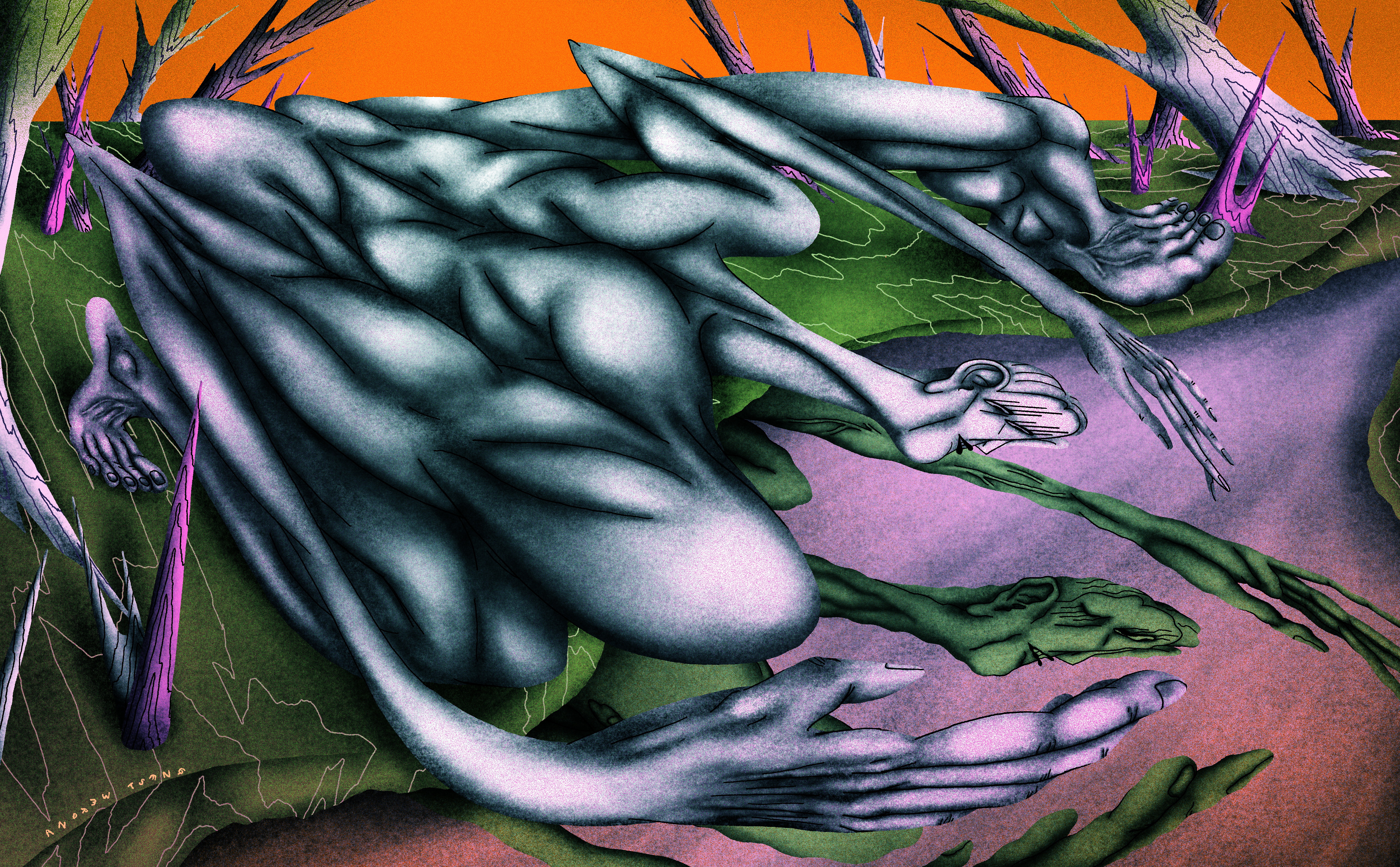
That preference shapes the recurring presence of figures in his work, but not according to a single logic. While some characters carry narrative or suggestion, others operate more structurally, as elements within an image rather than fully articulated personas. Distortion is not always deployed to communicate something in itself; at times it is simply a response to how an image needs to function. Bodies may be stretched, compressed, or reduced to resolve scale, balance, or rhythm, without those decisions having to carry additional meaning. “I often approach a body as a form that needs to fit within a composition,” he explains. “Sometimes there isn’t that much going on beyond that.”
This approach keeps interpretation open without being prescriptive. Narrative can surface, but it is not engineered or explained in advance. Tseng allows visual decisions to stand on their own, accepting that some elements exist simply because they work. “I try to find a balance between aesthetics and concept,” he says, “but sometimes a body or character looks the way it looks purely for the composition.”
Pushing figuration beyond convention becomes a way to condense ideas rather than uncover truths. Amplification operates like shorthand, allowing something to be suggested without being spelled out. “In certain situations you can package something you want to say in the form of exaggeration,” Tseng notes. “Like a visual metaphor.”
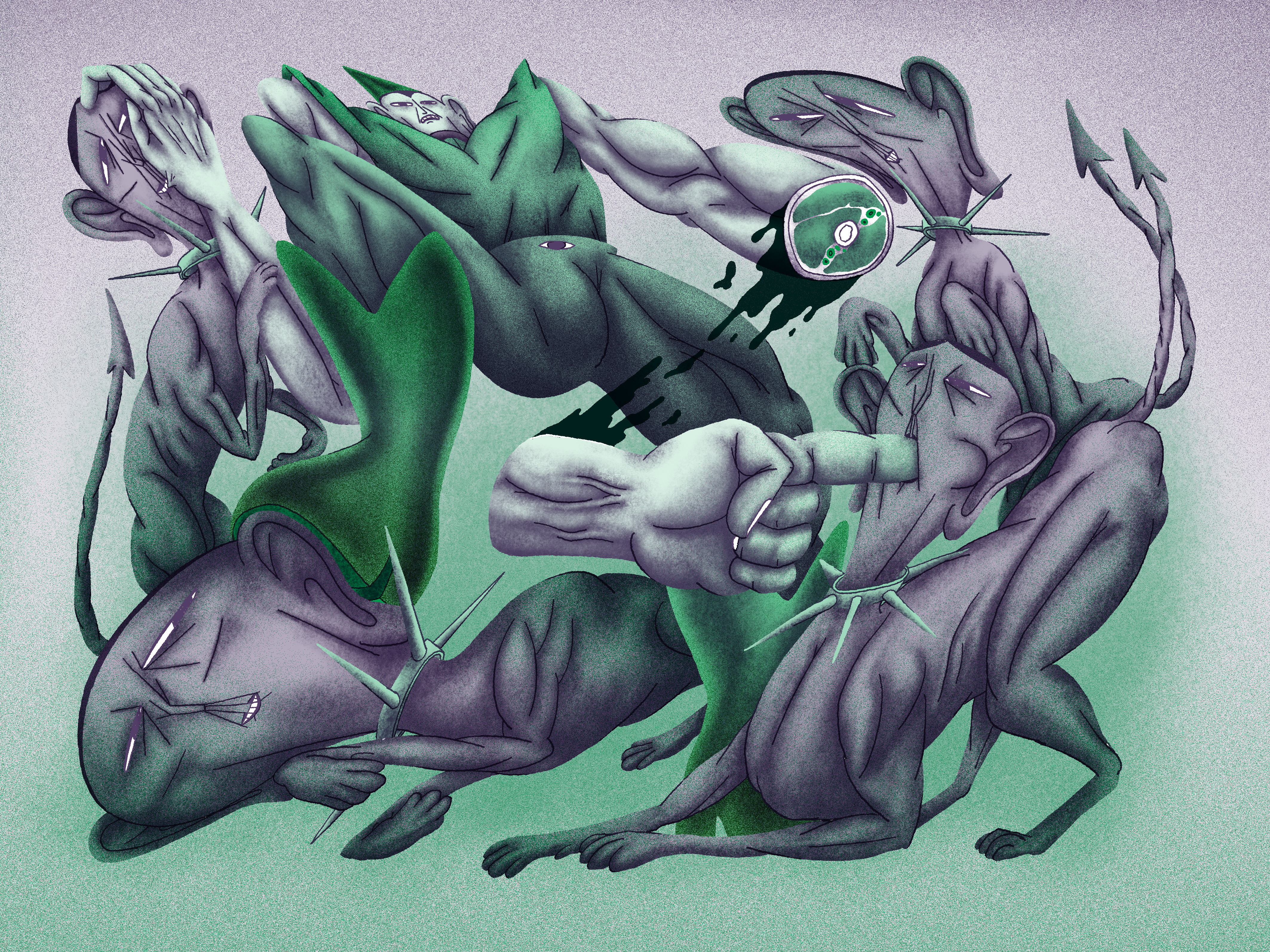
That same stylistic framework has led many viewers to read his work as homoerotic, particularly through its emphasis on physicality, intimacy, and performative masculinity. Tseng is conscious of these interpretations, but they stem less from personal declaration than from the sources he draws on, including animation, caricature, and stylised illustration traditions where bodies are theatrical and deliberately unreal. Meaning arises through form and reference, rather than intent.
Originality, for Tseng, does not always come easily or automatically. Influence is unavoidable and often operates beneath the surface rather than as a conscious choice. Rather than being defined purely by difference, originality emerges through attentiveness, in recognising the difference between absorbing references and reproducing them too directly, while actively developing a visual language with its own internal logic. “If you are inspired, that is a good thing,” he says. “However, I find it important to be aware of when you’re inspired versus when you’re blatantly copying.”
A similar pragmatism applies to commissioned work. Constraints are not seen as creative threats but as conditions that define the task. Ideally, alignment happens before the work begins, with his visual language already suited to the project. “With commissions, I do appreciate having some rules,” he explains. When negotiation does occur, it is usually logistical rather than conceptual.
Across personal and applied projects alike, Tseng’s approach remains consistent. He privileges visual coherence over explanation, construction over confession, and stylistic clarity over naturalism. Rather than asking what an image is supposed to convey, he focuses on whether it holds, and how far it can carry before meaning settles.
More Editorials
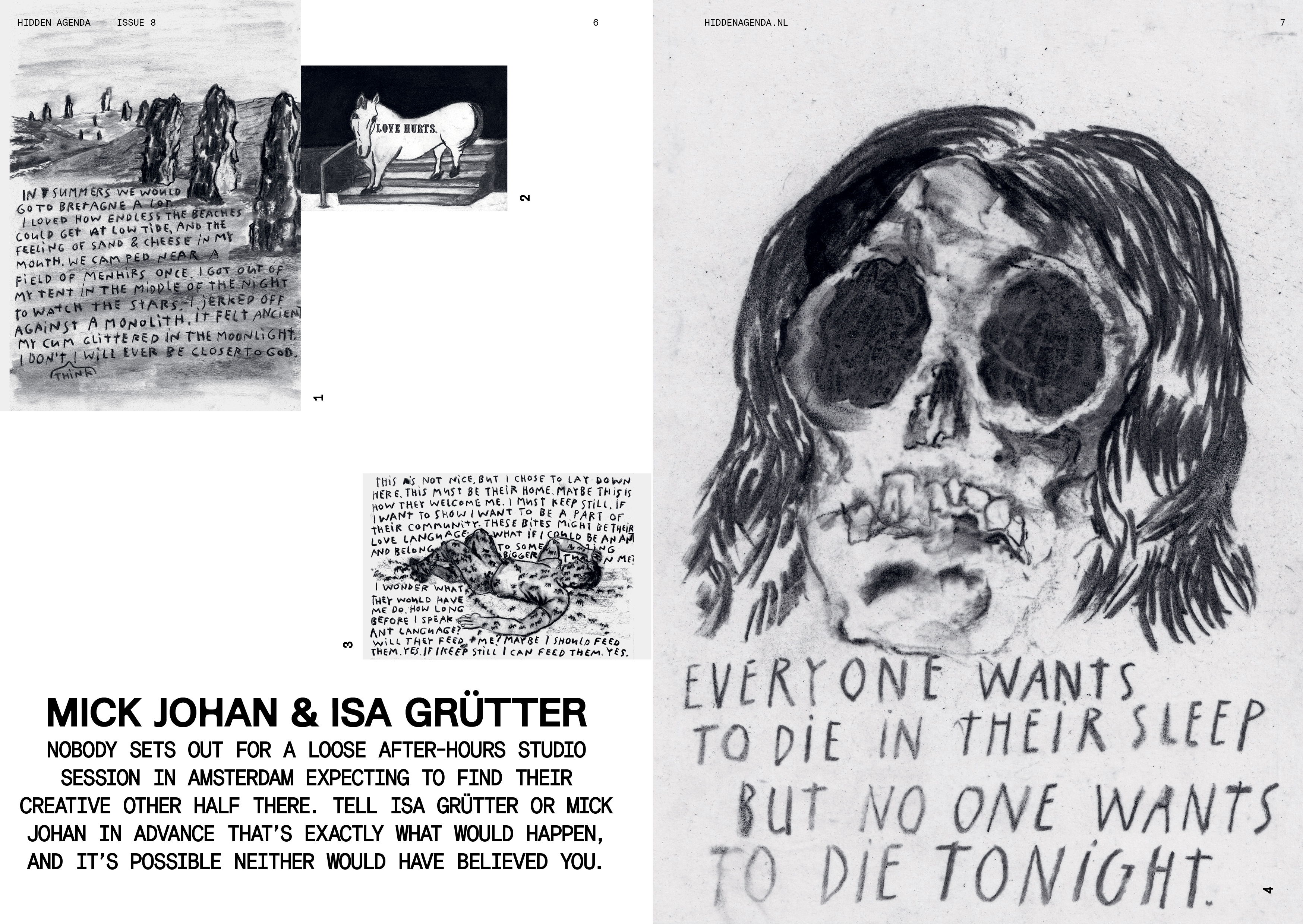
Mick Johan & Isa Grütter
By Patou J. FoetischNobody sets out for a loose after-hours studio session in Amsterdam expecting to find their creative other half there. Tell Isa Grütter or Mick Johan in advance that’s exactly what would happen, and…
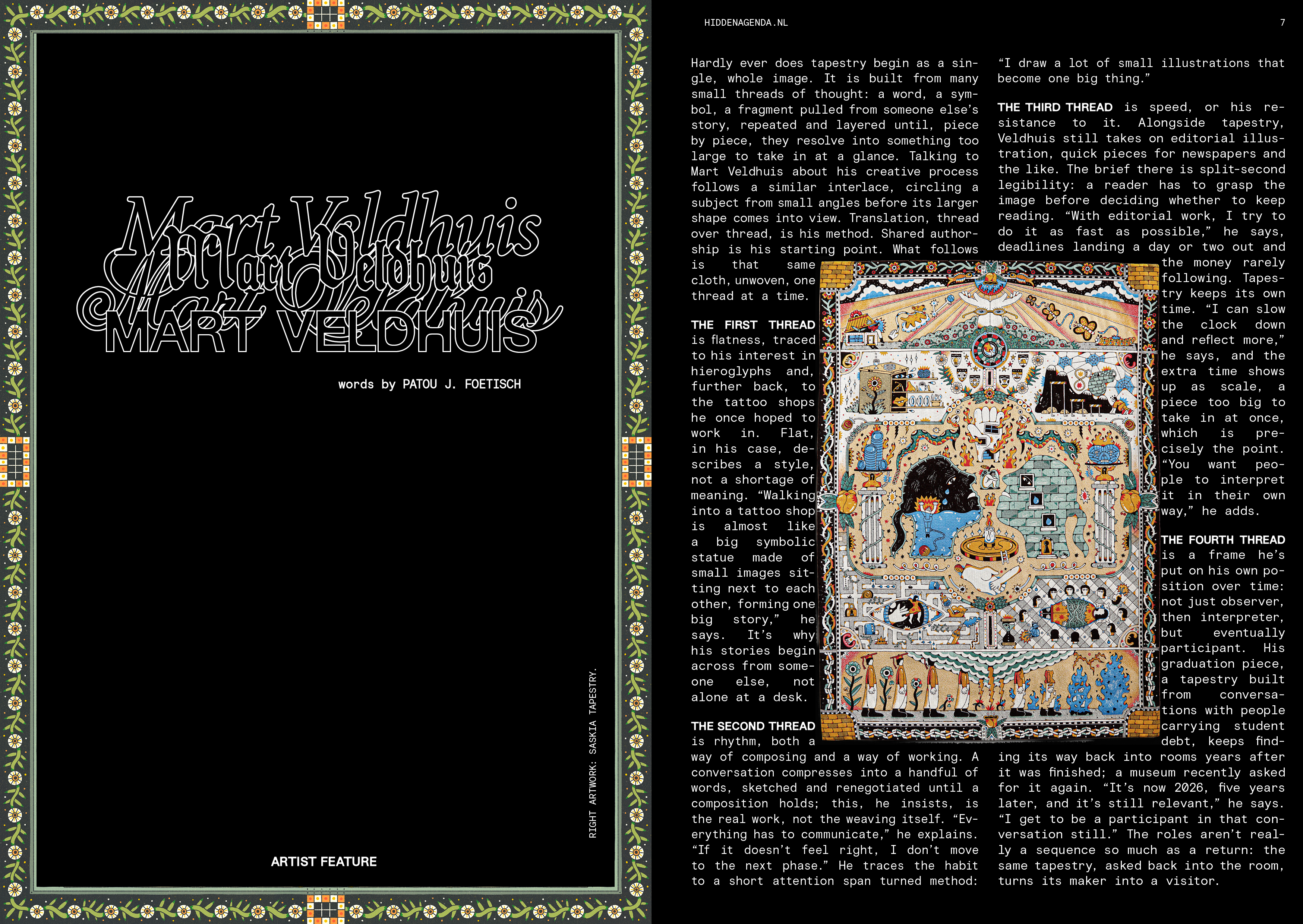
Mart Veldhuis
By Patou J. FoetischHardly ever does tapestry begin as a single, whole image. It is built from many small threads of thought: a word, a symbol, a fragment pulled from someone else's story, repeated and layered until,…
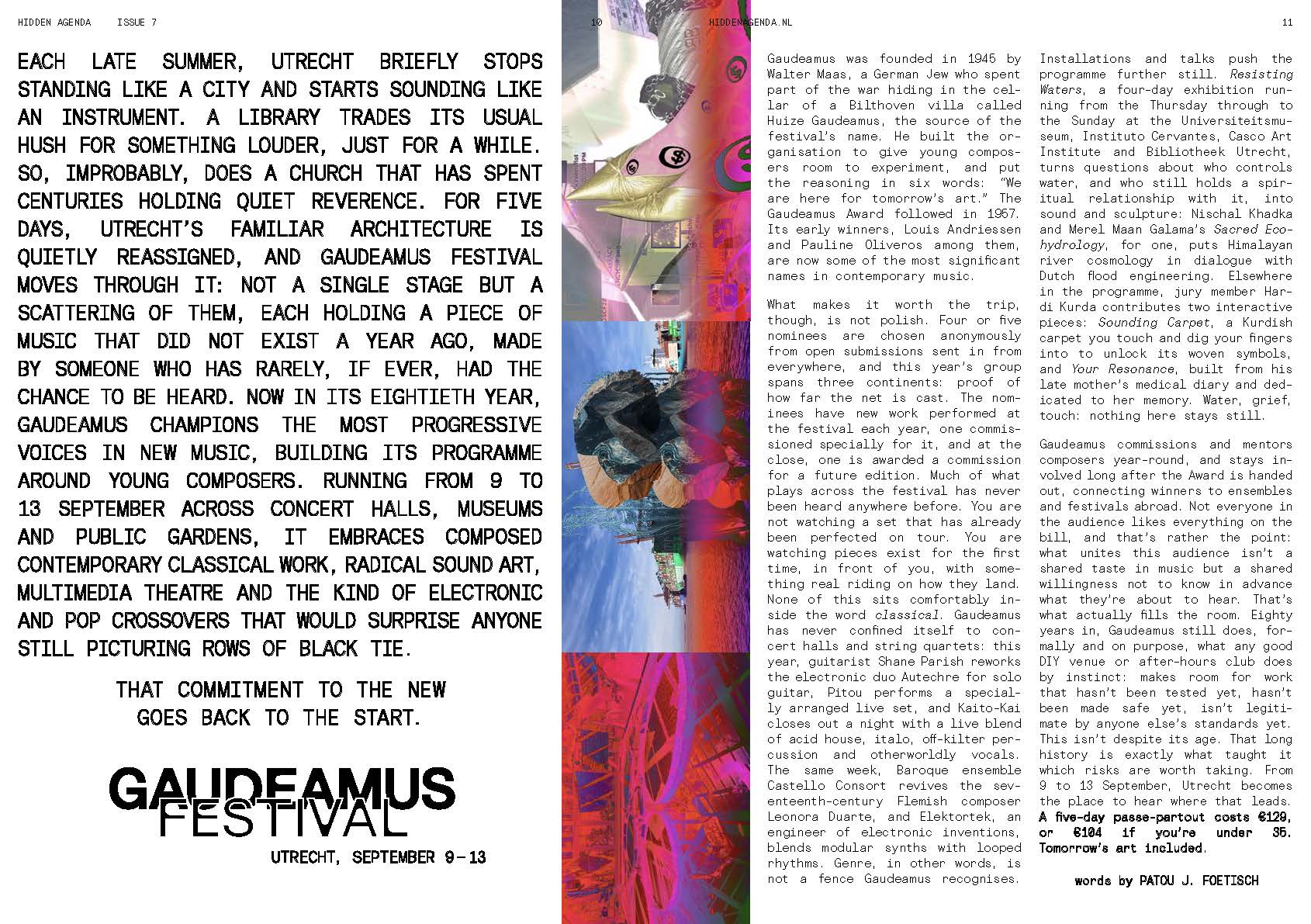
Gaudeamus Festival 2026
By Patou J. FoetischEach late summer, Utrecht briefly stops standing like a city and starts sounding like an instrument. A library trades its usual hush for something louder, just for a while. So, improbably, does a…
Juna Horstmans
By Patou J. FoetischJuna Horstmans' work often feels suspended between two recurring forms: the window and the flower. One frames perception, offering a partial view into something beyond itself; the other unfolds…
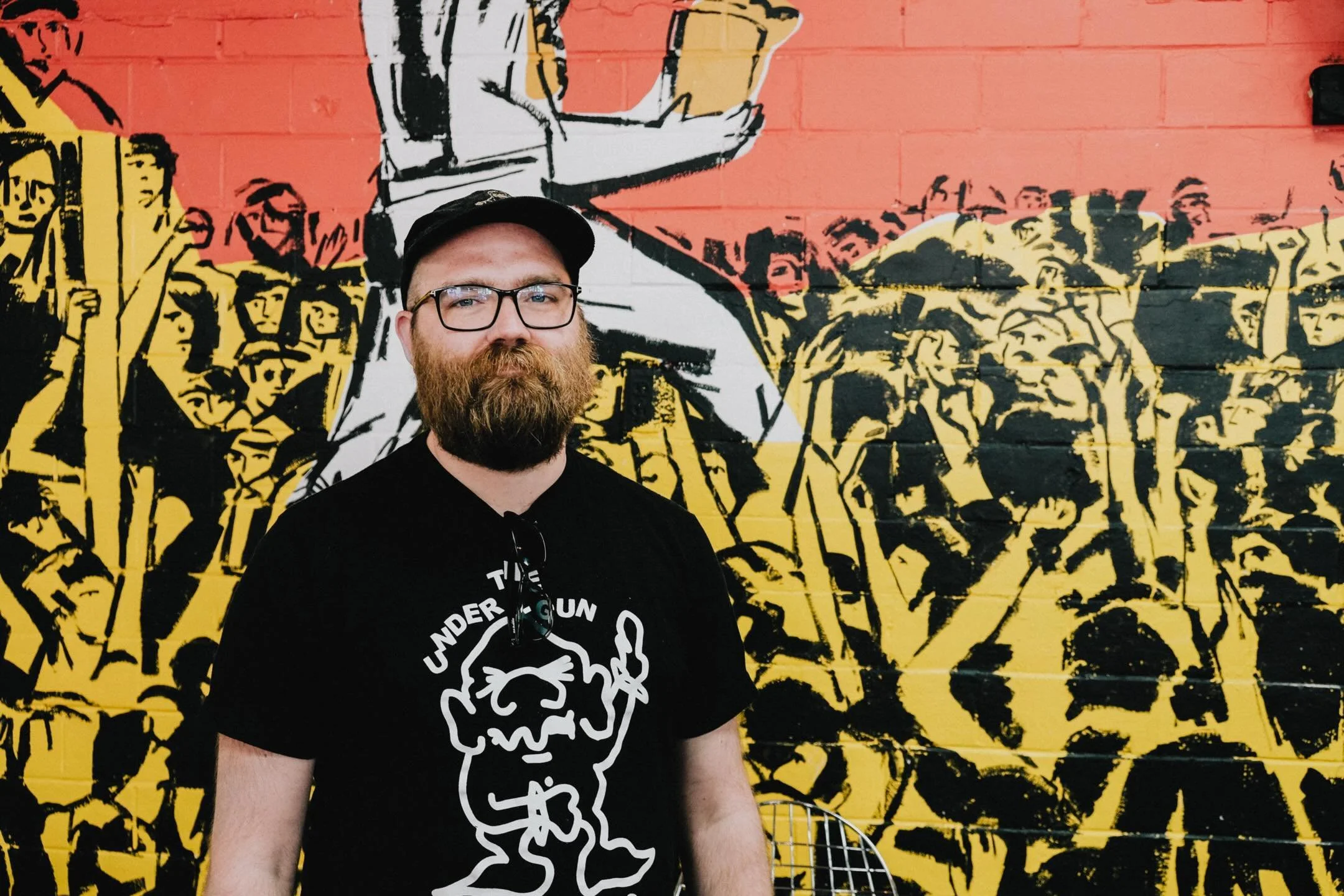
Meet your new favourite small-town punk
By Julia de Oliveira MoritzHere’s what it’s like chatting with Evan: he is almost perpetually excited, and the main way to tell if he’s smiling is through the slight movement of his moustache, unless he lets out his hearty…
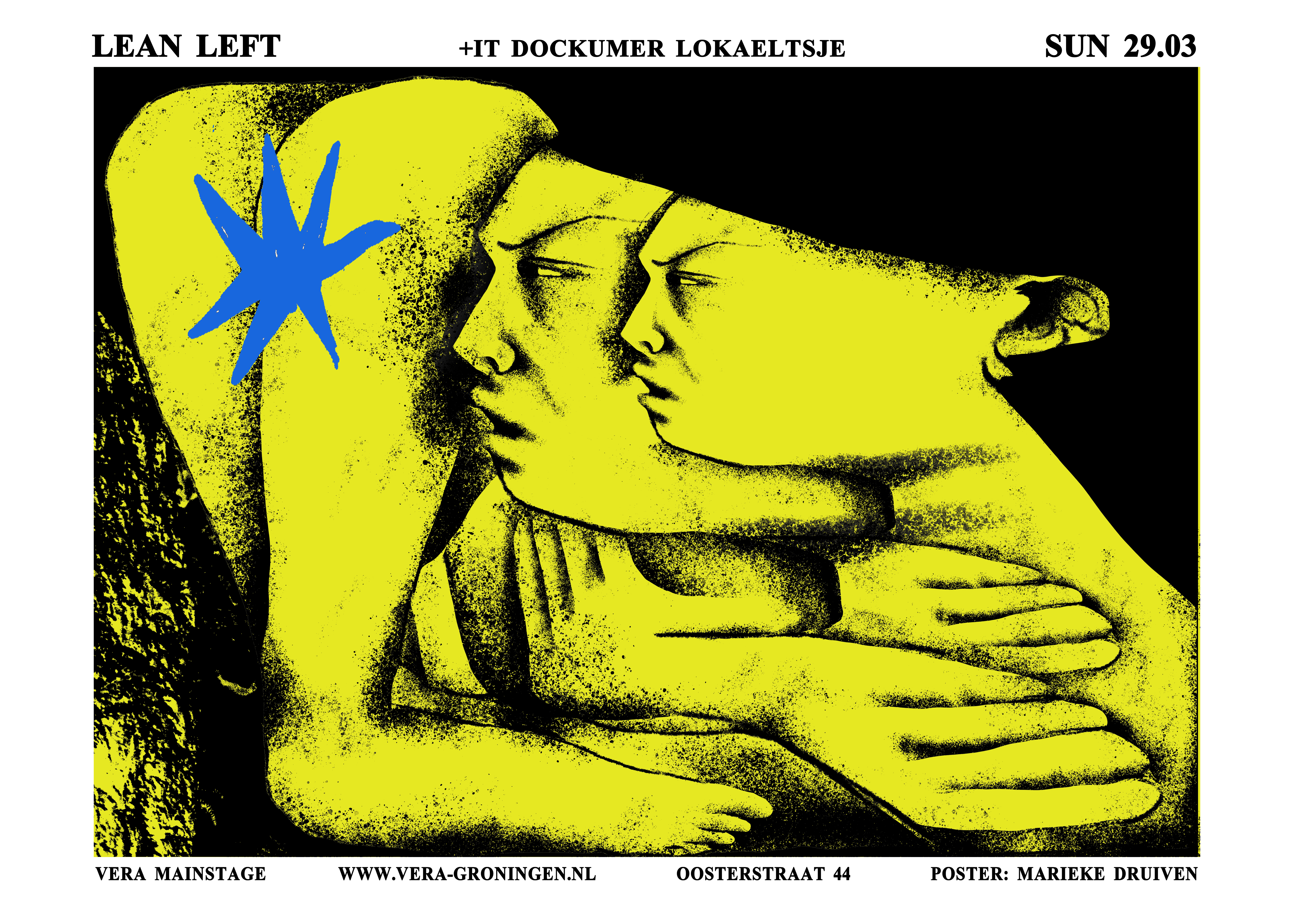
Marieke Druiven
By Patou J. FoetischMarieke Druiven's work feels suspended somewhere between the familiar and the unreal. Her figures and environments carry the strange familiarity of something half-recognised, as though ordinary…
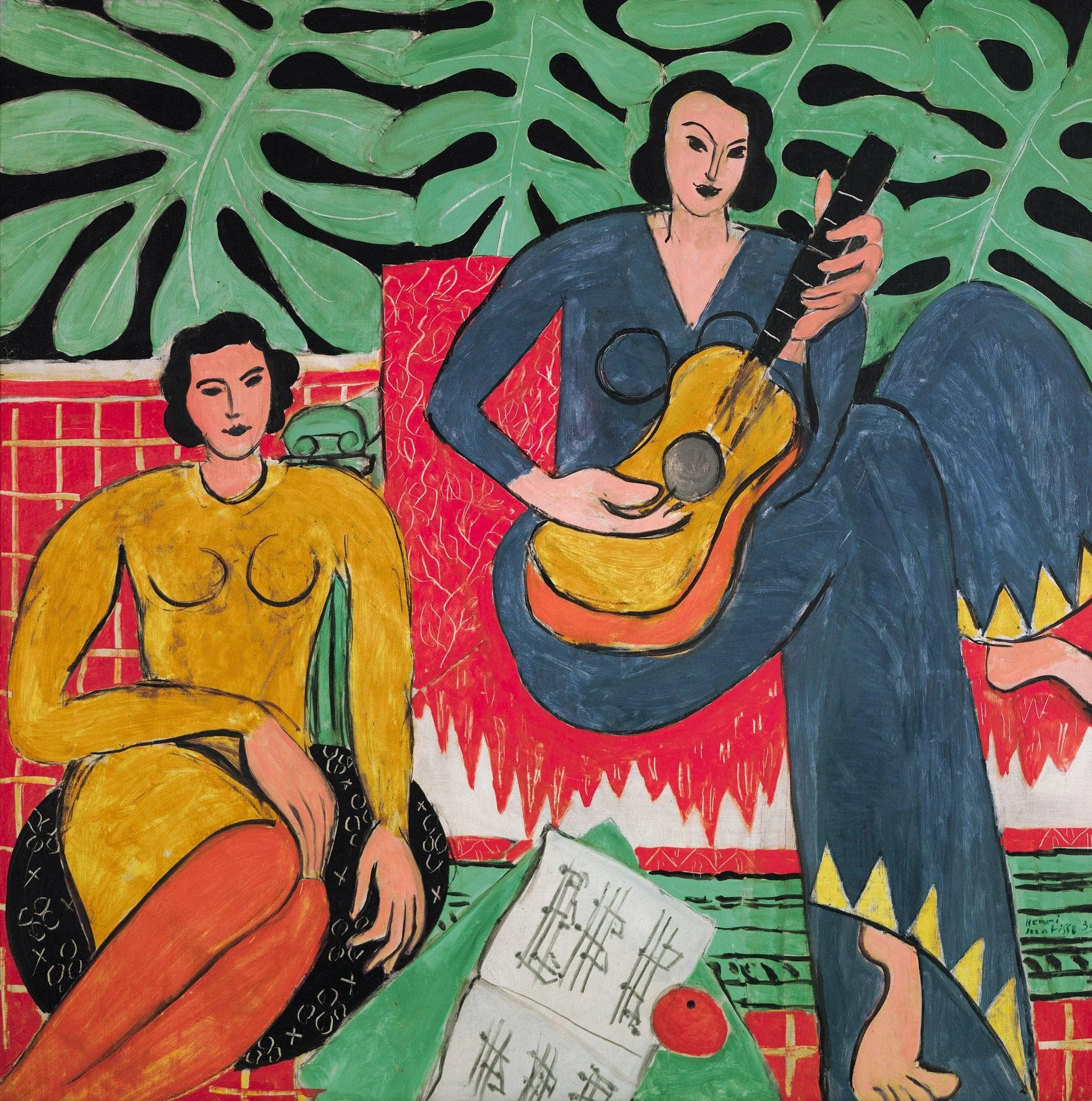
The cultural hangover following the Spotify boycotts
By Julia de Oliveira MoritzSpotify has faced criticism before. Taylor Swift, Joni Mitchell, and Thom Yorke have all removed their music from the platform in the past, only to sneak back in. It’s happening again now, seemingly…
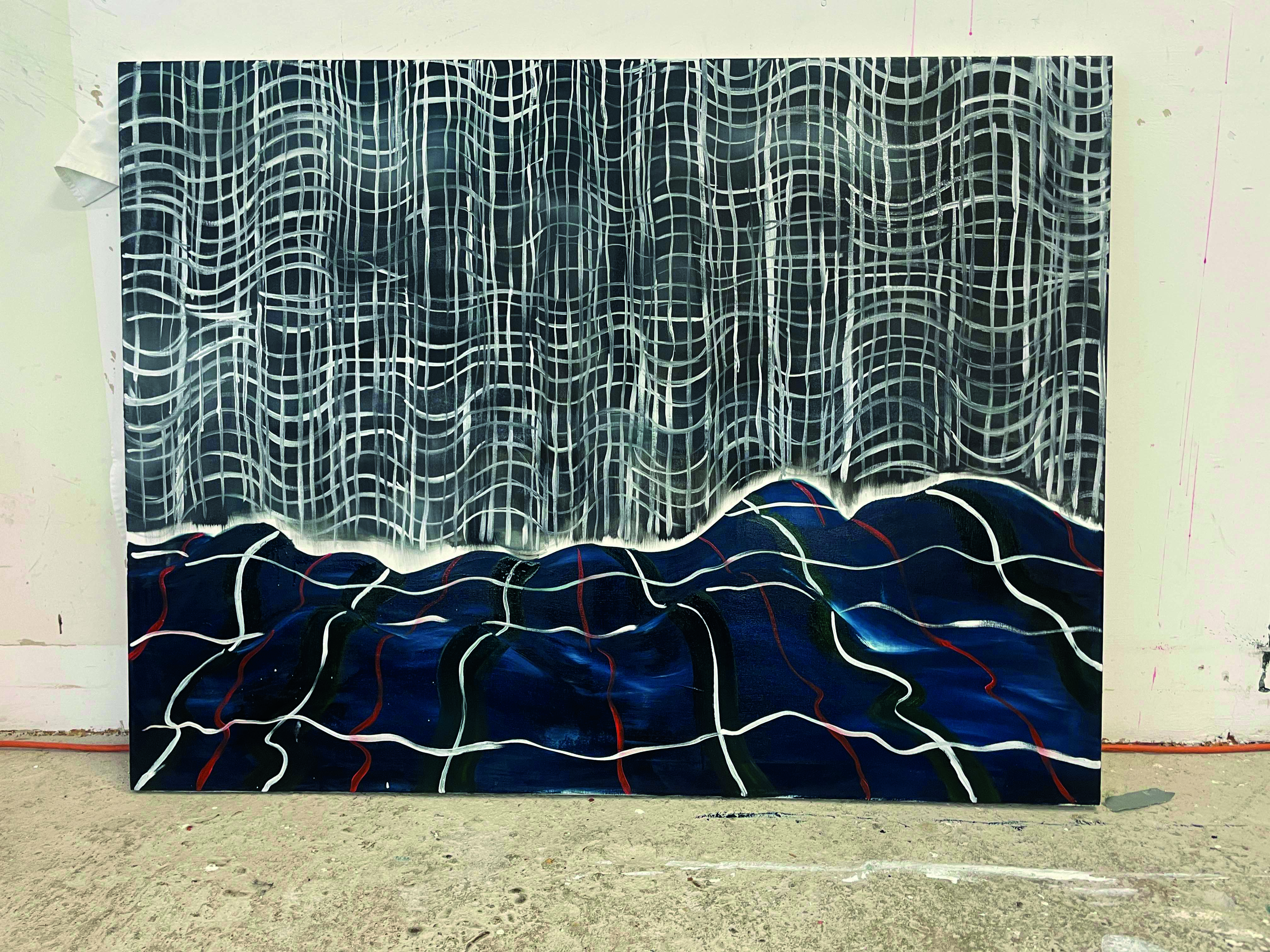
Una Jongenelis
By Patou J. FoetischNot everything moves in a straight line. Some processes unfold through hesitation and repetition that are never quite the same. What first may appear as a digression begins to fall into its own…
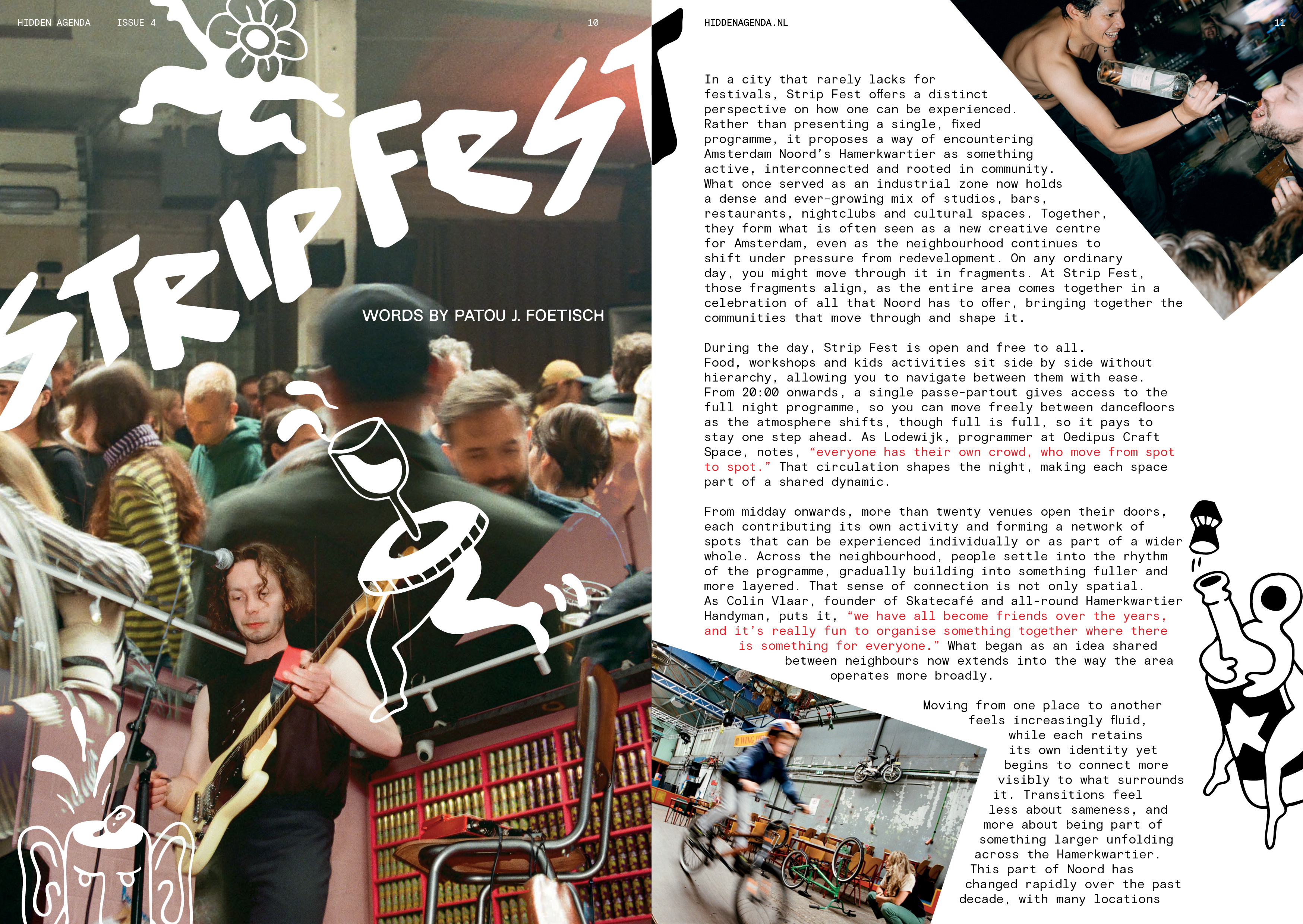
Strip Fest 2026
By Patou J. FoetischIn a city that rarely lacks for festivals, Strip Fest offers a distinct perspective on how one can be experienced. Rather than presenting a single, fixed programme, it proposes a way of encountering…
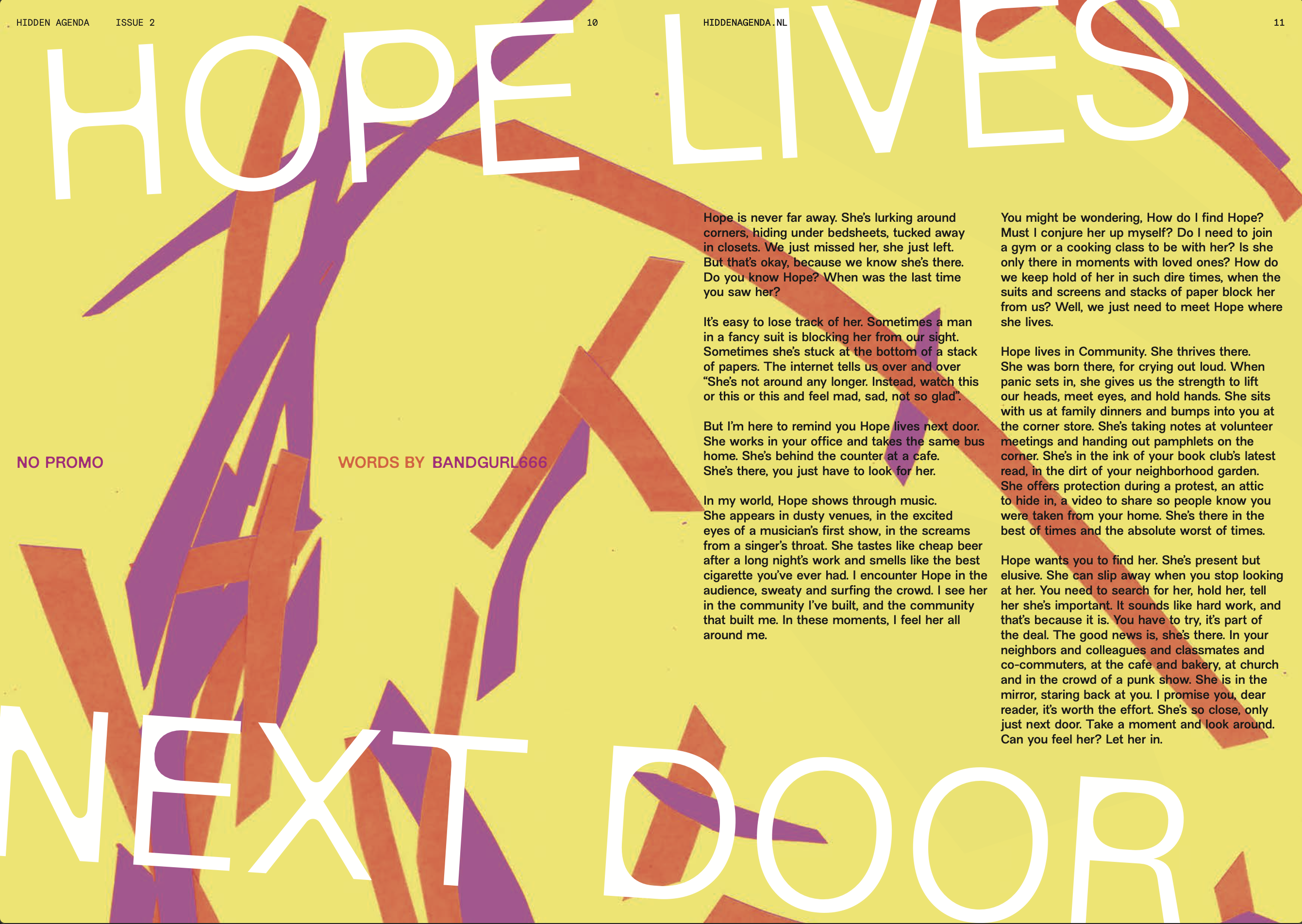
Hope Lives Next Door
By Bandgurl666Hope is never far away. She’s lurking around corners, hiding under bedsheets, tucked away in closets. We just missed her, she just left. But that’s okay, because we know she’s there. Do you know…