Una Jongenelis
Hidden Agenda Monthly: Edition #4 - May 2026
By Patou J. Foetisch // 21 JUL 2026
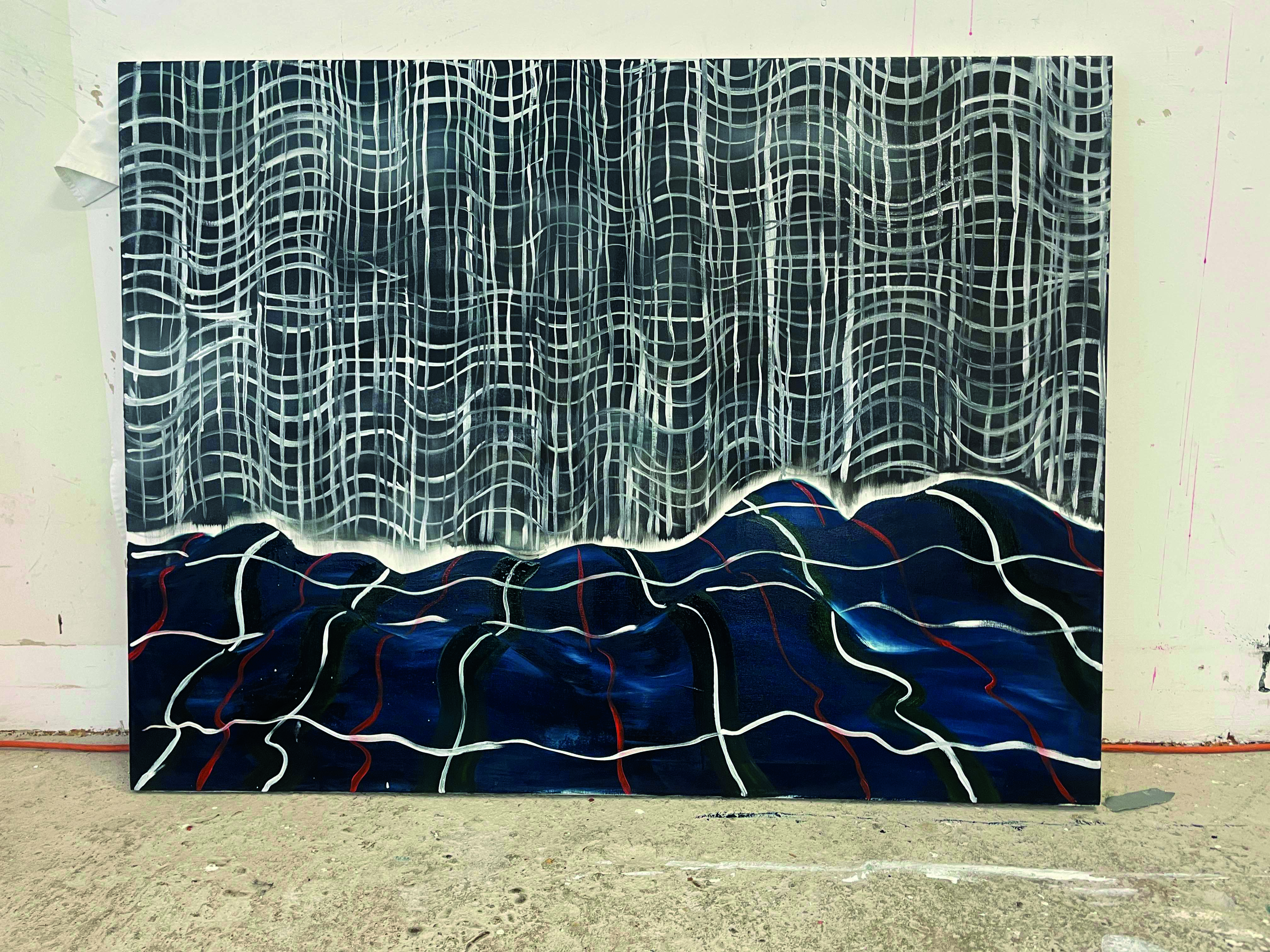
Image: "Curtains for Mrs Jongenelis // Grandmothers dying bed' (oil on bedsheet, 2026)
Not everything moves in a straight line. Some processes unfold through hesitation and repetition that are never quite the same. What first may appear as a digression begins to fall into its own rhythm. Our conversation with Una Jongenelis follows this logic. It shifts between points, resonates, redirects, and refuses to settle too quickly. In doing so, it offers perspective into how her practice takes shape.
For Jongenelis, the medium is never the starting point. Ideas arrive first, often without form, and only later find their way into something tangible. “It’s not linear,” she reflects. “I don’t really separate them in my head.” This suggests not just interdisciplinarity, but a suspension of stabilising meaning too early. Each becomes a temporary container for something that could take shape elsewhere, should the idea demand it.
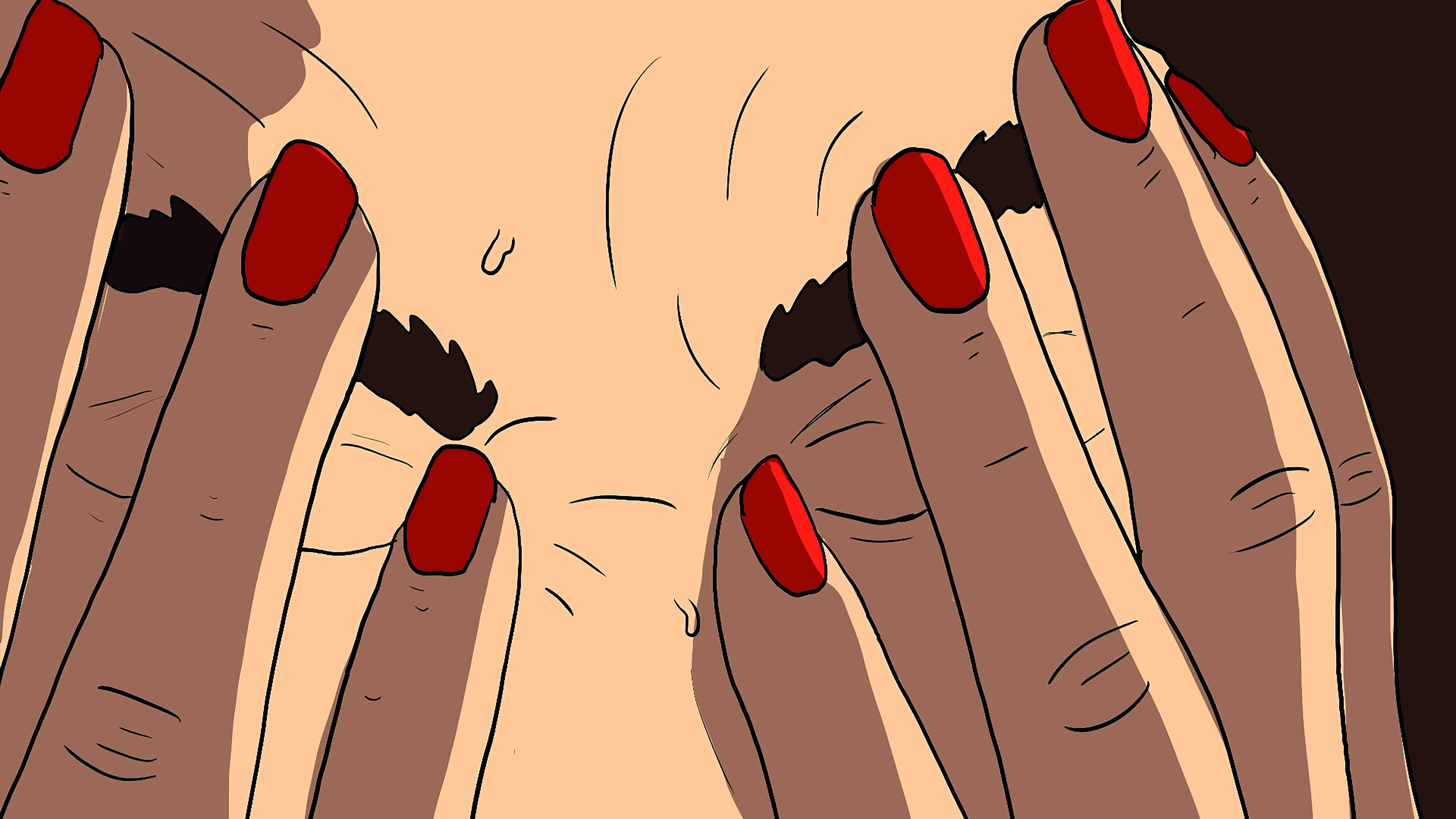
Still from animated short Thunderhead (2026)
That tension echoes her relationship to psychology. Although she stepped away from the field, its influence remains. Her work does not attempt to resolve emotional states but to sit within them without neutralising their intensity. Fear, for instance, is not framed purely as something to overcome, but as something functional, even necessary, rather than something to be eliminated. This becomes particularly visible in Thunderhead, her debut animated film recently premiered at the International Film Festival Rotterdam. Animation offers a way to externalise what would otherwise remain internal. “Animation gives me a lot of freedom,” she explains. “You’re not bound to reality in the same way. You can break physics, you can visualise internal states, like anxiety or fear, in a more direct way. You can make things visible that are otherwise abstract.” Instead of representing emotion, she constructs environments where it can exist materially, staged with weight, movement and consequence.
Yet this freedom comes at a cost. Animation and film demand structure, duration, and an engagement with systems that resist immediacy. “It took around three years to produce Thunderhead,” she notes. “You have to think about production, funding, and working with other people. It becomes much more structured.” Where drawing or music might allow for speed and directness, film insists on planning, coordination and patience.
In collaborative settings, projects like My Purse or Yodel Queen operate through collective input, where authorship disperses across multiple voices. “For us, being in a band is very democratic,” she explains, describing it as a process of constant negotiation as opposed to a fixed hierarchy. Decisions are shared, ideas are tested against each other, and outcomes are not fixed in advance. It is less about asserting a singular vision than about working through ideas collectively, testing and refining them in real time. The result is less controlled but more responsive, with risk rooted in relinquishing authorship and trusting the dynamic between participants.
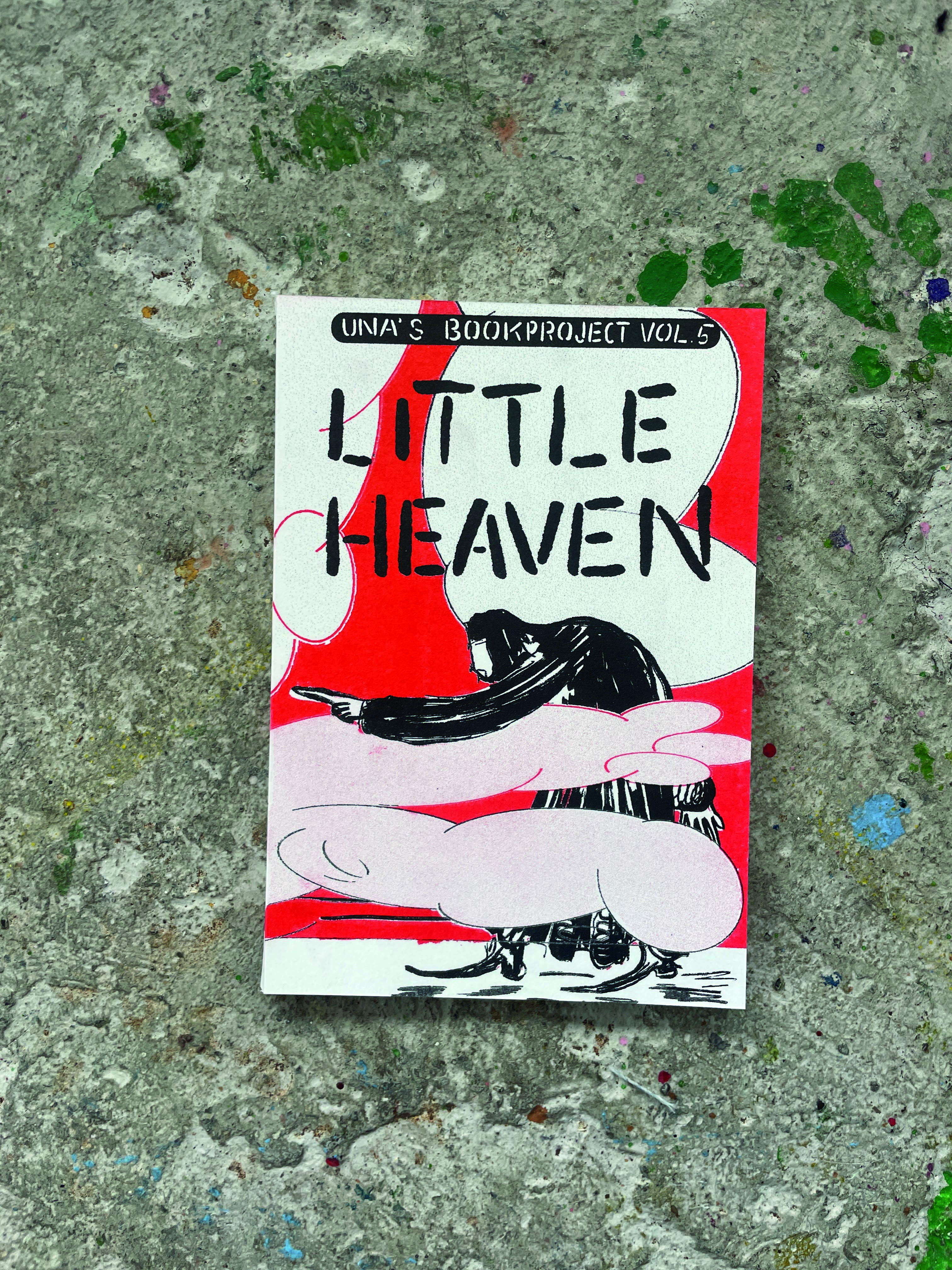
"Una's Book Project Vol. 5: Little Heaven" (2026)
Performance enriches this further. It introduces the body, presence, and the unpredictability of an audience. When asked about masks, what initially reads as a metaphor becomes something more literal in her response. Masks function as tools, a way to enter performance while creating distance from the self that audiences might otherwise project onto. “I’m still figuring out how to be on stage,” she admits, describing the mask as something that helps her step into that uncertainty. It allows her to shift into a different mode, to exaggerate, to take up space in ways that might otherwise feel out of reach. The mask is not about hiding, but about allowing something else to take form. It creates a temporary separation that enables play, failure, and transformation.
This interest in shaping situations also informs her role as an organiser. Events become an extension of her practice, not as finished works but as situations. “I like influencing the possibilities, not the outcome,” she says. The focus lies in bringing people, ideas and environments into contact, allowing interactions to unfold without over-directing them. In this sense, her work moves beyond individual production towards facilitation. Looking ahead, Jongenelis remains open to expanding into new forms. Theatre, for instance, is something she mentions with interest. The direction remains responsive to the idea itself. The medium will follow the idea, not the other way around.
More Editorials
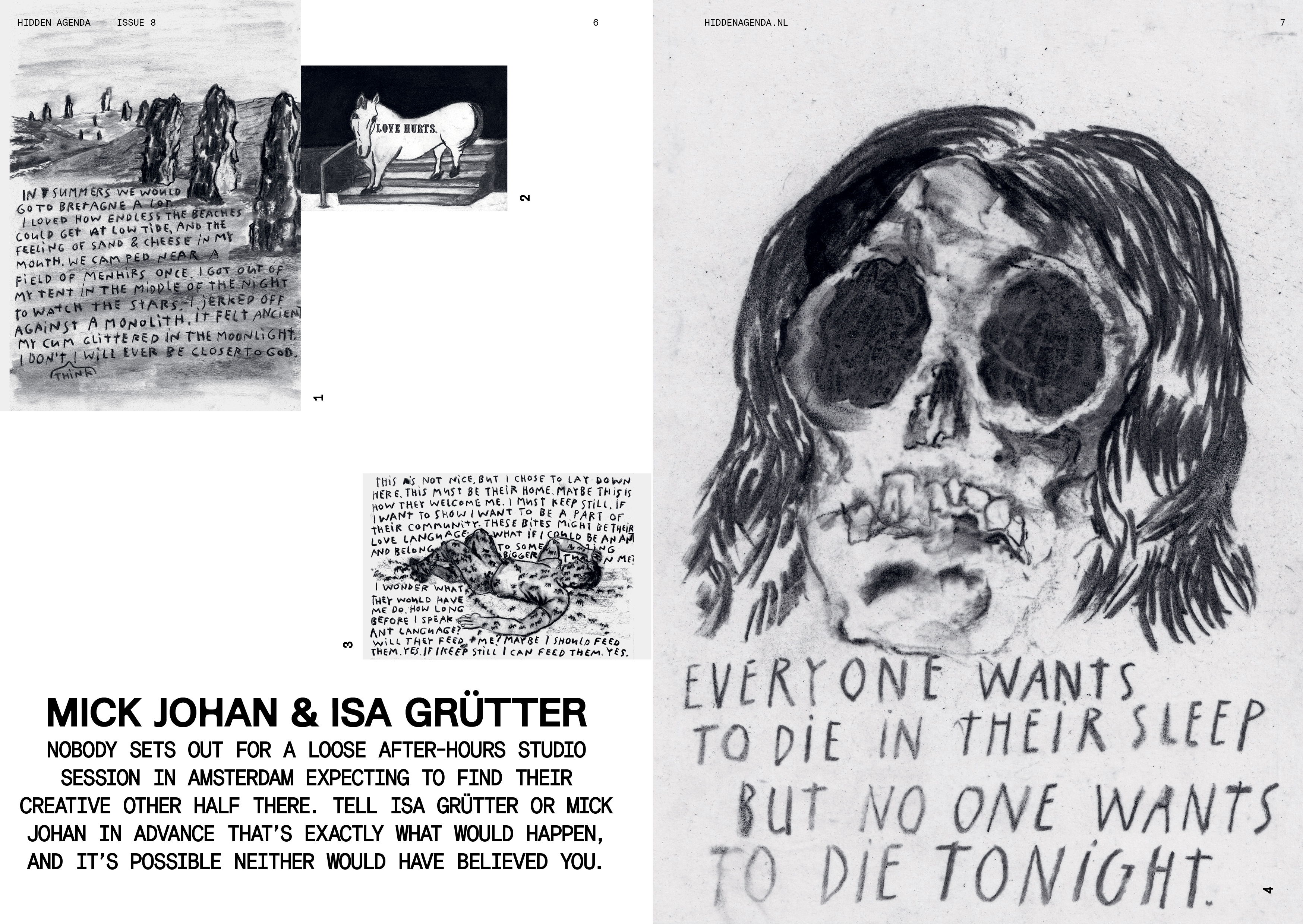
Mick Johan & Isa Grütter
By Patou J. FoetischNobody sets out for a loose after-hours studio session in Amsterdam expecting to find their creative other half there. Tell Isa Grütter or Mick Johan in advance that’s exactly what would happen, and…
Mart Veldhuis
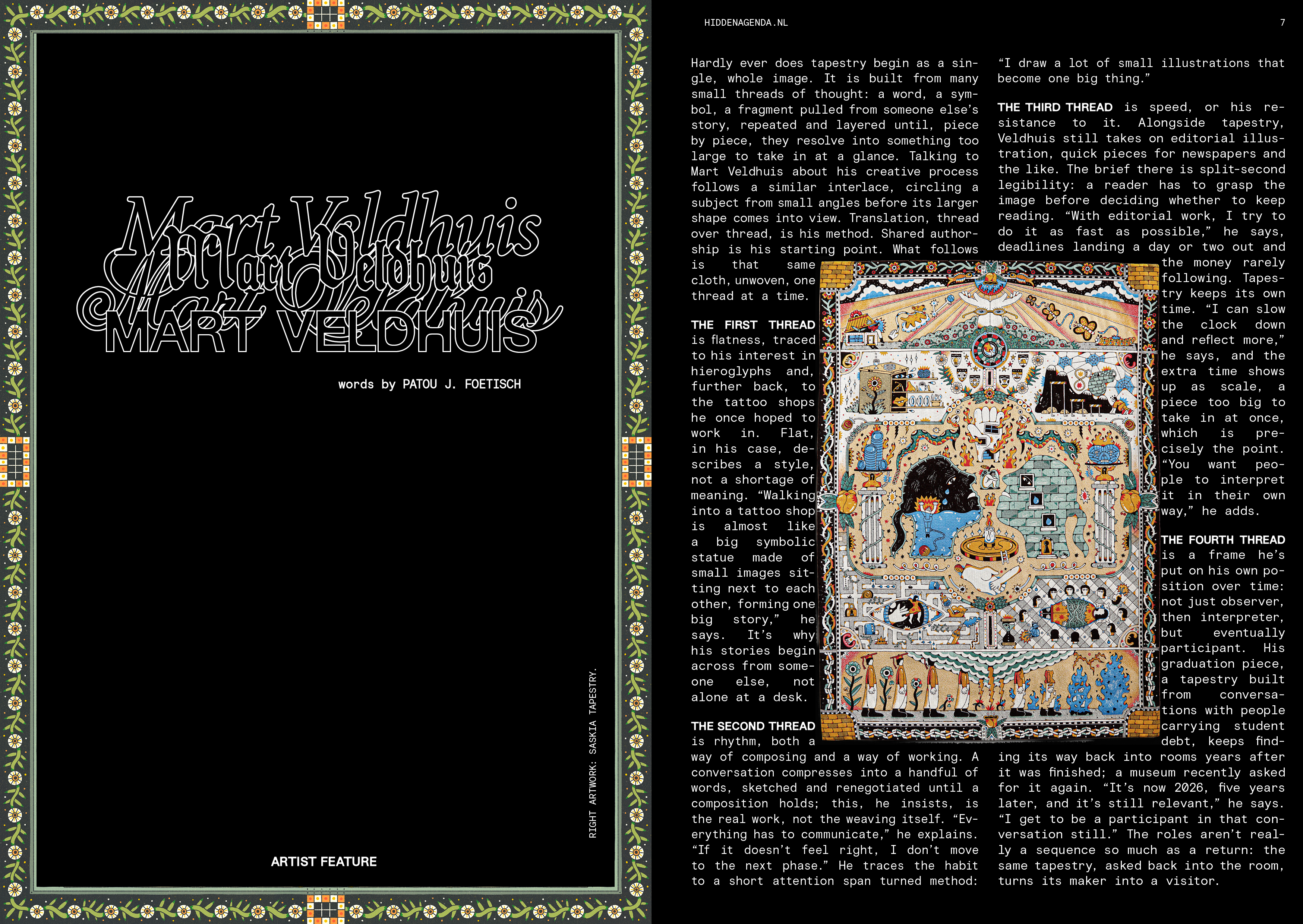
By Patou J. FoetischHardly ever does tapestry begin as a single, whole image. It is built from many small threads of thought: a word, a symbol, a fragment pulled from someone else's story, repeated and layered until,…
Gaudeamus Festival 2026
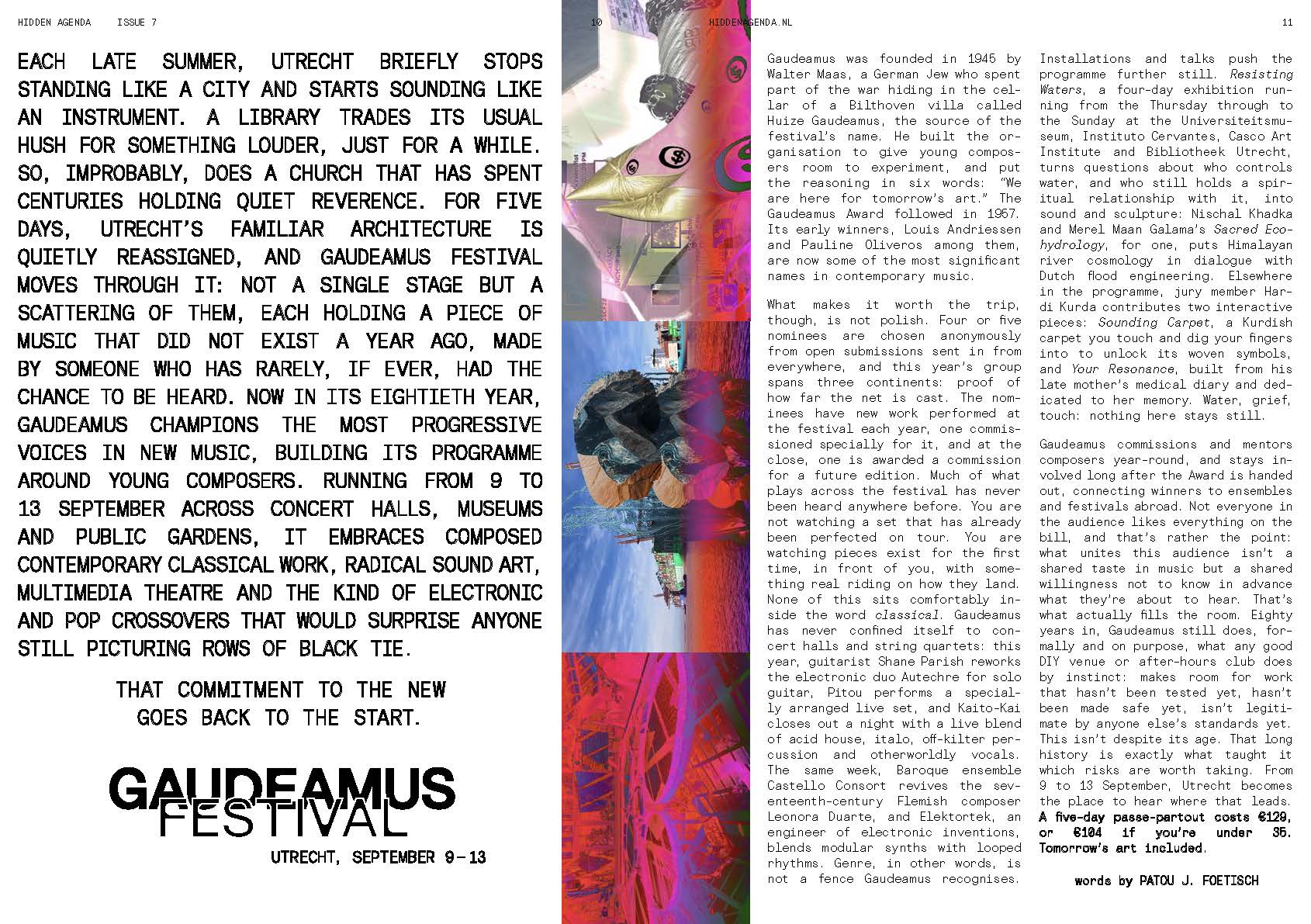
By Patou J. FoetischEach late summer, Utrecht briefly stops standing like a city and starts sounding like an instrument. A library trades its usual hush for something louder, just for a while. So, improbably, does a…
Juna Horstmans
By Patou J. FoetischJuna Horstmans' work often feels suspended between two recurring forms: the window and the flower. One frames perception, offering a partial view into something beyond itself; the other unfolds…
Meet your new favourite small-town punk
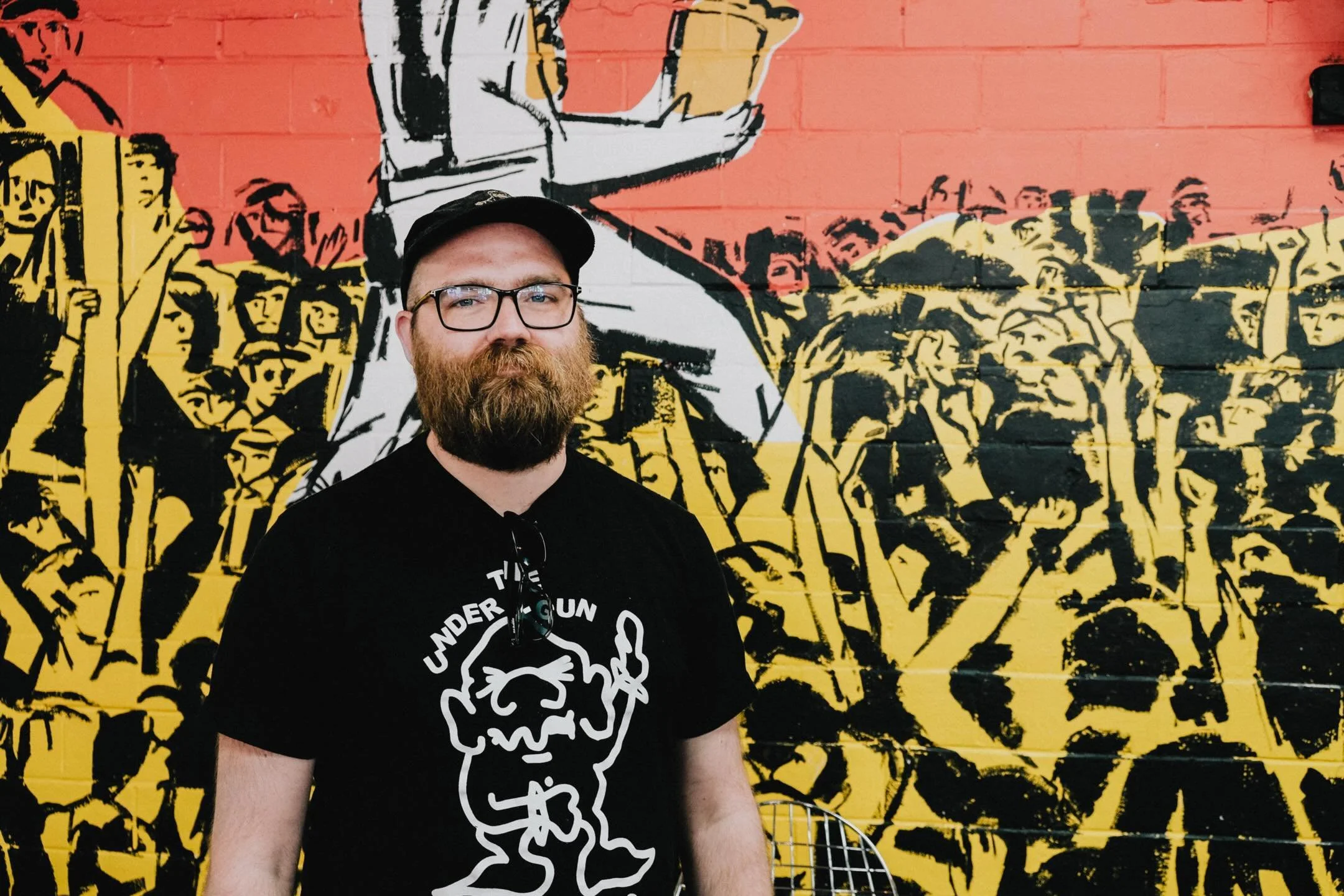
By Julia de Oliveira MoritzHere’s what it’s like chatting with Evan: he is almost perpetually excited, and the main way to tell if he’s smiling is through the slight movement of his moustache, unless he lets out his hearty…
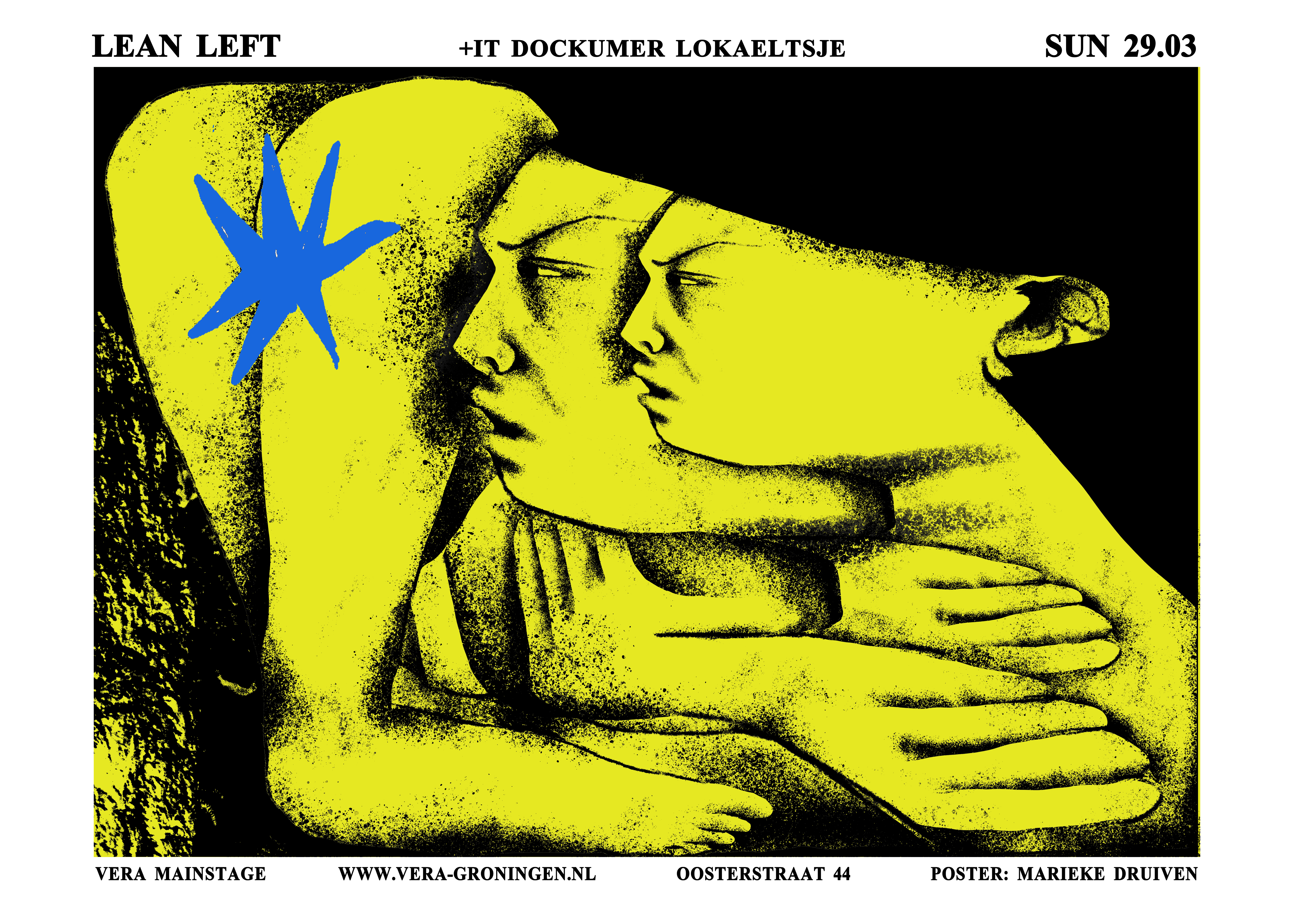
Marieke Druiven
By Patou J. FoetischMarieke Druiven's work feels suspended somewhere between the familiar and the unreal. Her figures and environments carry the strange familiarity of something half-recognised, as though ordinary…
The cultural hangover following the Spotify boycotts
By Julia de Oliveira MoritzSpotify has faced criticism before. Taylor Swift, Joni Mitchell, and Thom Yorke have all removed their music from the platform in the past, only to sneak back in. It’s happening again now, seemingly…
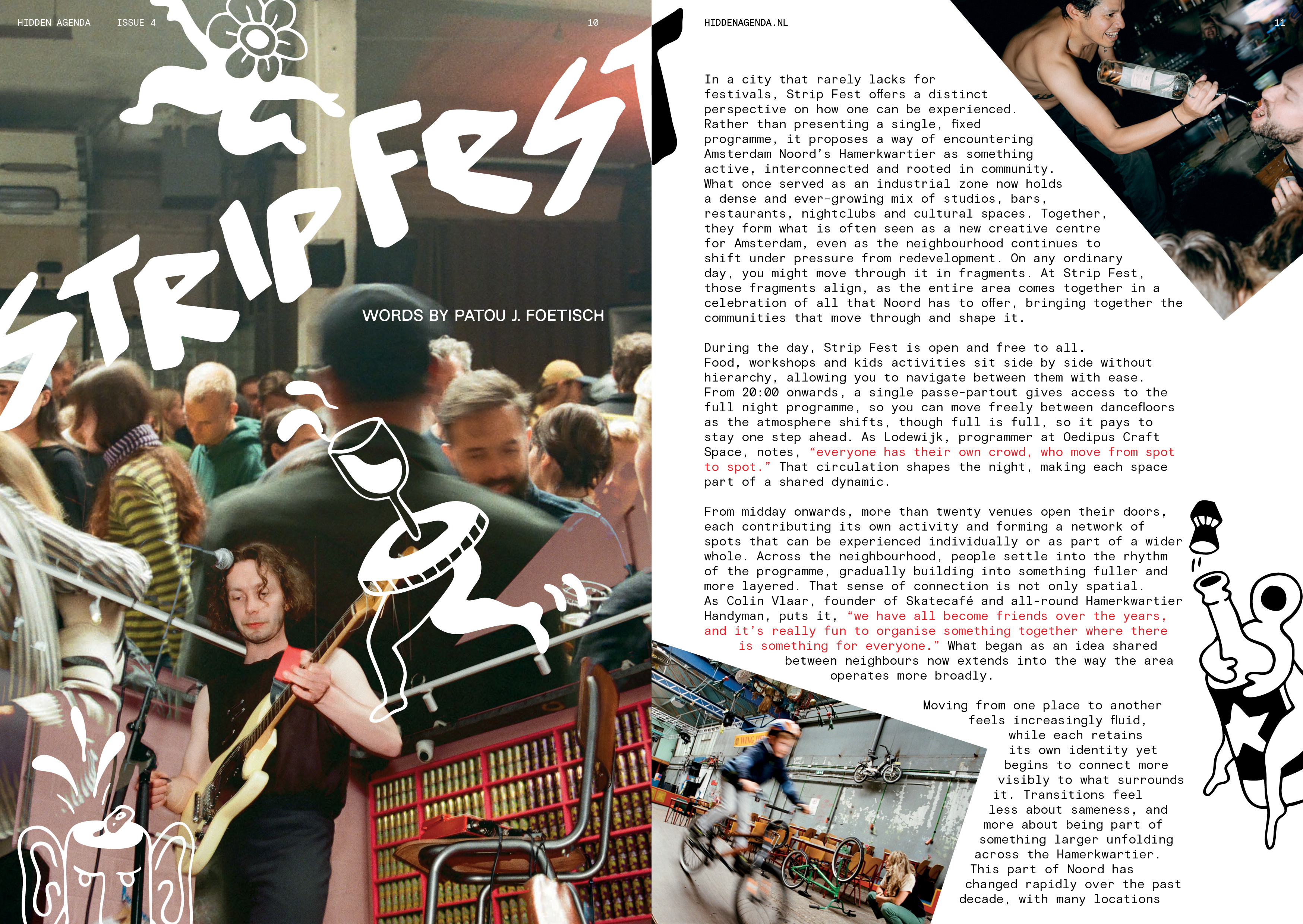
Strip Fest 2026
By Patou J. FoetischIn a city that rarely lacks for festivals, Strip Fest offers a distinct perspective on how one can be experienced. Rather than presenting a single, fixed programme, it proposes a way of encountering…
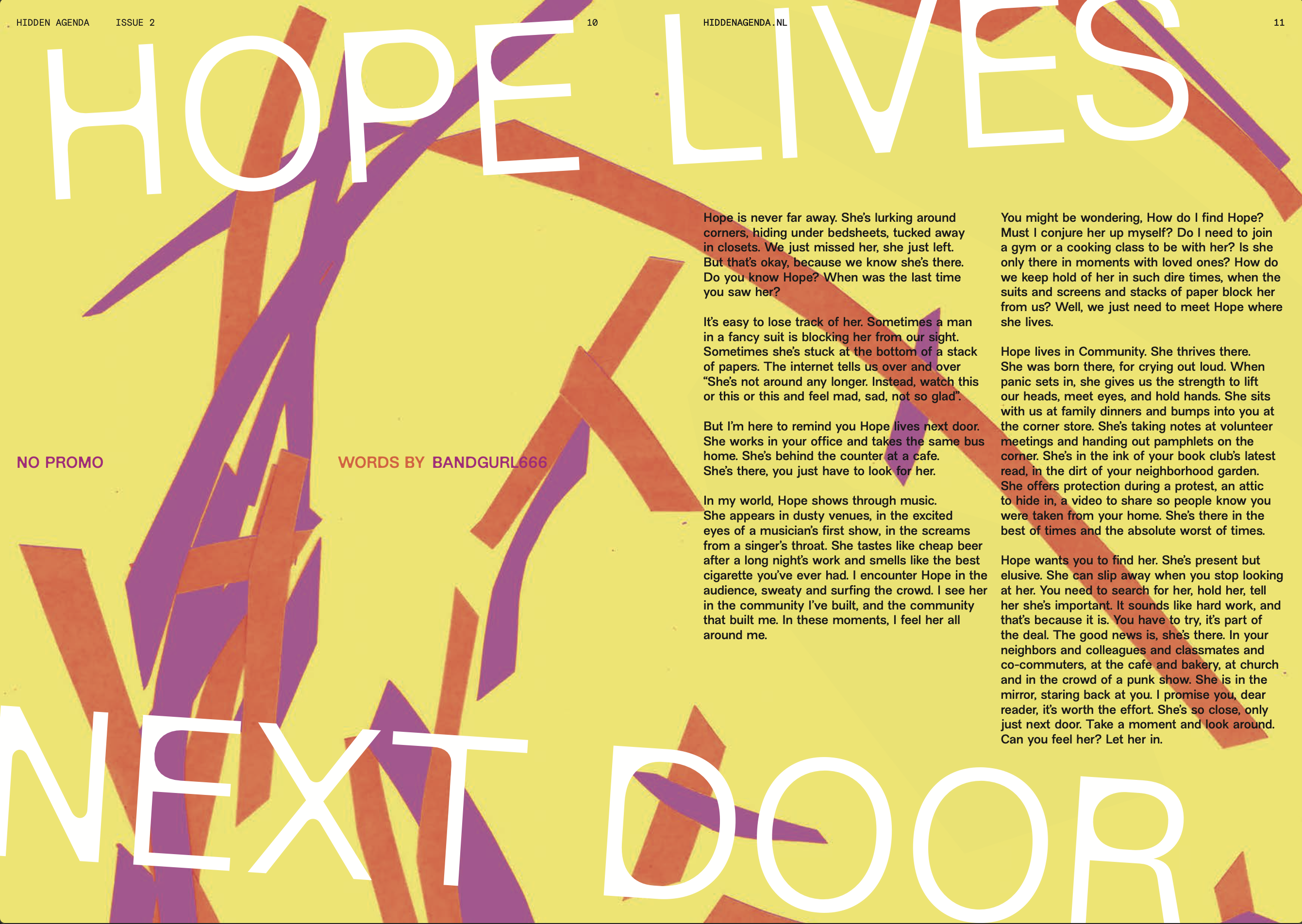
Hope Lives Next Door
By Bandgurl666Hope is never far away. She’s lurking around corners, hiding under bedsheets, tucked away in closets. We just missed her, she just left. But that’s okay, because we know she’s there. Do you know…
Layla Gijsen
By Patou J. FoetischOur conversation prior to this interview begins with something trivial: undercooked rice, before drifting into questions of making and momentum. Although unrelated, the anecdote hints at something…