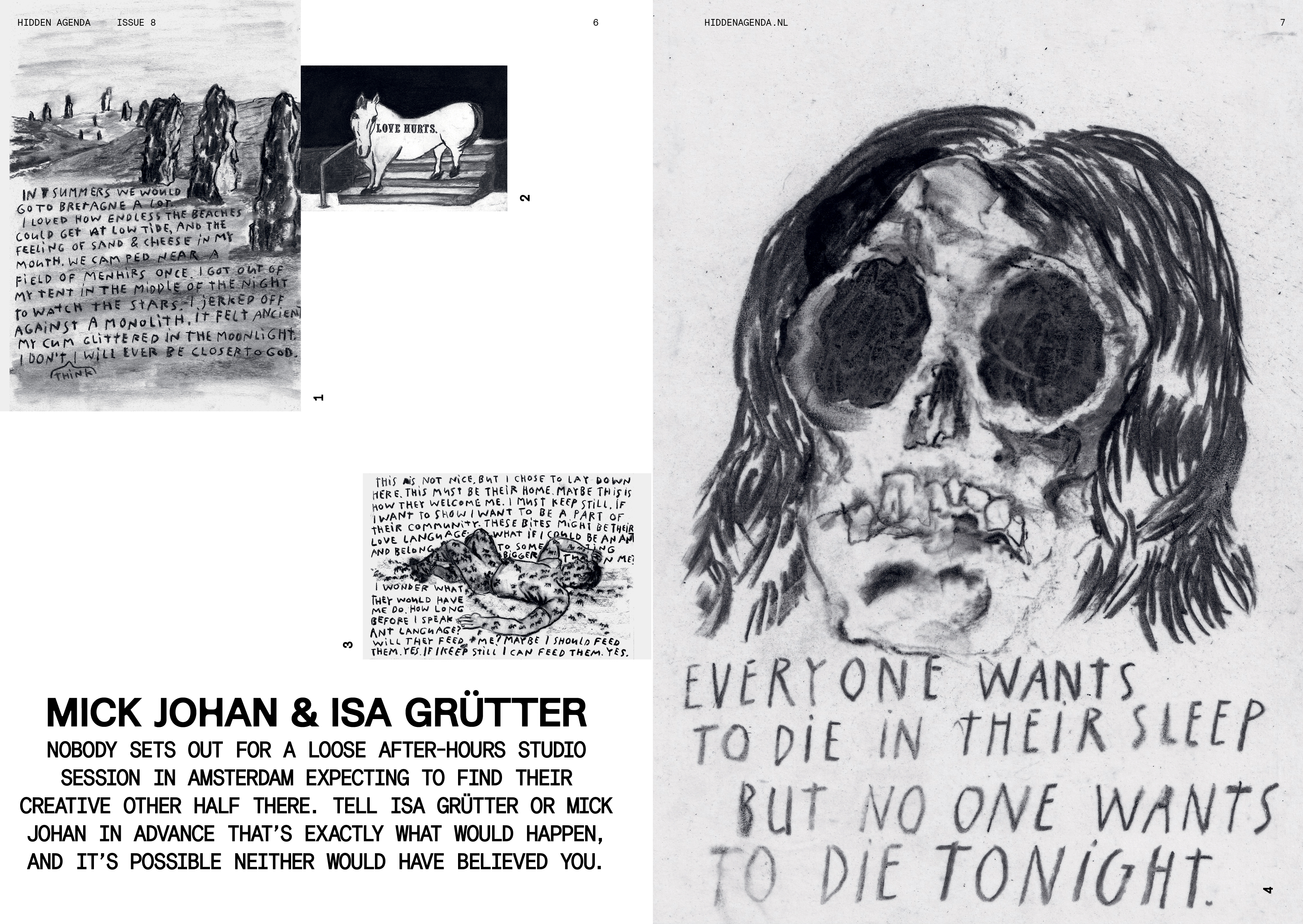
Mick Johan & Isa Grütter
Hidden Agenda Monthly: Edition #8 - October 2026
By Patou J. Foetisch // 08 OCT 2026
Nobody sets out for a loose after-hours studio session in Amsterdam expecting to find their creative other half there. Tell Isa Grütter or Mick Johan in advance that’s exactly what would happen, and it’s possible neither would have believed you. What they found isn’t quite a romance and isn’t quite a friendship either, something the language hasn’t caught up to yet, and neither, it turns out, is their working method. Our call, from their current residency in Tokyo, two time zones away, five coffees deep and recovered from an opening weekend, gave away something else.
More than once, one of them answered a question clearly meant for the other, not cutting in, more like the words were simply sitting closer to hand. Mick went first, unprompted, framing her drawing style through a background in dance she’d only mentioned in passing, calling her less a drawer than a sculptor. Isa did the same for him later, nudging him past a question comparing his years drumming in MICH to how he works with her now, when he seemed to lose the thread of his own answer. Two years of shared studios, and each of them now appears to carry a working knowledge of the other's own instincts, occasionally a more fluent one than its actual owner.
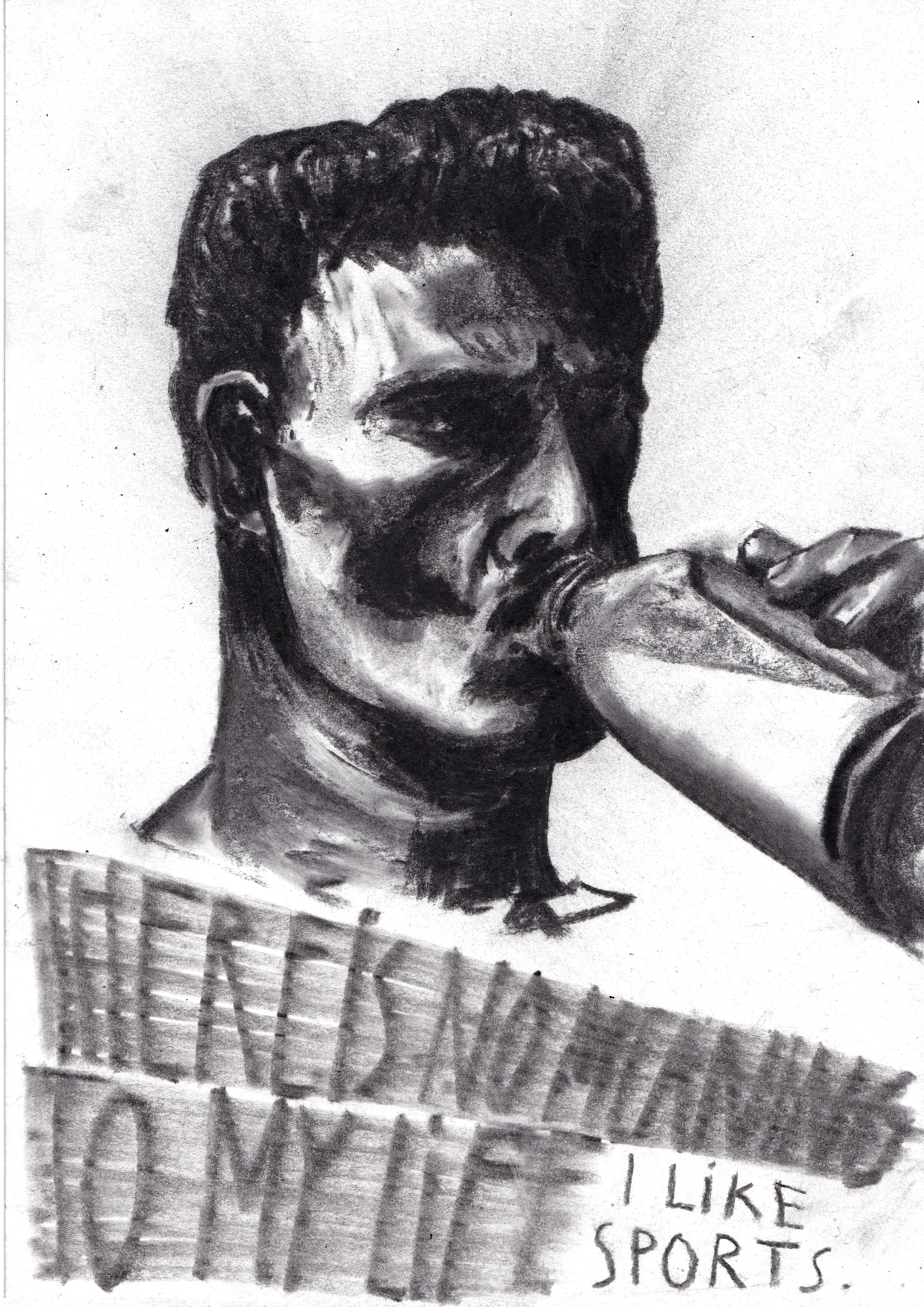
I like sports
Their combined creative endeavours had a fairly ordinary genesis: mutual friends, a shared studio between Mick and Isa’s partner, long before either of them tried drawing together. Three rules have held since: black and white only, and every drawing touched by both of them. The third arrived on its own: pieces go down on the studio floor once a pass feels finished, and stay there, one among dozens, until both of them agree it’s ready to earn its way onto a wall. The floor is where they still look like two separate people. The wall is where they stop. Simplicity is the whole point, and simplicity, on its own, doesn’t always say enough. That’s where the words come in. Isa has said that text can tip an entire image somewhere new, and that Mick, specifically, is dangerously good at it, “almost manipulative,” in her words. A drawing gives you a body; the text next to it gives you an argument. None of that comes from identical starting points, either: Mick’s own toolkit was shaped by years in advertising, Isa’s by illustration work, and the actual work is what happens when they trade what they don’t share. Isa taught Mick charcoal, a material he’d never touched before, whilst Mick increased his software skills by watching her work rather than just asking. “It’s not like you were only giving and I was only taking,” she tells him, when he undersells his own side of it.
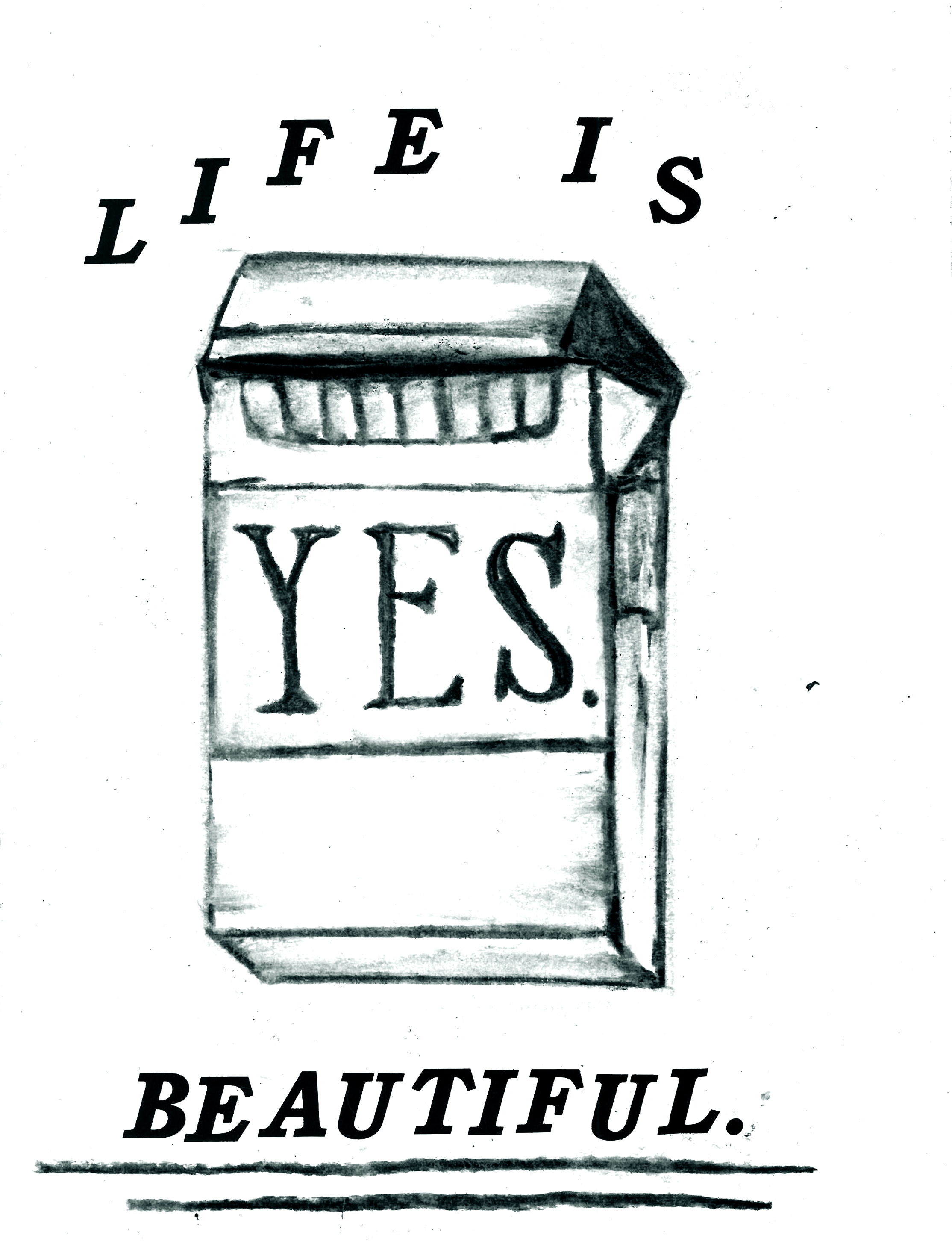
Yes
That kind of trade comes easier to one of them than the other. “Collaborating actually makes me less vulnerable,” he says, “because the work isn’t entirely my own any more.” For Isa, it was less of a given; what she has instead is a kind of forgetting, she genuinely doesn’t remember who drew certain lines any more, and isn’t bothered by it. “I might feel that with someone else,” she says, of the quiet pride that comes with claiming work, “but not with him.” The book the two of them eventually put out, I’ll fight you forever, pushes this same ambiguity further. Printed on paper thin enough that one page’s drawing shows through to the next, two already-shared drawings layer into a third image that belongs to neither of them. One drawing makes the same point even more directly: a bare backside, lettered with the word KOOL in the shape of its cigarette logo. Isa is the one who’s spent years fascinated by the body; but it was Mick who drew this one. Mick’s own advertising past makes the rest stranger still, because once the body existed, it was Isa who looked up the logo and lettered it on. “I think Mick already made the drawing,” she says, “and then I didn’t know what to write on it. We were talking about Japan, and he said, ‘ah, in Japan they smoke these really cool cigarettes.’ I looked up the logo and drew it on.” Neither of them made the part you’d expect them to make. That’s not coincidence, it’s the actual mechanism: whatever each of them is known for individually gets instinctively handed to the other, until the finished thing belongs to neither specialty and both of them equally.
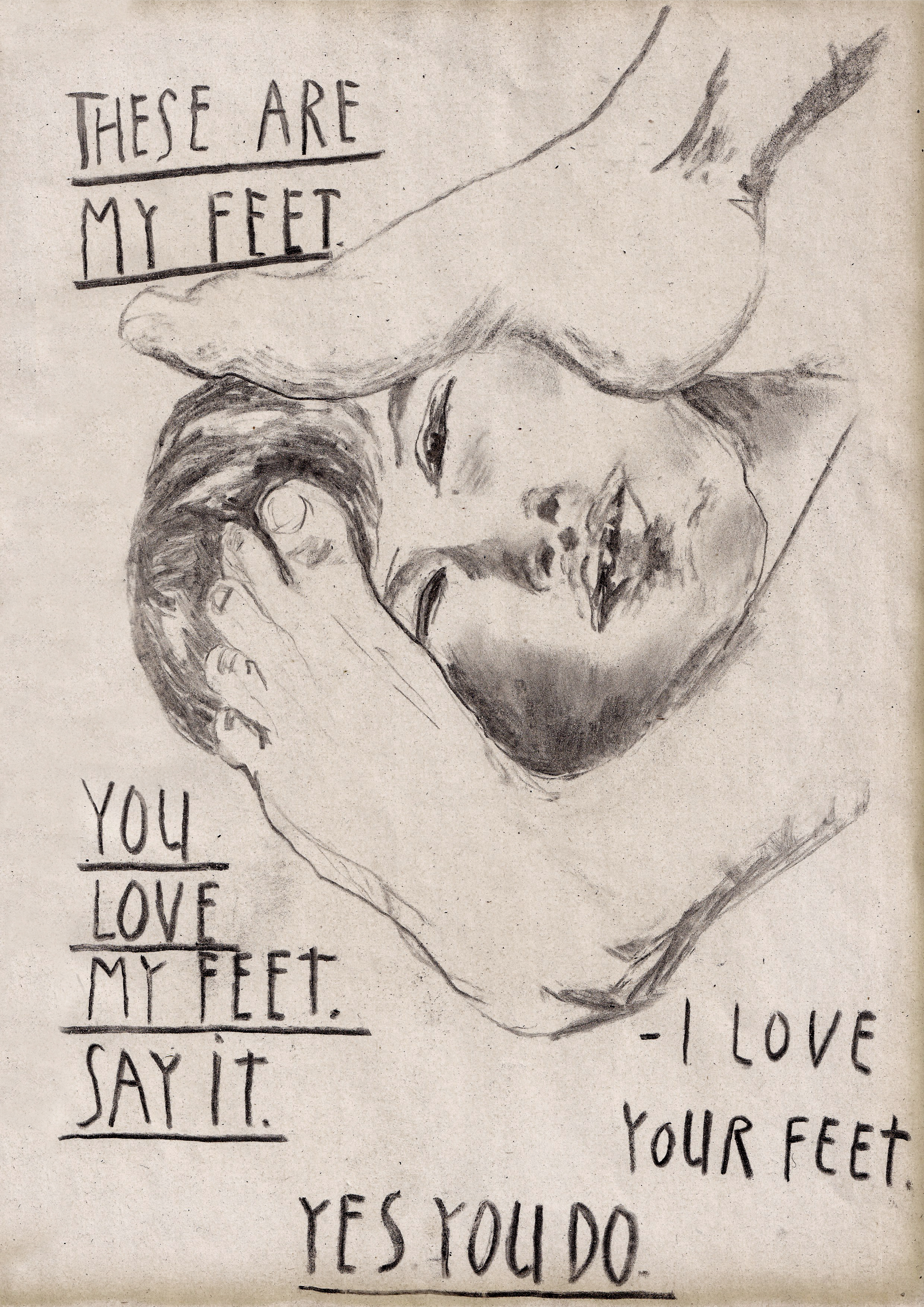
Say it
What’s next is, predictably, still being decided together: a new book with De Harmonie, part drawing collection, part almanac, horoscopes and tips for getting through the week. Isa calls it a manual for how to live. Mick calls it a way of surviving the moment. Neither correction matters, and neither seems to want to make one, which is really the whole practice in miniature: two separate minds until the moment they agree, one signature after that, still without a word for what any of it makes them.
More Editorials
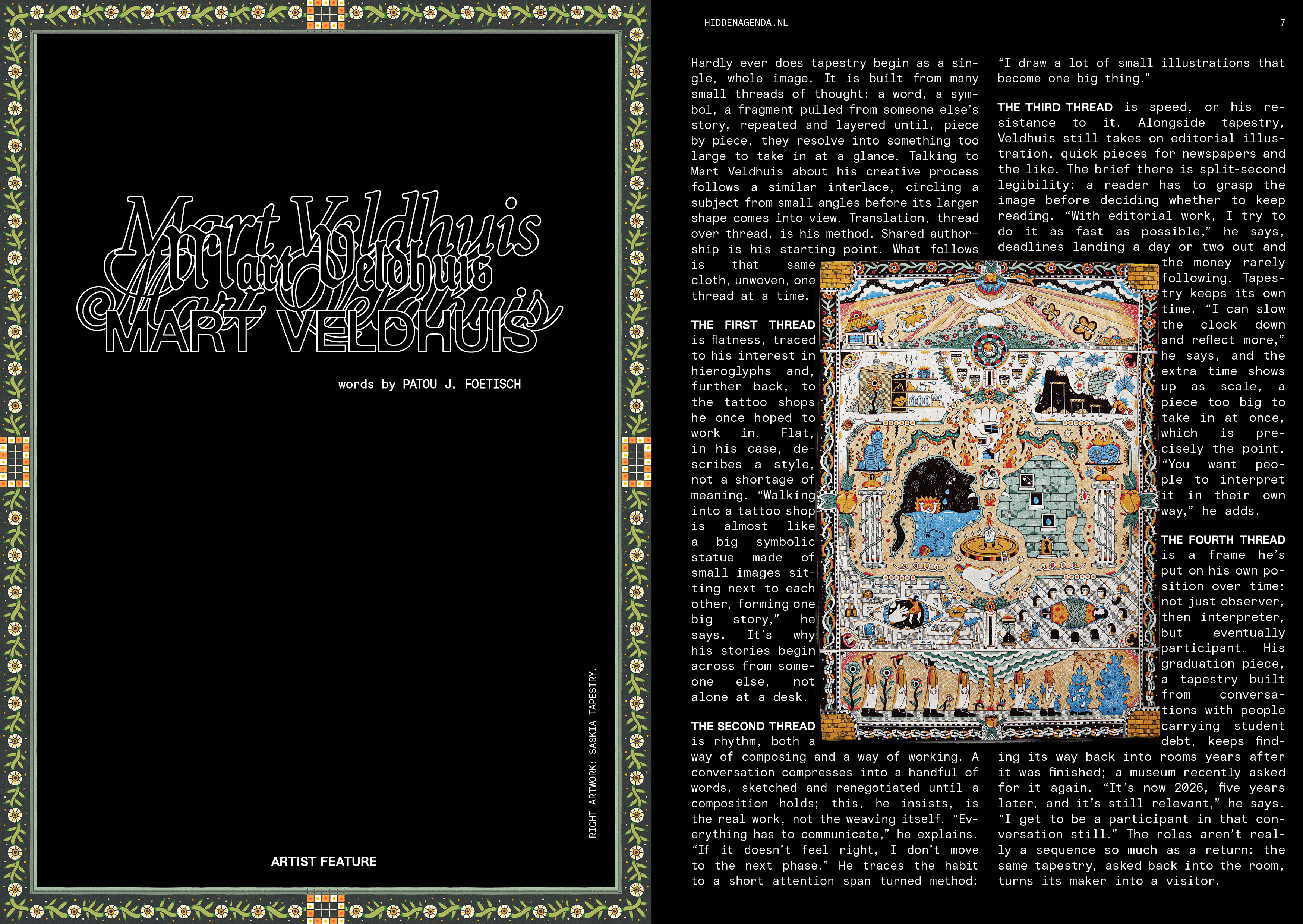
Mart Veldhuis
By Patou J. FoetischHardly ever does tapestry begin as a single, whole image. It is built from many small threads of thought: a word, a symbol, a fragment pulled from someone else's story, repeated and layered until,…
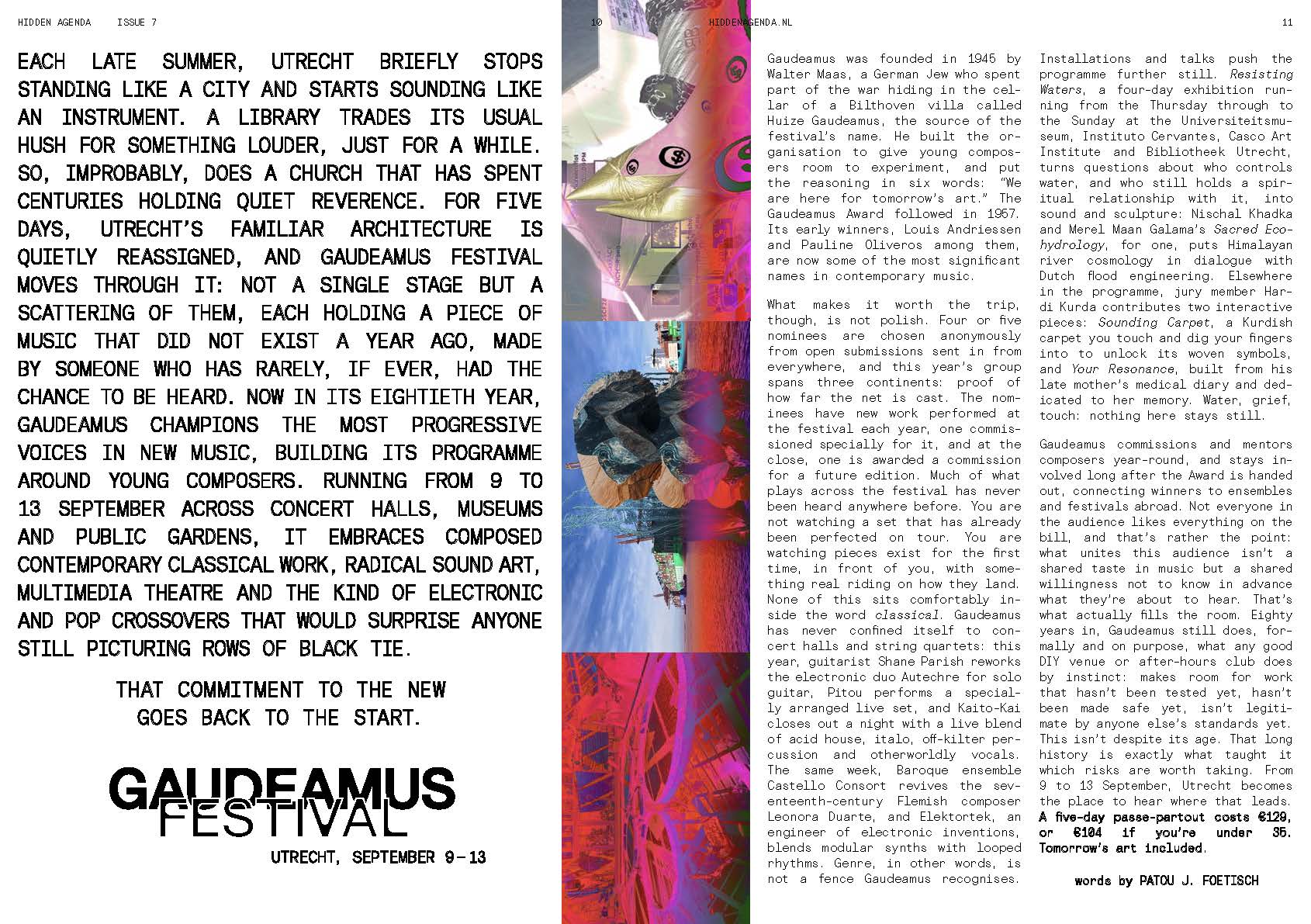
Gaudeamus Festival 2026
By Patou J. FoetischEach late summer, Utrecht briefly stops standing like a city and starts sounding like an instrument. A library trades its usual hush for something louder, just for a while. So, improbably, does a…
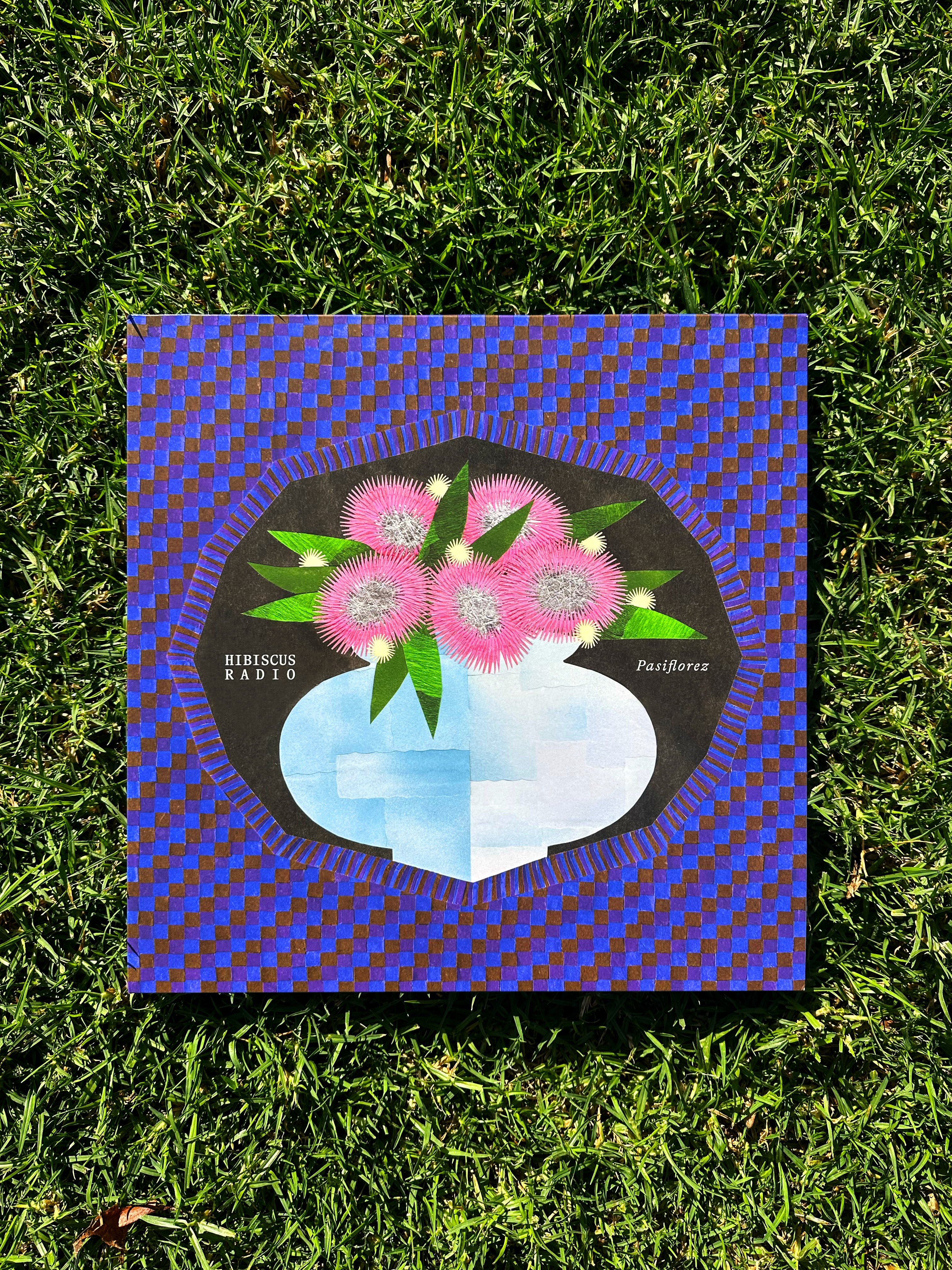
Juna Horstmans
By Patou J. FoetischJuna Horstmans' work often feels suspended between two recurring forms: the window and the flower. One frames perception, offering a partial view into something beyond itself; the other unfolds…
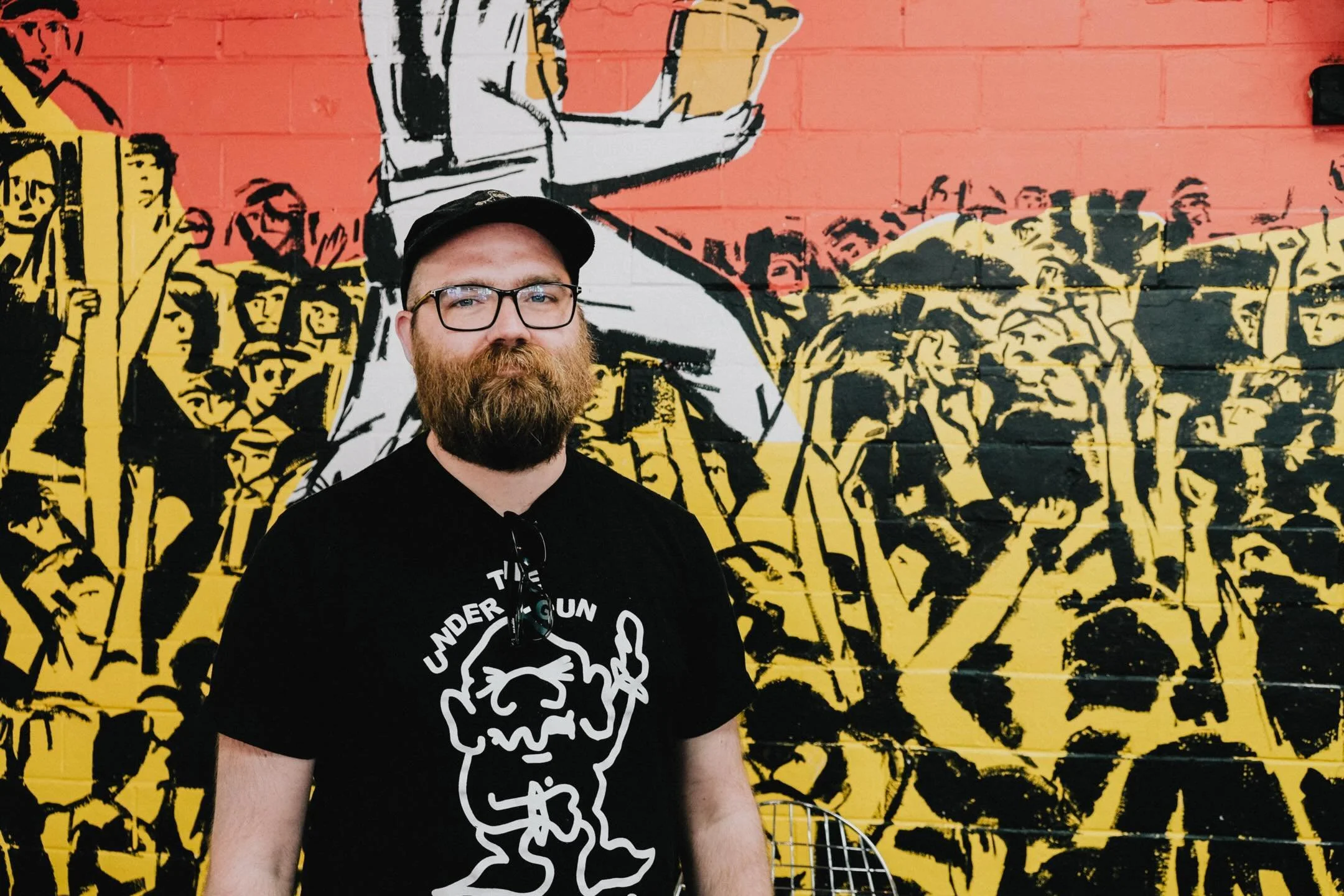
Meet your new favourite small-town punk
By Julia de Oliveira MoritzHere’s what it’s like chatting with Evan: he is almost perpetually excited, and the main way to tell if he’s smiling is through the slight movement of his moustache, unless he lets out his hearty…
Marieke Druiven
By Patou J. FoetischMarieke Druiven's work feels suspended somewhere between the familiar and the unreal. Her figures and environments carry the strange familiarity of something half-recognised, as though ordinary…
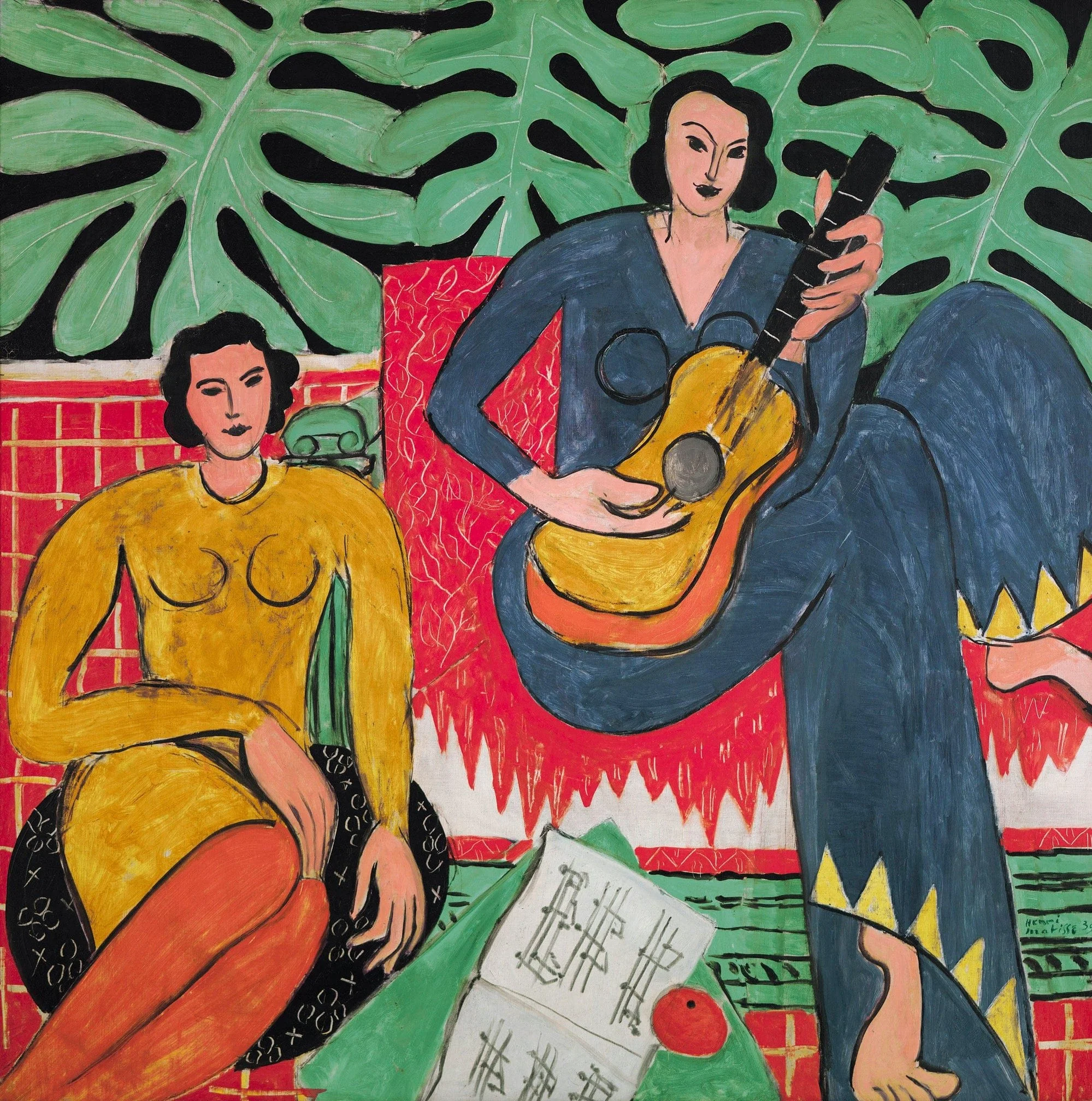
The cultural hangover following the Spotify boycotts
By Julia de Oliveira MoritzSpotify has faced criticism before. Taylor Swift, Joni Mitchell, and Thom Yorke have all removed their music from the platform in the past, only to sneak back in. It’s happening again now, seemingly…
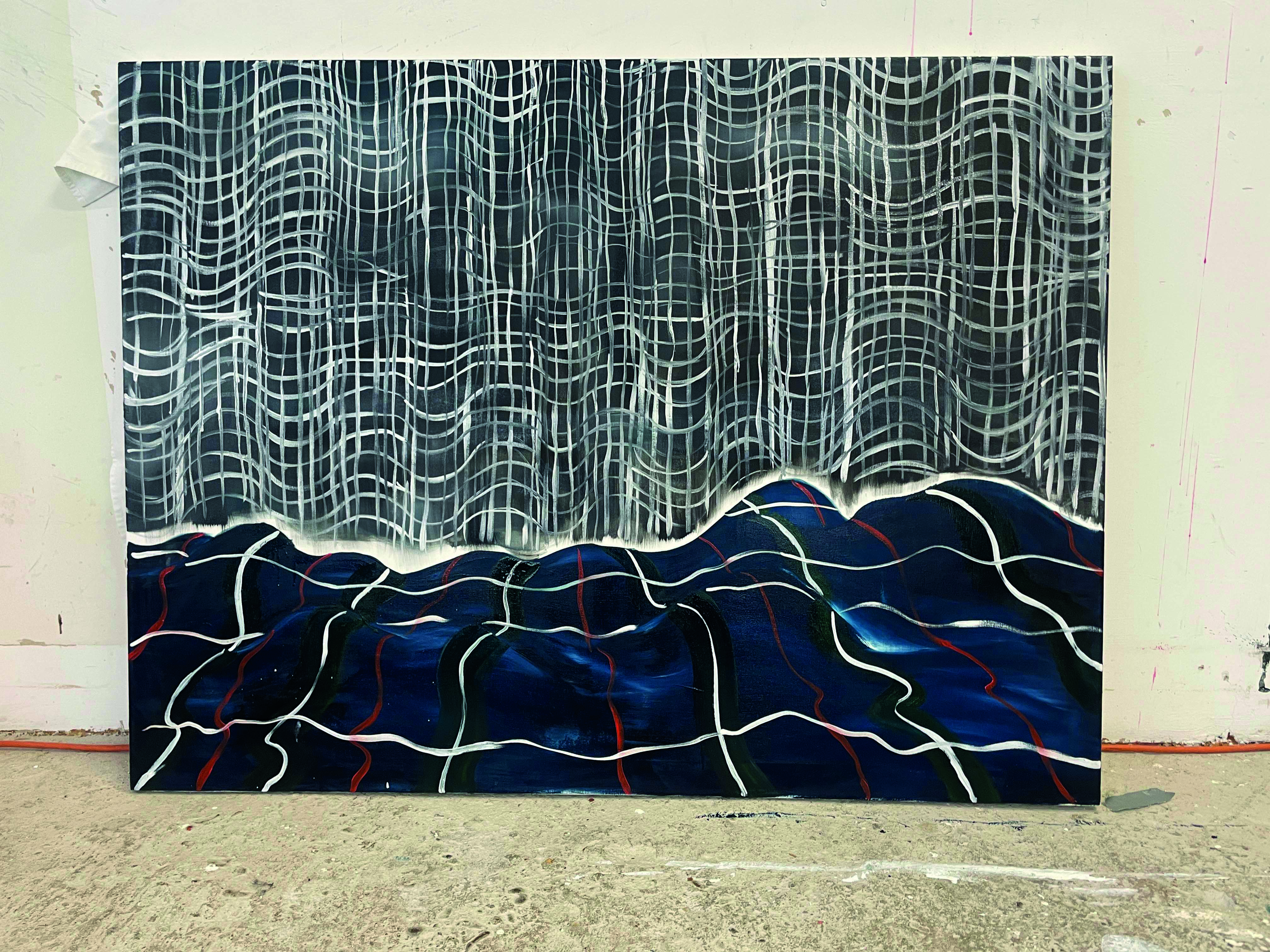
Una Jongenelis
By Patou J. FoetischNot everything moves in a straight line. Some processes unfold through hesitation and repetition that are never quite the same. What first may appear as a digression begins to fall into its own…
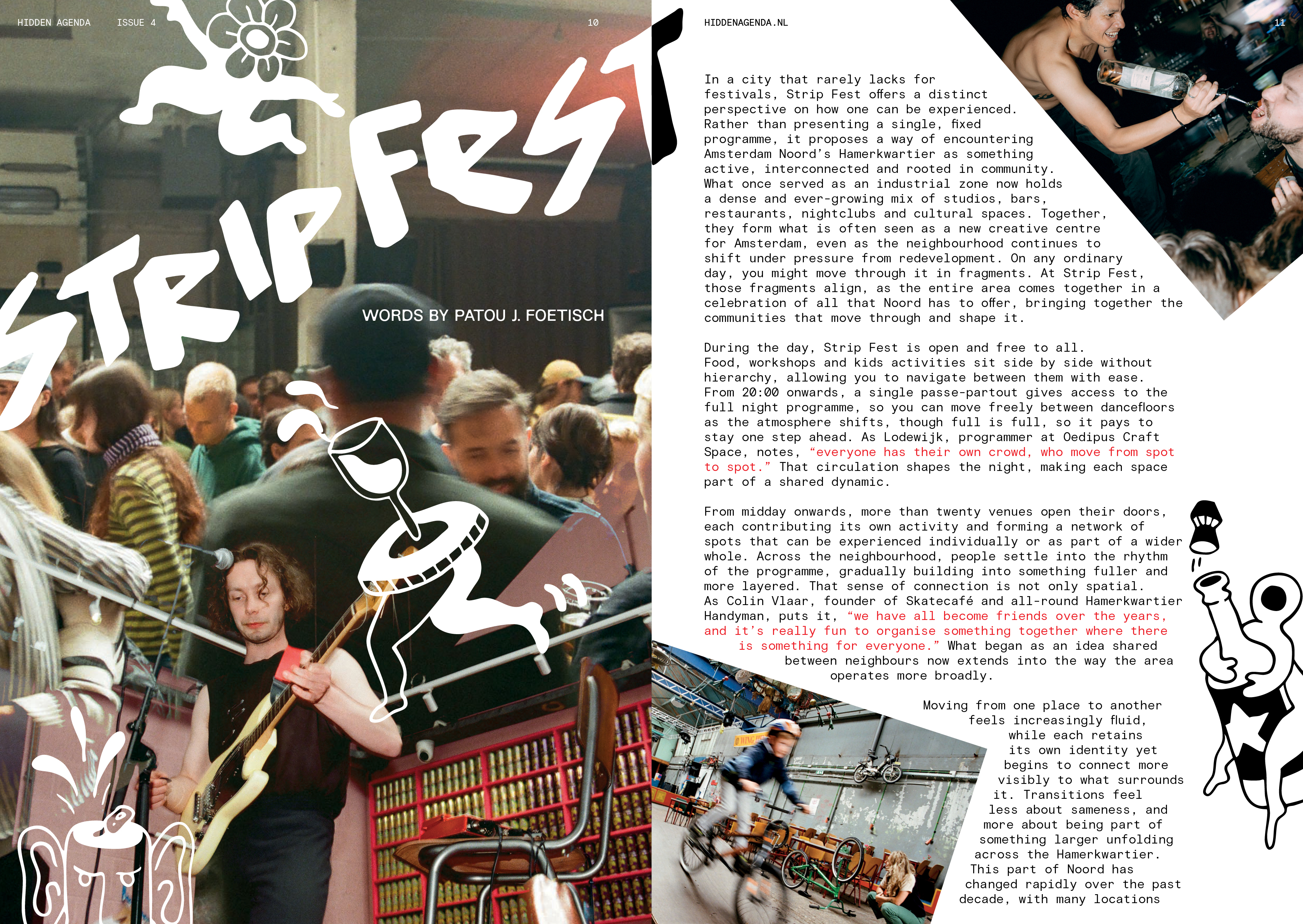
Strip Fest 2026
By Patou J. FoetischIn a city that rarely lacks for festivals, Strip Fest offers a distinct perspective on how one can be experienced. Rather than presenting a single, fixed programme, it proposes a way of encountering…
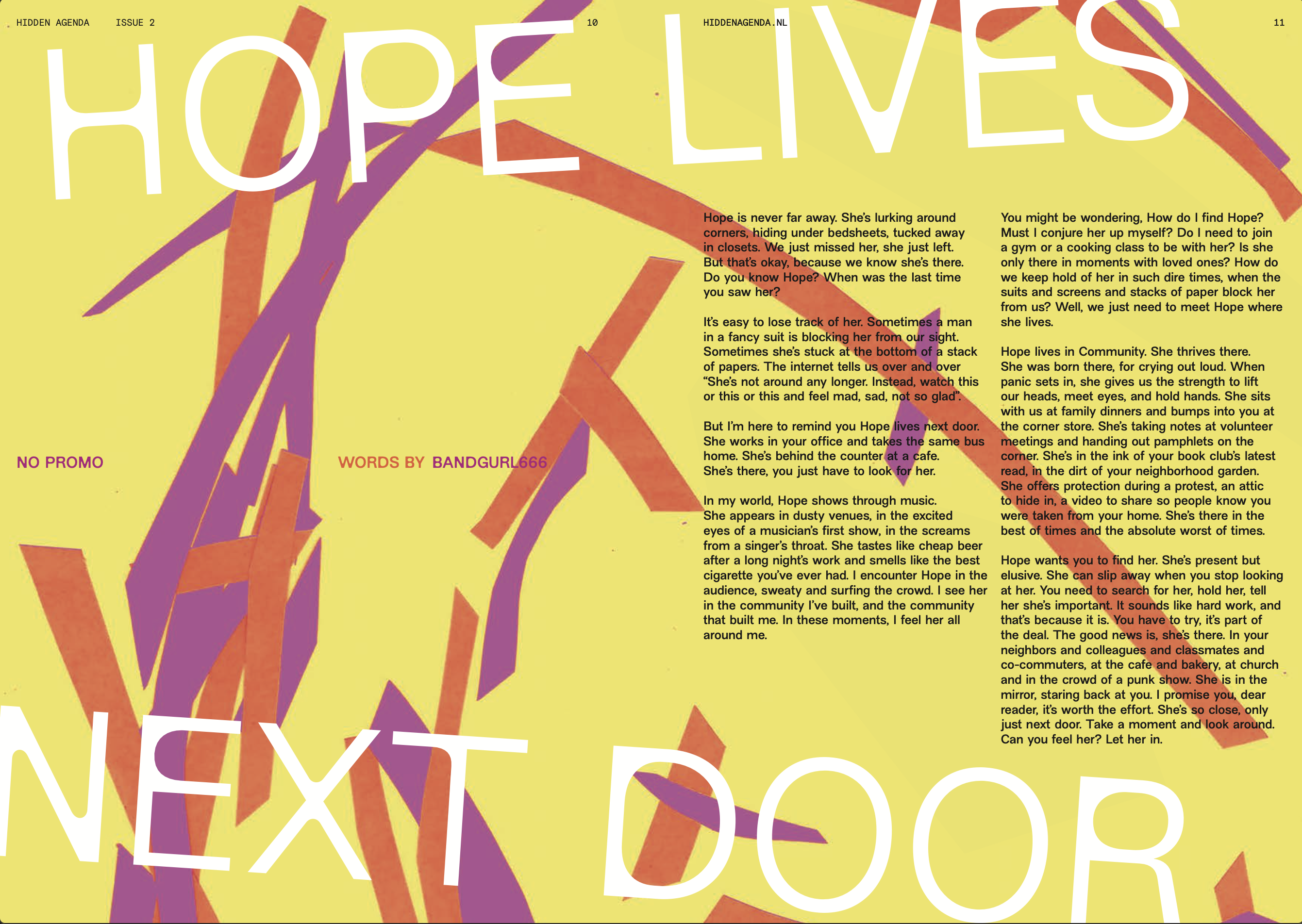
Hope Lives Next Door
By Bandgurl666Hope is never far away. She’s lurking around corners, hiding under bedsheets, tucked away in closets. We just missed her, she just left. But that’s okay, because we know she’s there. Do you know…
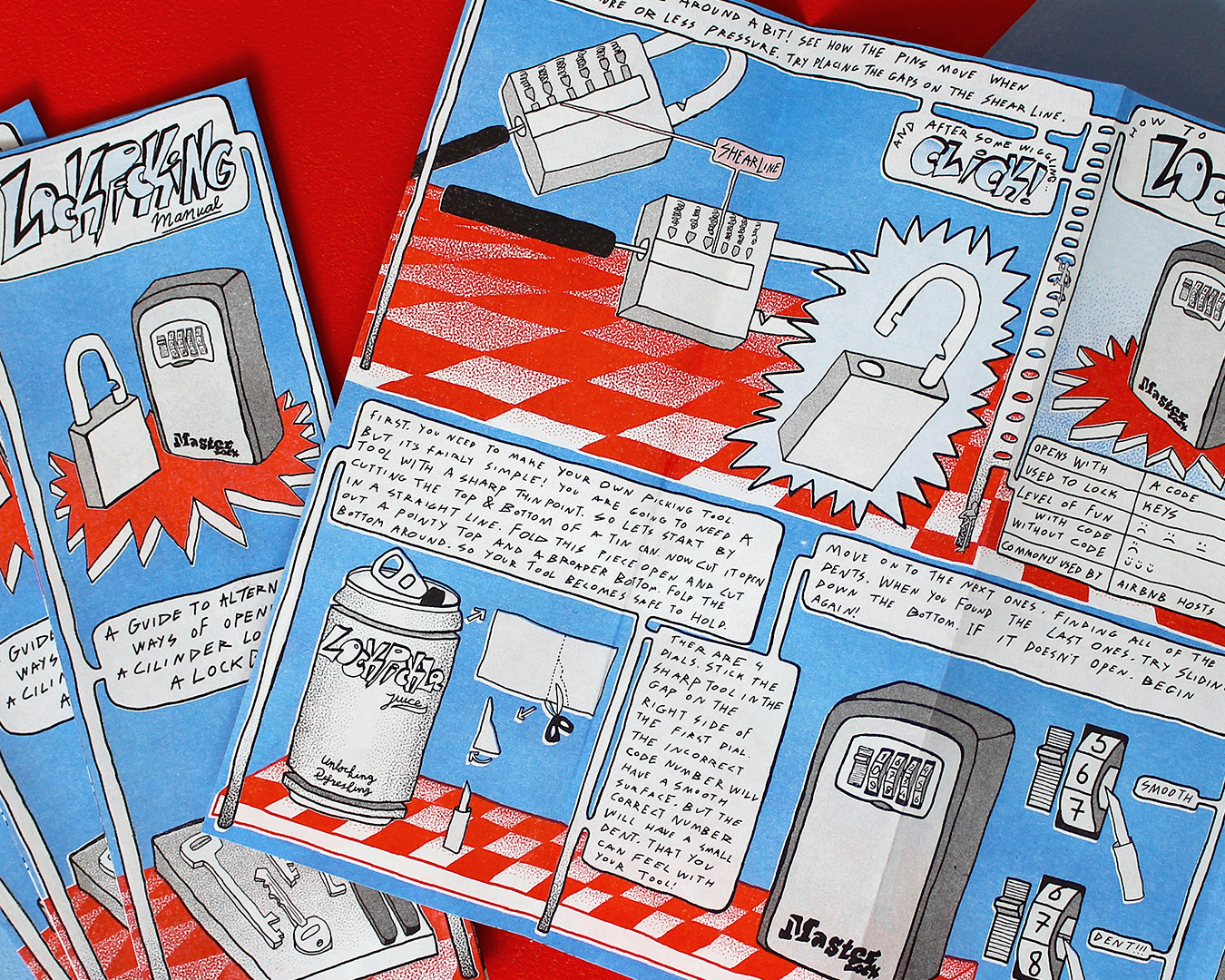
Layla Gijsen
By Patou J. FoetischOur conversation prior to this interview begins with something trivial: undercooked rice, before drifting into questions of making and momentum. Although unrelated, the anecdote hints at something…