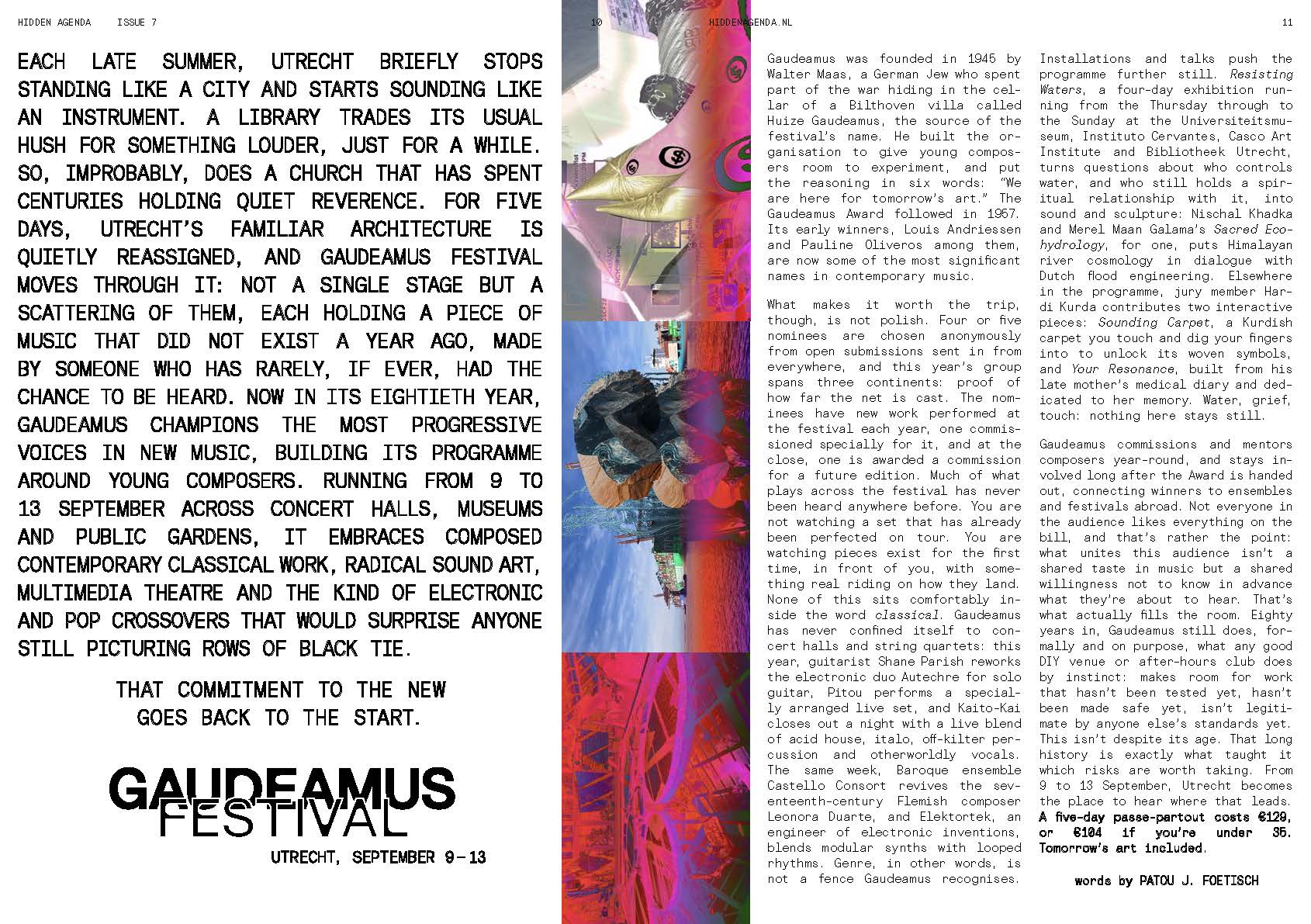
Gaudeamus Festival 2026
Each late summer, Utrecht briefly stops standing like a city and starts sounding like an instrument.
By Patou J. Foetisch // 08 SEPT 2026
Each late summer, Utrecht briefly stops standing like a city and starts sounding like an instrument. A library trades its usual hush for something louder, just for a while. So, improbably, does a church that has spent centuries holding quiet reverence. For five days, Utrecht’s familiar architecture is quietly reassigned, and Gaudeamus Festival moves through it: not a single stage but a scattering of them, each holding a piece of music that did not exist a year ago, made by someone who has rarely, if ever, had the chance to be heard. Now in its eightieth year, Gaudeamus champions the most progressive voices in new music, building its programme around young composers. Running from 9 to 13 September across concert halls, museums and public gardens, it embraces composed contemporary classical work, radical sound art, multimedia theatre and the kind of electronic and pop crossovers that would surprise anyone still picturing rows of black tie.
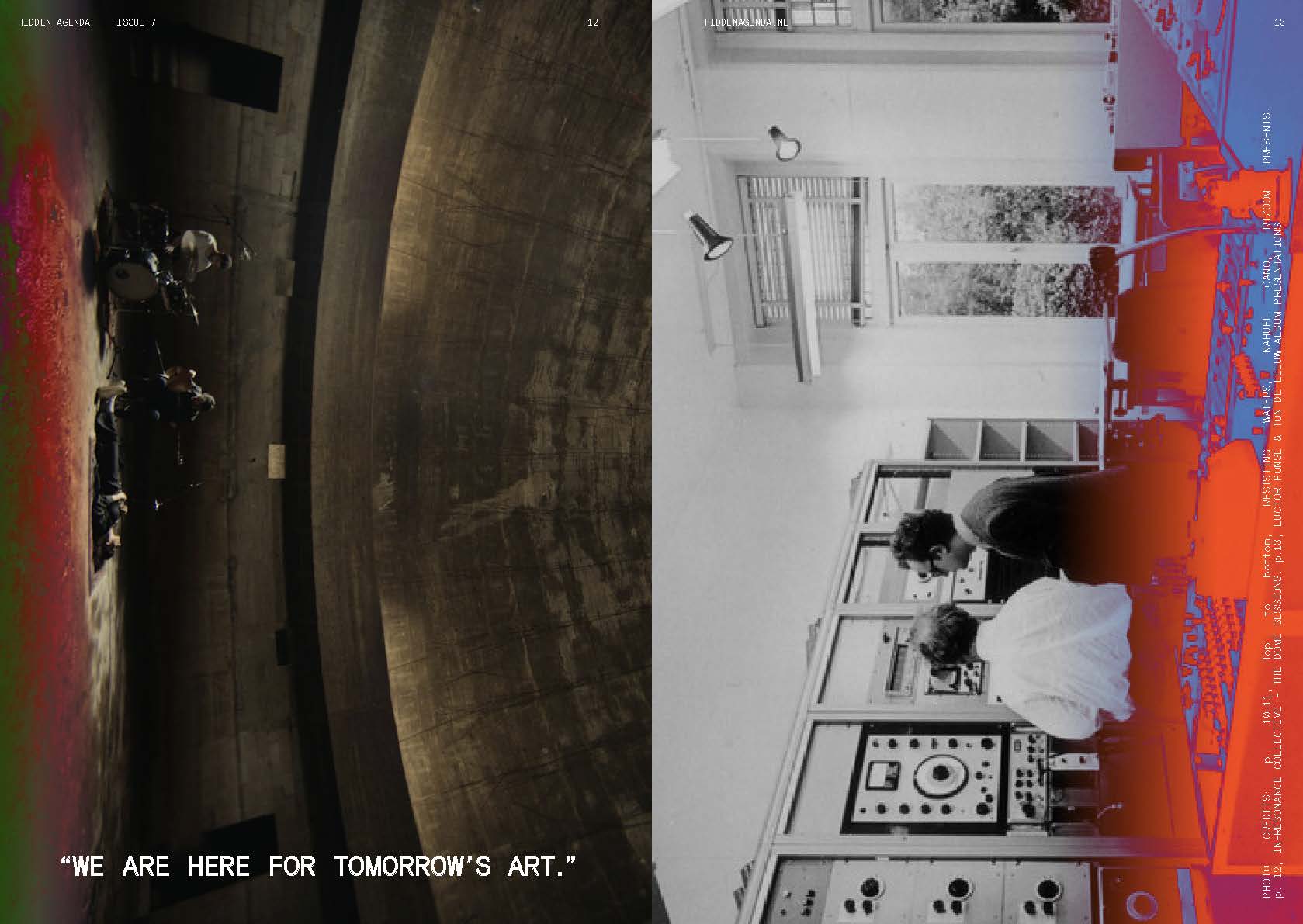
That commitment to the new goes back to the start. Gaudeamus was founded in 1945 by Walter Maas, a German Jew who spent part of the war hiding in the cellar of a Bilthoven villa called Huize Gaudeamus, the source of the festival's name. He built the organisation to give young composers room to experiment, and put the reasoning in six words: "We are here for tomorrow's art." The Gaudeamus Award followed in 1957. Its early winners, Louis Andriessen and Pauline Oliveros among them, are now some of the most significant names in contemporary music.
What makes it worth the trip, though, is not polish. Four or five nominees are chosen anonymously from open submissions sent in from everywhere, and this year's group spans three continents: proof of how far the net is cast. The nominees have new work performed at the festival each year, one commissioned specially for it, and at the close, one is awarded a commission for a future edition. Much of what plays across the festival has never been heard anywhere before. You are not watching a set that has already been perfected on tour. You are watching pieces exist for the first time, in front of you, with something real riding on how they land.
None of this sits comfortably inside the word classical. Gaudeamus has never confined itself to concert halls and string quartets: this year, guitarist Shane Parish reworks the electronic duo Autechre for solo guitar, Pitou performs a specially arranged live set, and Kaito-Kai closes out a night with a live blend of acid house, italo, off-kilter percussion and otherworldly vocals. The same week, Baroque ensemble Castello Consort revives the seventeenth-century Flemish composer Leonora Duarte, and Elektortek, an engineer of electronic inventions, blends modular synths with looped rhythms. Genre, in other words, is not a fence Gaudeamus recognises.
Installations and talks push the programme further still. Resisting Waters, a four-day exhibition running from the Thursday through to the Sunday at the Universiteitsmuseum, Instituto Cervantes, Casco Art Institute and Bibliotheek Utrecht, turns questions about who controls water, and who still holds a spiritual relationship with it, into sound and sculpture: Nischal Khadka and Merel Maan Galama's Sacred Ecohydrology, for one, puts Himalayan river cosmology in dialogue with Dutch flood engineering. Elsewhere in the programme, jury member Hardi Kurda contributes two interactive pieces: Sounding Carpet, a Kurdish carpet you touch and dig your fingers into to unlock its woven symbols, and Your Resonance, built from his late mother's medical diary and dedicated to her memory. Water, grief, touch: nothing here stays still.
Gaudeamus commissions and mentors composers year-round, and stays involved long after the Award is handed out, connecting winners to ensembles and festivals abroad. Not everyone in the audience likes everything on the bill, and that's rather the point: what unites this audience isn't a shared taste in music but a shared willingness not to know in advance what they're about to hear. That's what actually fills the room. Eighty years in, Gaudeamus still does, formally and on purpose, what any good DIY venue or after-hours club does by instinct: makes room for work that hasn't been tested yet, hasn't been made safe yet, isn't legitimate by anyone else's standards yet. This isn't despite its age. That long history is exactly what taught it which risks are worth taking. From 9 to 13 September, Utrecht becomes the place to hear where that leads. A five-day passe-partout costs €129, or €104 if you're under 35. Tomorrow's art included.
More Editorials
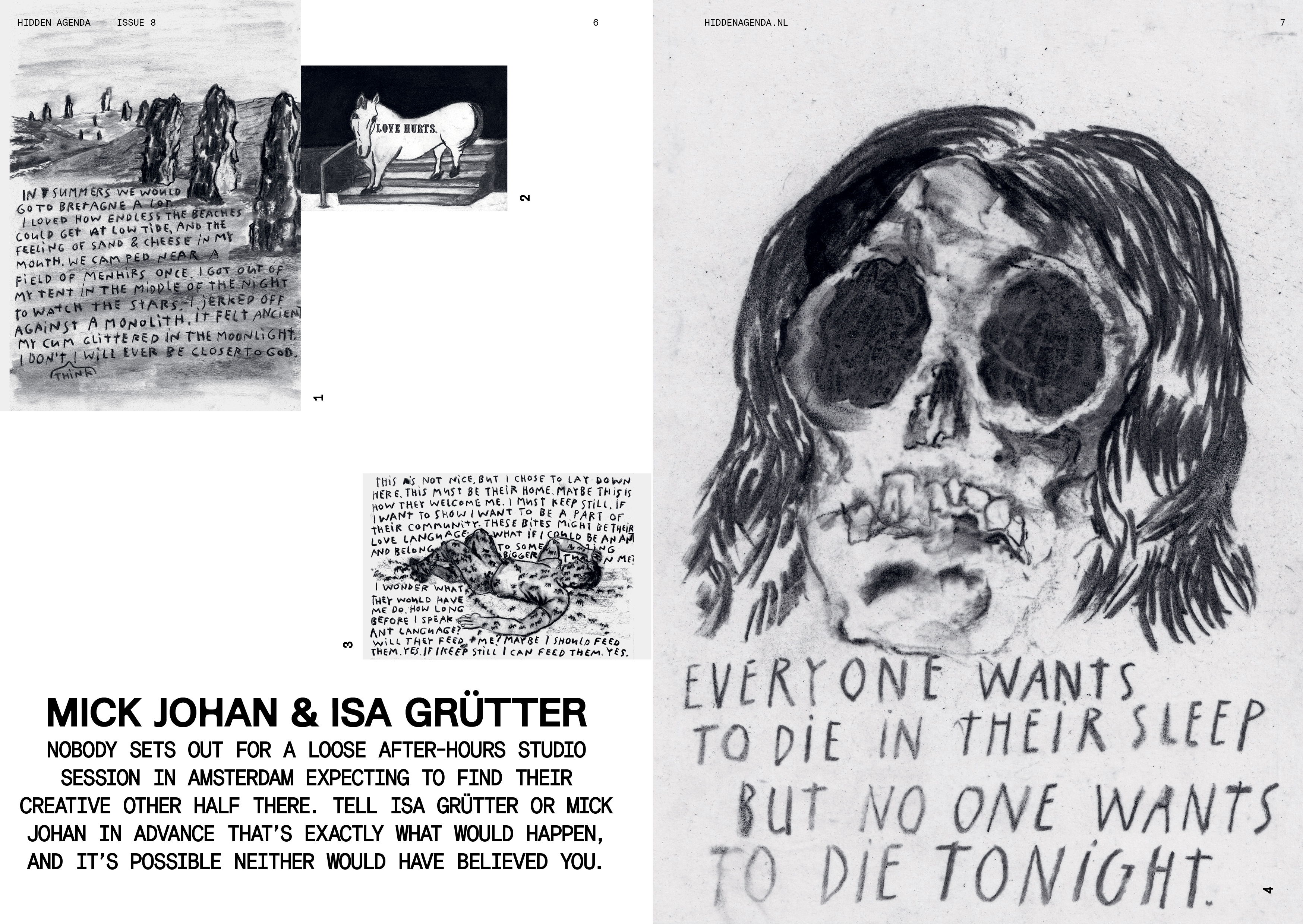
Mick Johan & Isa Grütter
By Patou J. FoetischNobody sets out for a loose after-hours studio session in Amsterdam expecting to find their creative other half there. Tell Isa Grütter or Mick Johan in advance that’s exactly what would happen, and…
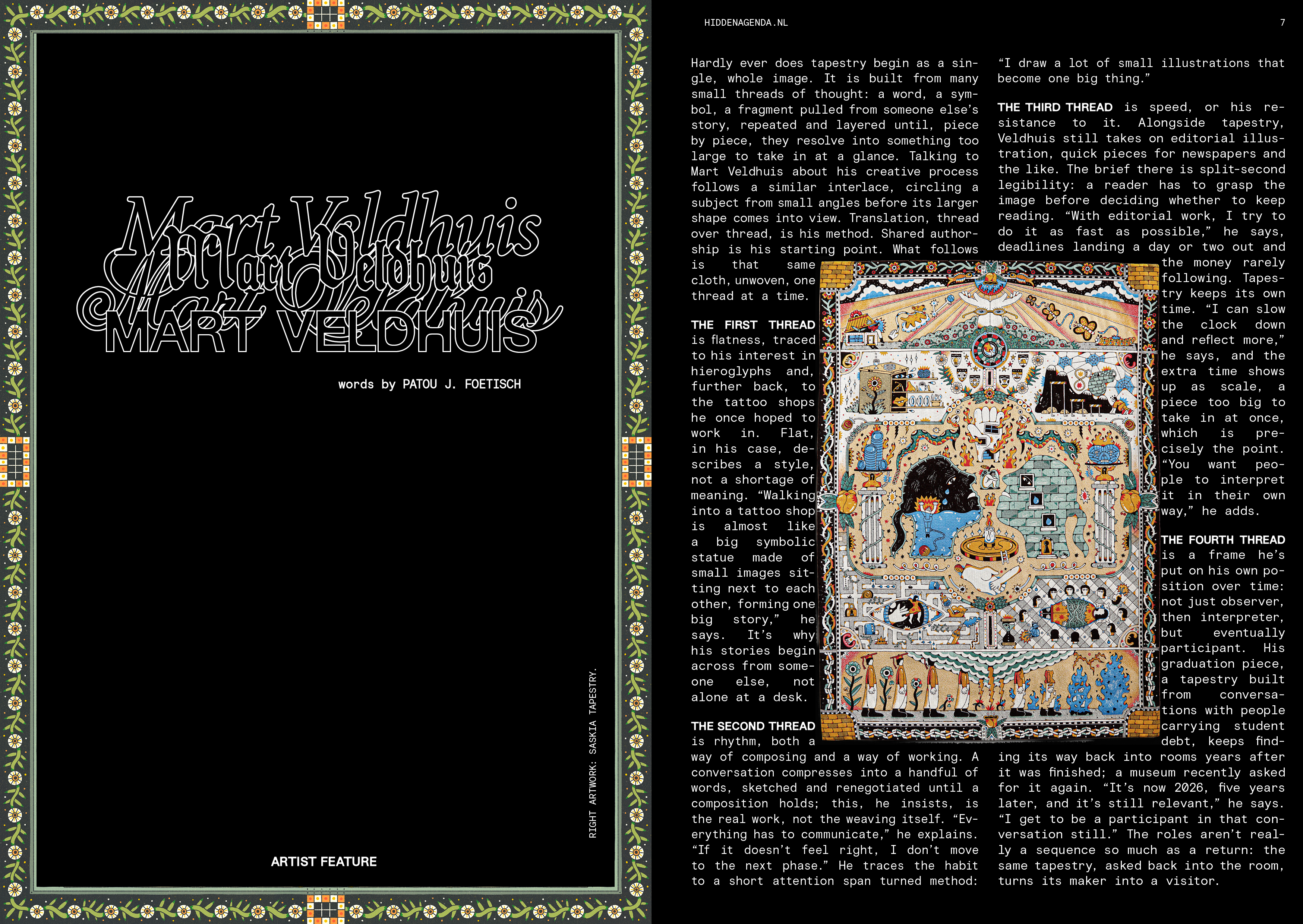
Mart Veldhuis
By Patou J. FoetischHardly ever does tapestry begin as a single, whole image. It is built from many small threads of thought: a word, a symbol, a fragment pulled from someone else's story, repeated and layered until,…
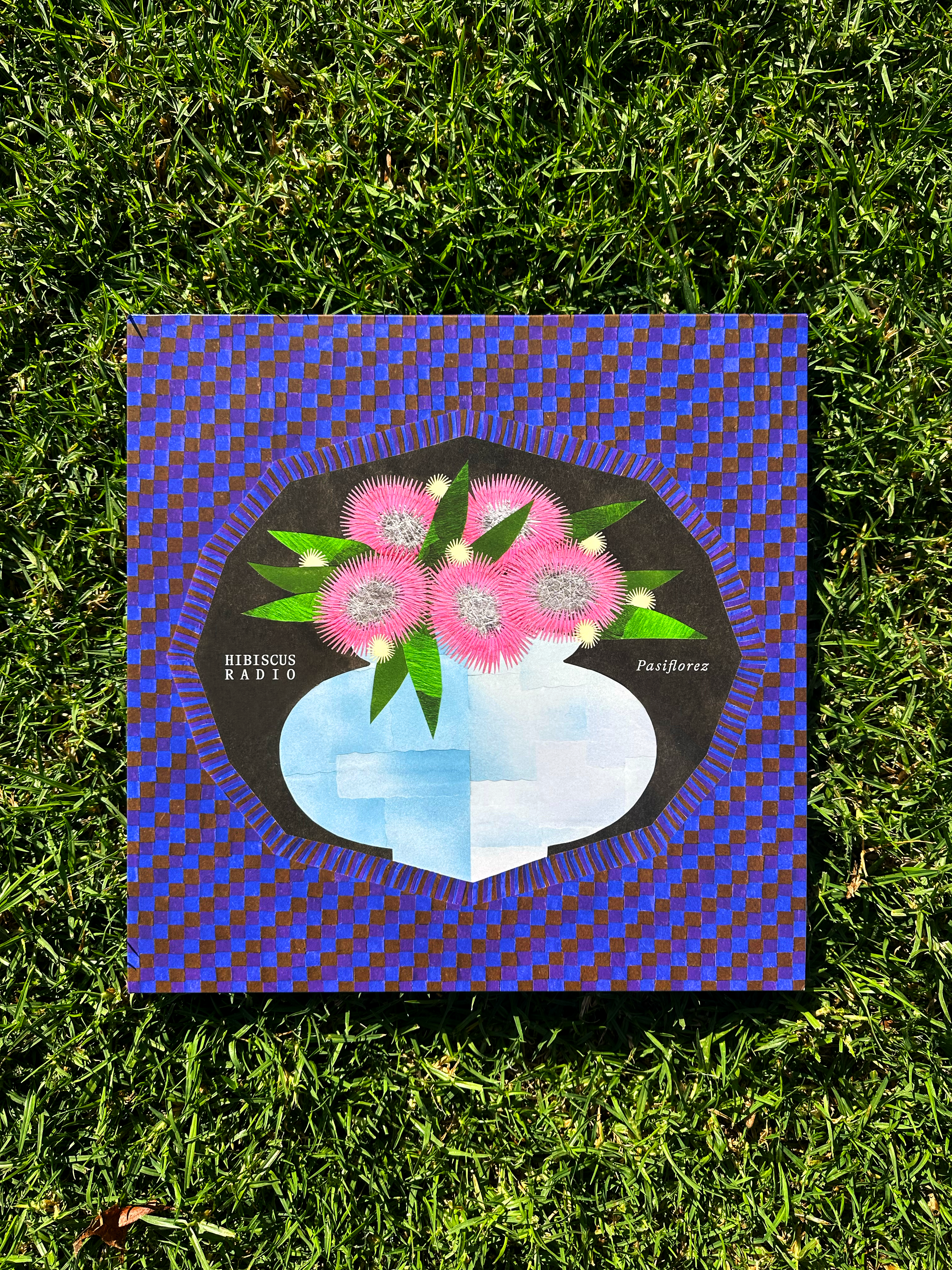
Juna Horstmans
By Patou J. FoetischJuna Horstmans' work often feels suspended between two recurring forms: the window and the flower. One frames perception, offering a partial view into something beyond itself; the other unfolds…
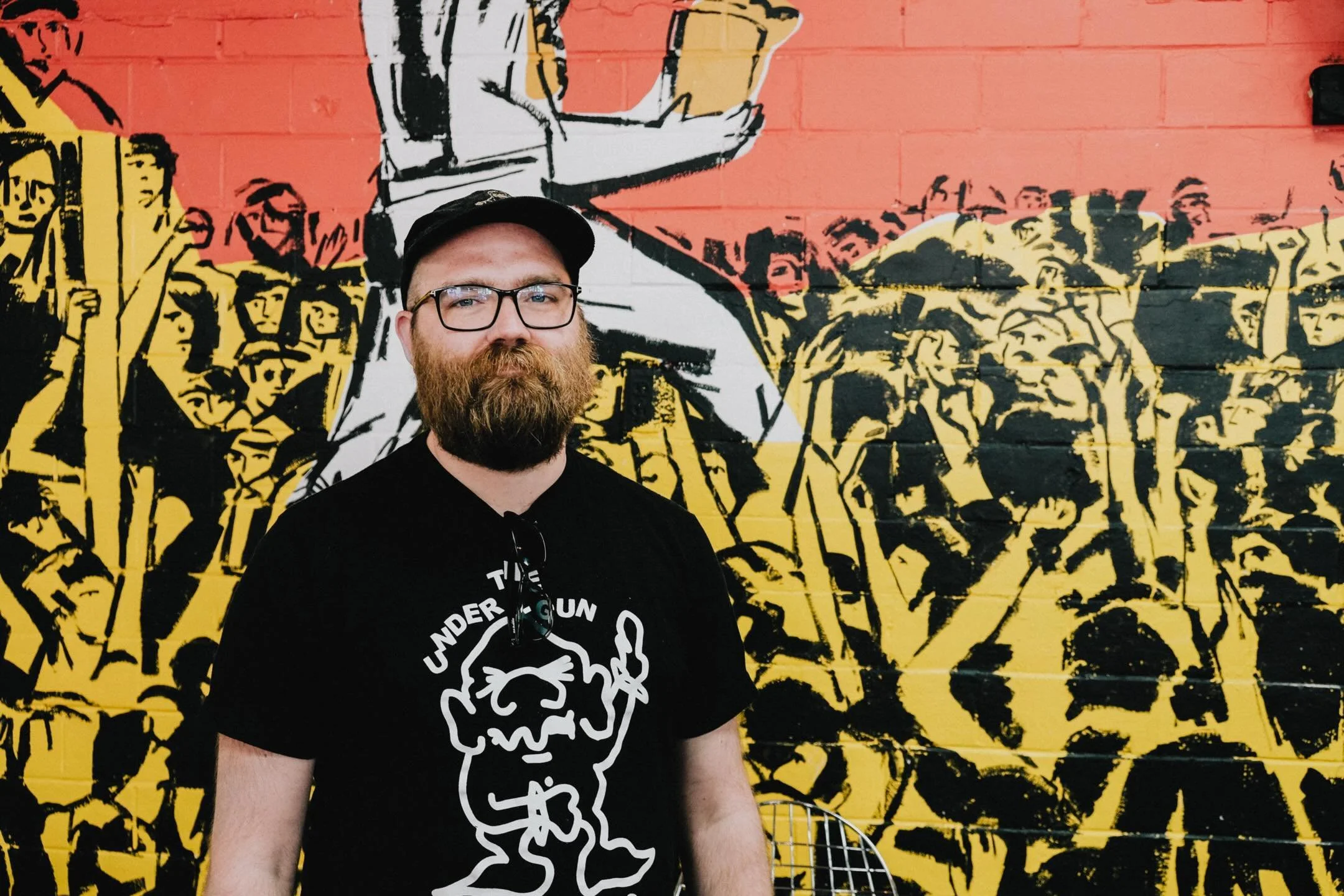
Meet your new favourite small-town punk
By Julia de Oliveira MoritzHere’s what it’s like chatting with Evan: he is almost perpetually excited, and the main way to tell if he’s smiling is through the slight movement of his moustache, unless he lets out his hearty…
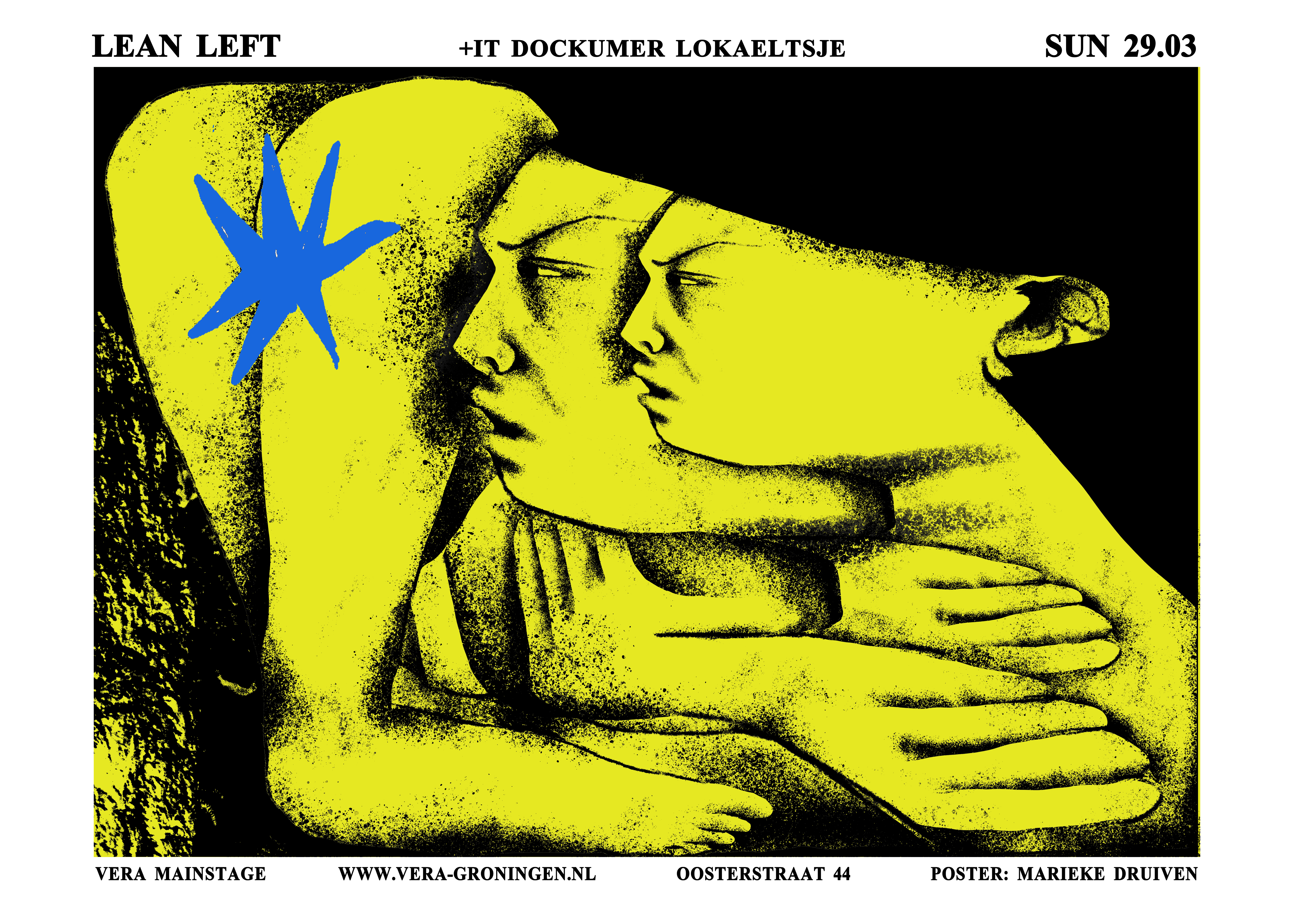
Marieke Druiven
By Patou J. FoetischMarieke Druiven's work feels suspended somewhere between the familiar and the unreal. Her figures and environments carry the strange familiarity of something half-recognised, as though ordinary…
The cultural hangover following the Spotify boycotts
By Julia de Oliveira MoritzSpotify has faced criticism before. Taylor Swift, Joni Mitchell, and Thom Yorke have all removed their music from the platform in the past, only to sneak back in. It’s happening again now, seemingly…
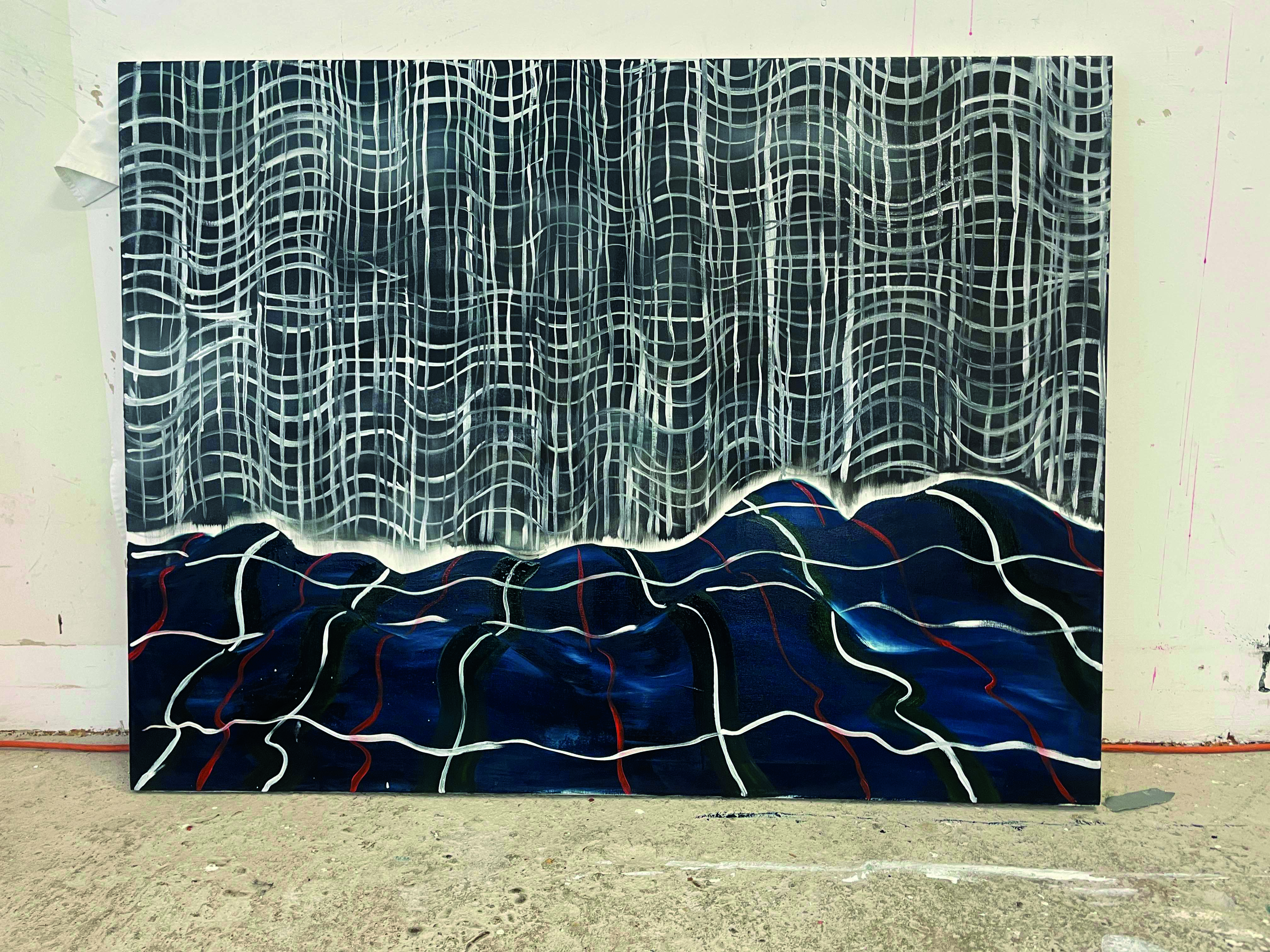
Una Jongenelis
By Patou J. FoetischNot everything moves in a straight line. Some processes unfold through hesitation and repetition that are never quite the same. What first may appear as a digression begins to fall into its own…
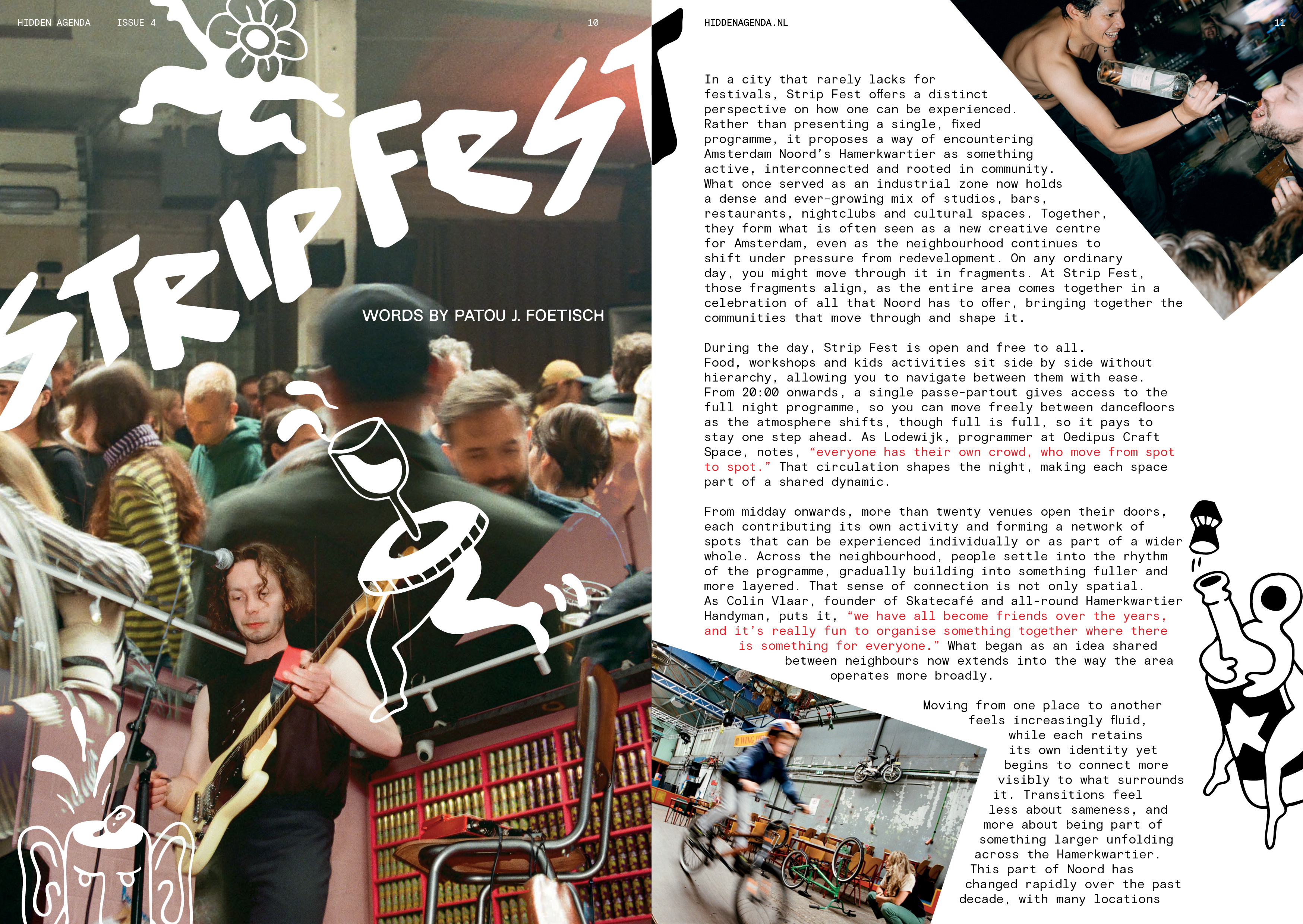
Strip Fest 2026
By Patou J. FoetischIn a city that rarely lacks for festivals, Strip Fest offers a distinct perspective on how one can be experienced. Rather than presenting a single, fixed programme, it proposes a way of encountering…
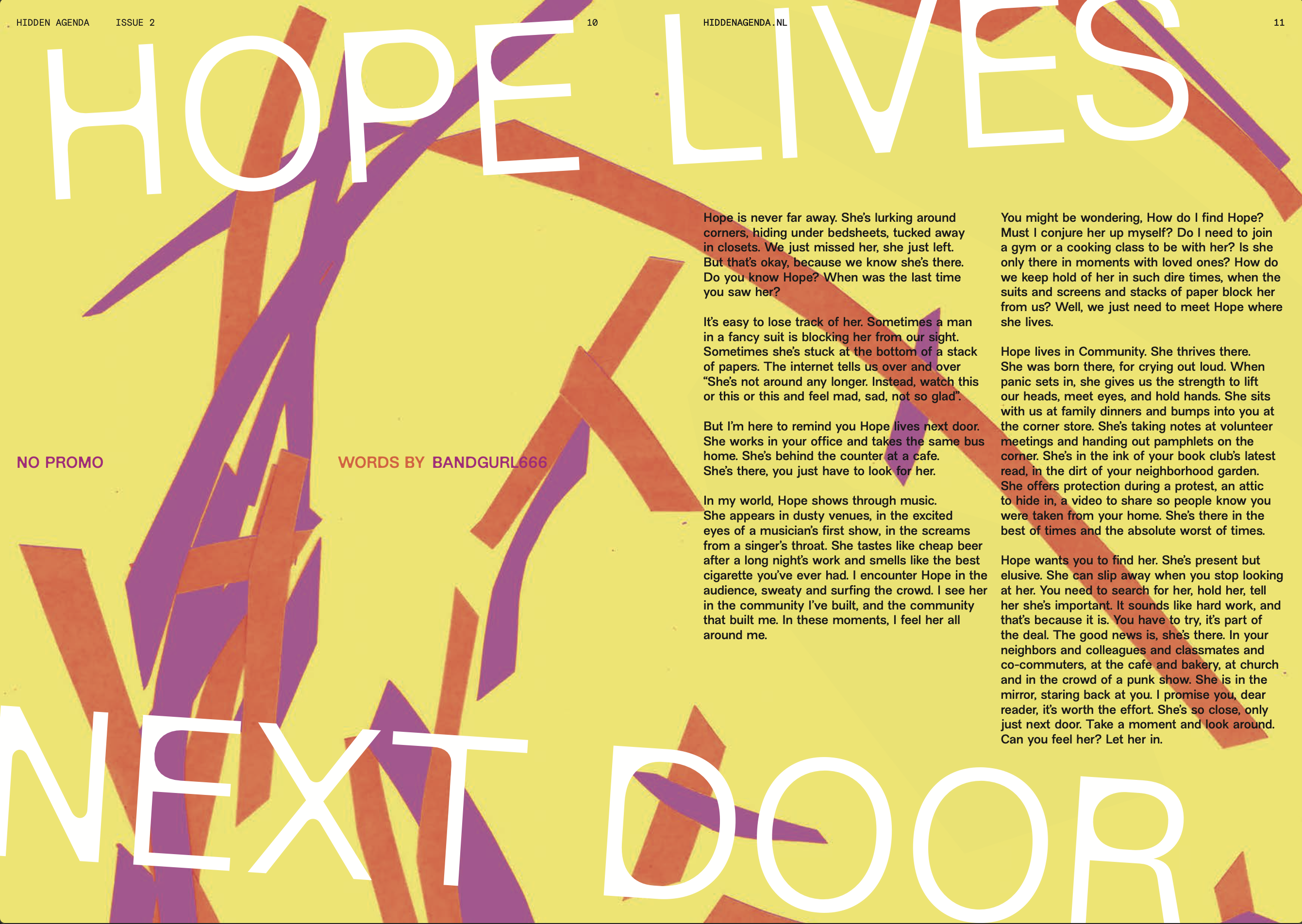
Hope Lives Next Door
By Bandgurl666Hope is never far away. She’s lurking around corners, hiding under bedsheets, tucked away in closets. We just missed her, she just left. But that’s okay, because we know she’s there. Do you know…
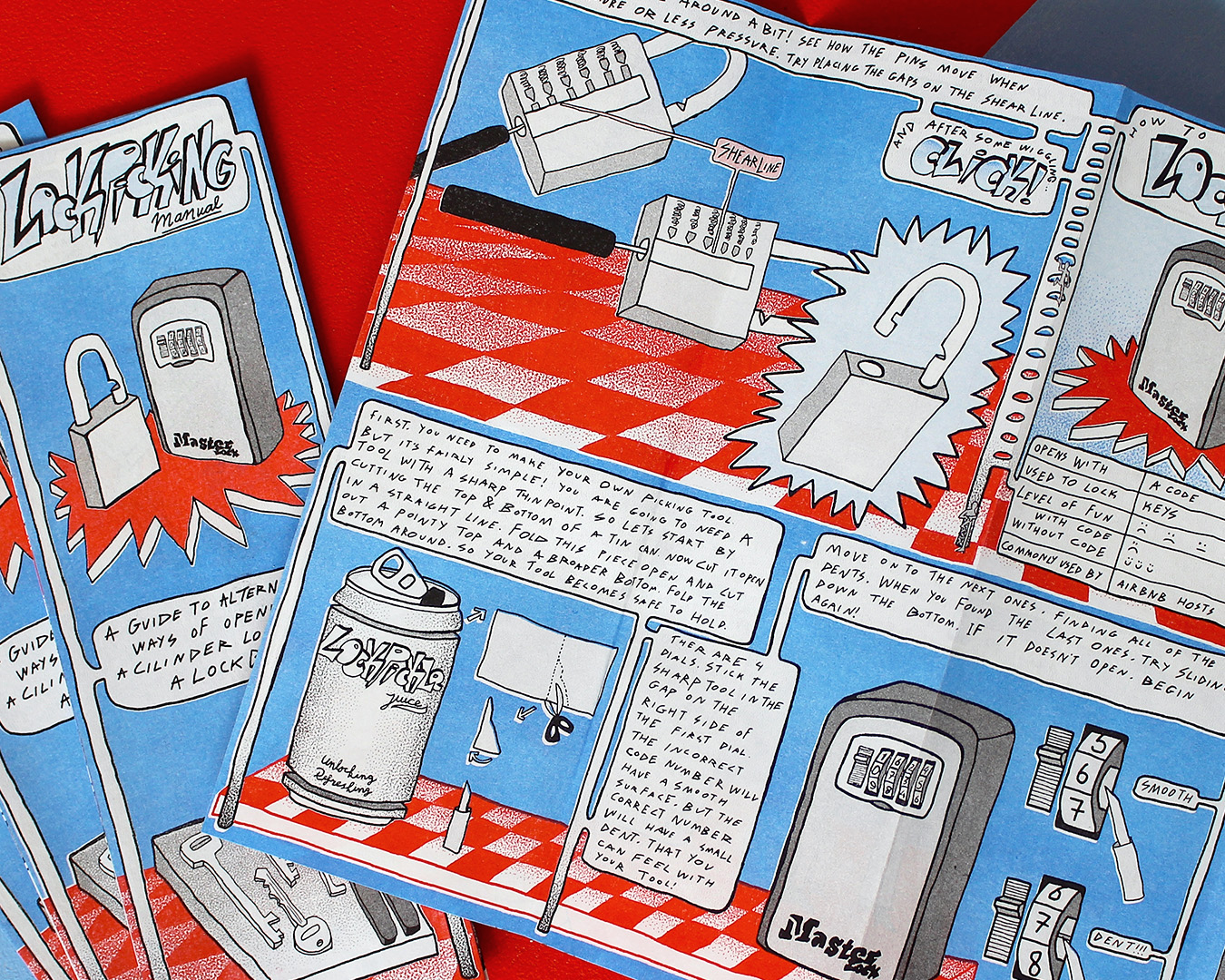
Layla Gijsen
By Patou J. FoetischOur conversation prior to this interview begins with something trivial: undercooked rice, before drifting into questions of making and momentum. Although unrelated, the anecdote hints at something…