Layla Gijsen
Hidden Agenda Monthly: Edition #3 - April 2026
By Patou J. Foetisch // 21 JUL 2026
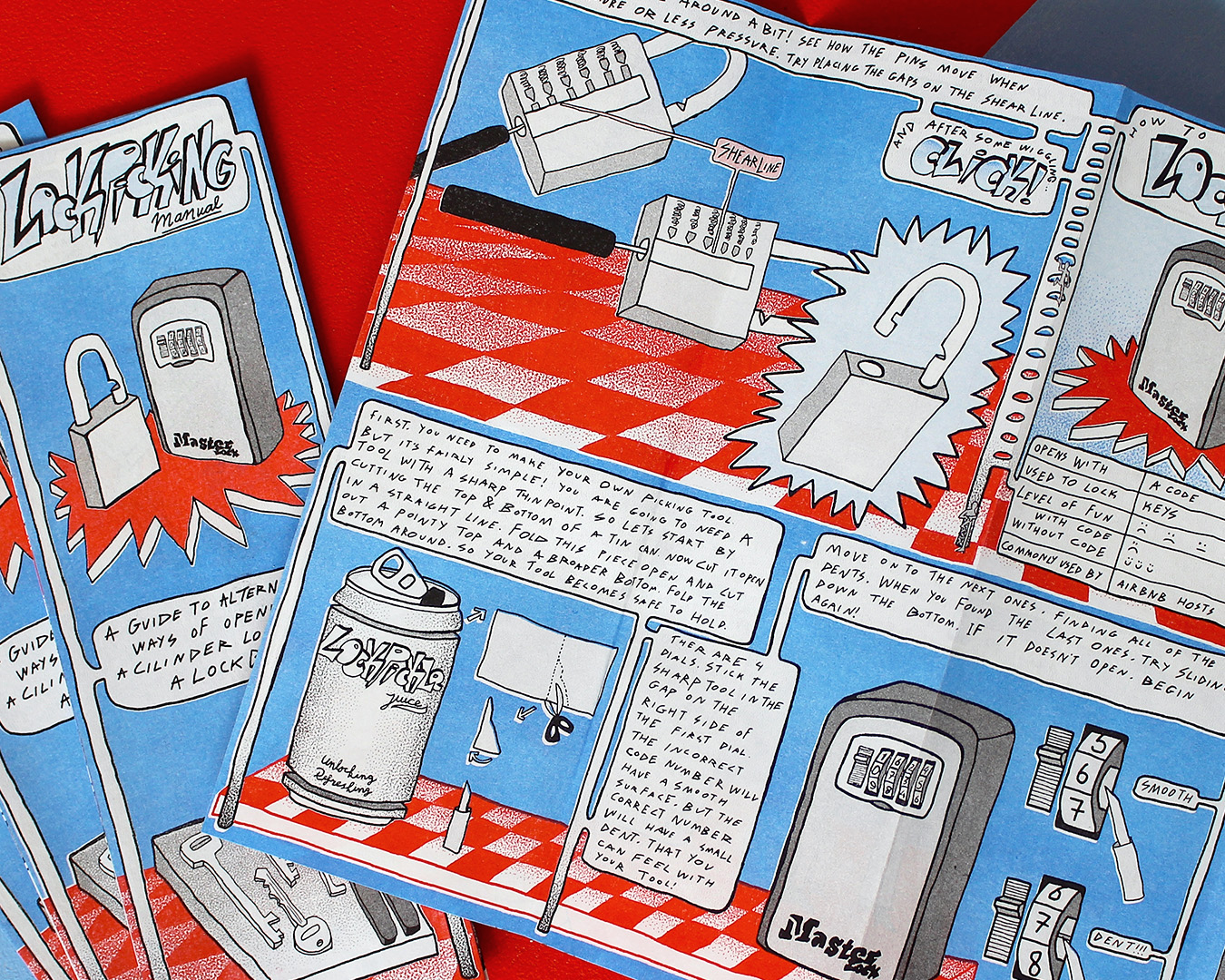
Image: Alternative Openings
Our conversation prior to this interview begins with something trivial: undercooked rice, before drifting into questions of making and momentum. Although unrelated, the anecdote hints at something central to Layla Gijsen’s approach: simplicity in process does not mean cutting corners. Gijsen, who performs under DJ Sjaak, moves between reflection and immediacy: printed matter looks back, preserving fragments of the scenes she inhabits, while DJ sets unfold live, constructed in real time and shaping spaces where people gather in the present, pointing toward what might come next. Together, they form a dialogue between time and place, with boundaries that remain deliberately porous.
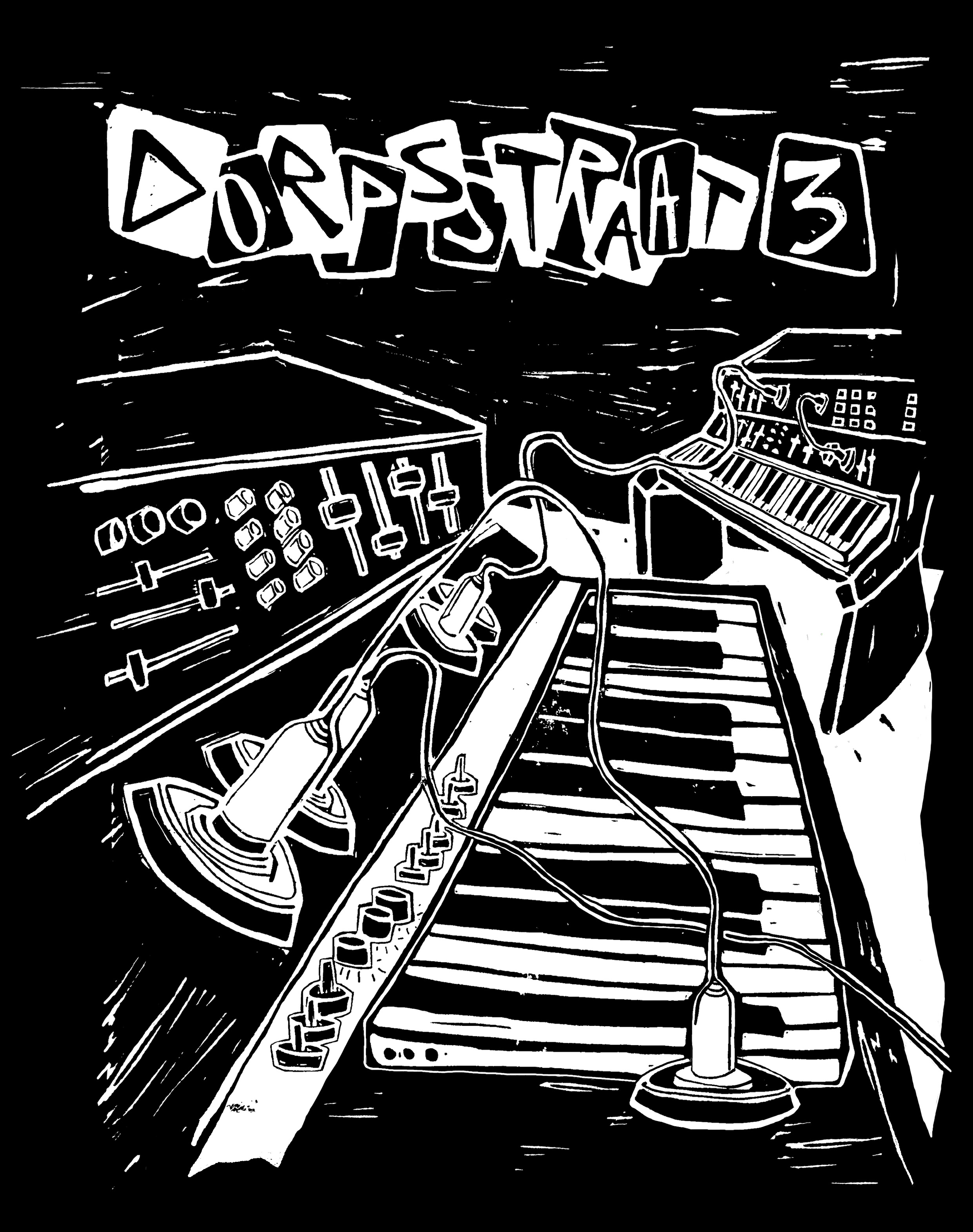
Merch for Dorpstraat3
The number of projects she moves between might suggest a strict routine, but the impulse connecting them is less about medium and more about behaviour. “I think I’m quite an enthusiastic person, and I feel that having this luxury has allowed my creative endeavours to thrive.” But enthusiasm, she admits, has a shadow. “I’m also a perfectionist. Sometimes it’s hard to take a moment and enjoy it,” she says. “I’m trying to get better at that.”
When she first began DJing, that perfectionism was intensified during her early years behind the decks. As a woman DJ, her mistakes often felt more visible and were scrutinised more closely. “People would ask my boyfriend standing next to me for the track ID, or in-house technicians would assume I didn’t know how the gear worked,” she recalls. The experience made her hyper-aware of every transition, limiting her willingness to experiment at first. Over time, however, the same dynamics around the booth became a source of confidence. Learning to command the room with loud, high-energy sets eventually fed back into her visual work as well, transforming the very environment that had once made her self-conscious.
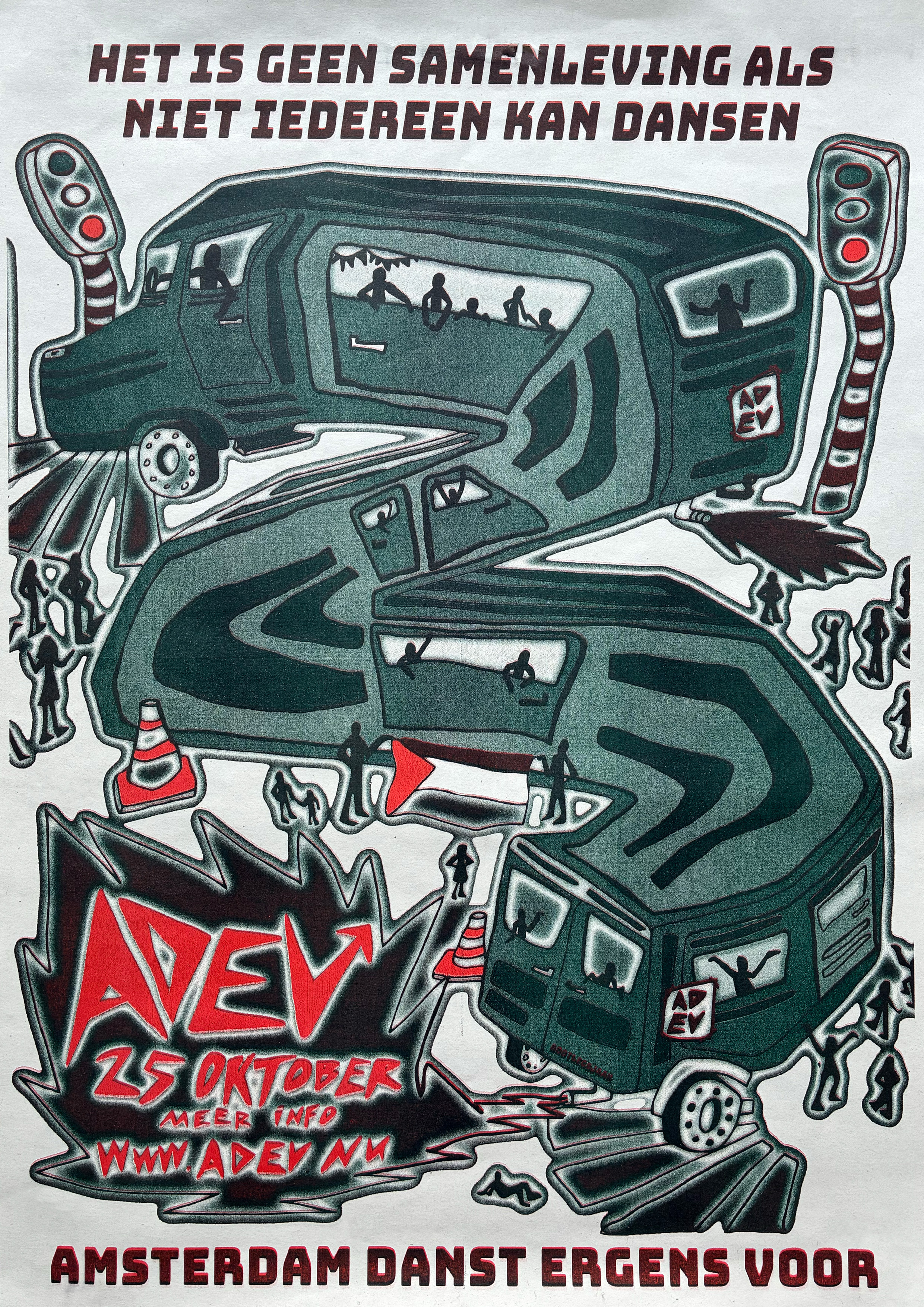
ADEV 2025
If enthusiasm is the engine, community is the direction it moves in. As an Amsterdam native who has lived there her whole life, this has been a way of grounding her practice. Scenes don’t emerge spontaneously; they are assembled through countless small gestures. That mindset extends beyond her personal practice into the way she helps build platforms for others, organising events and initiatives that support the communities she moves within. That sense of proximity extends across the different media she works with. For instance, Gijsen prefers when the DJ booth disappears as a hierarchy. She prefers playing at the same level as the audience, avoiding what she jokingly calls the “church thing” where everyone faces the DJ on stage. The goal is not for people to dance for her but to dance with each other. This too reflects how she thinks about visual art. Posters placed in the street operate within shared public space without demanding a single viewpoint. Both practical and symbolic, they circulate through the city as quiet markers of the settings that produce them.
This openness has been visible in her project Alternative Openings, which invites visitors to learn lock-picking through skill sharing, reframing everyday locks and property as fragile social constructs rather than fixed systems. “I think the shift in how I apply myself to a project within its respective context is that people interact with it differently. A poster is something you pass by. It communicates quickly,” Gijsen explains. “But an installation invites people to move around it, to look at it from different angles, sometimes to touch it. So the work becomes more spatial, but also more social in a way. Even when I’m working in three dimensions, I’m often thinking about surfaces and shapes in a way that comes from printmaking that you don’t get from digital design. There is resistance in the material, and that resistance is something I like.”
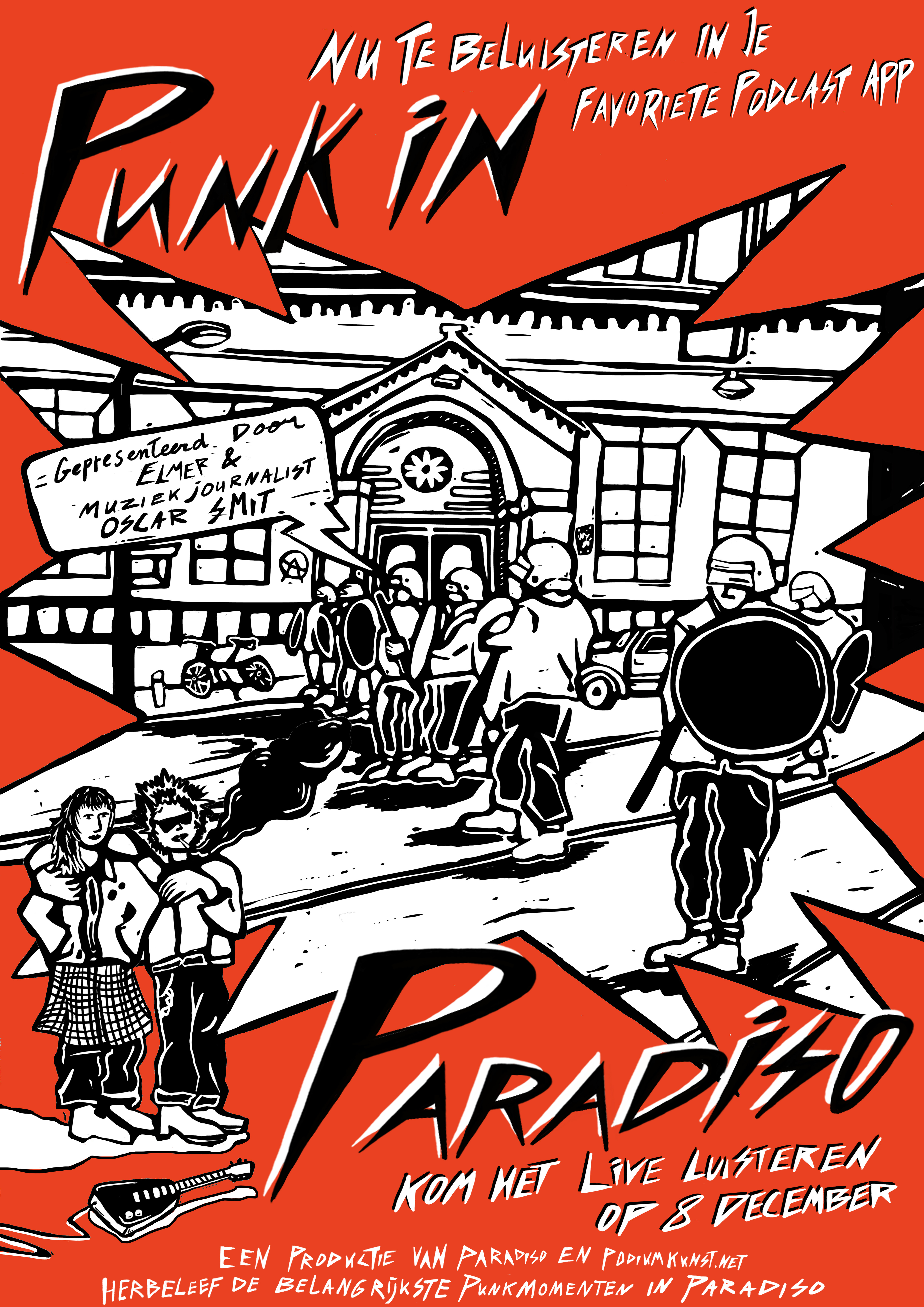
Punk In Paradiso
Gijsen’s relationship to time surfaces most clearly in her publishing work, where preservation becomes a central concern. As seen in Permanence Through Print, a zine documenting squatted locations before they disappear, Gijsen’s contribution combines interviews, historical reflection and collage to record places that exist in constant tension between occupation and eviction, while giving residents the opportunity to tell their own stories. “A lot of the places where our culture begins come from squatted spaces,” she notes. “When squatting disappears, those places disappear too. So archiving them becomes important, because people outside these activist circles may not realise what these places add to the history and present of the city.”
Where participation matters more than spectacle, keeping a finger on the pulse of the community is key to understanding what spaces need and responding accordingly, regardless of the moment it belongs to. A rhythm begins to emerge. Ideas circulate, pause and return in new forms. This ethos, alongside Gijsen’s practice and enthusiasm, mirrors the structure of her DJ sets. “Sharing that energy within my community is very important,” she says. “Ultimately, the aim is not simply to produce artistic content but to create environments where it can move fluidly between people.”
More Editorials
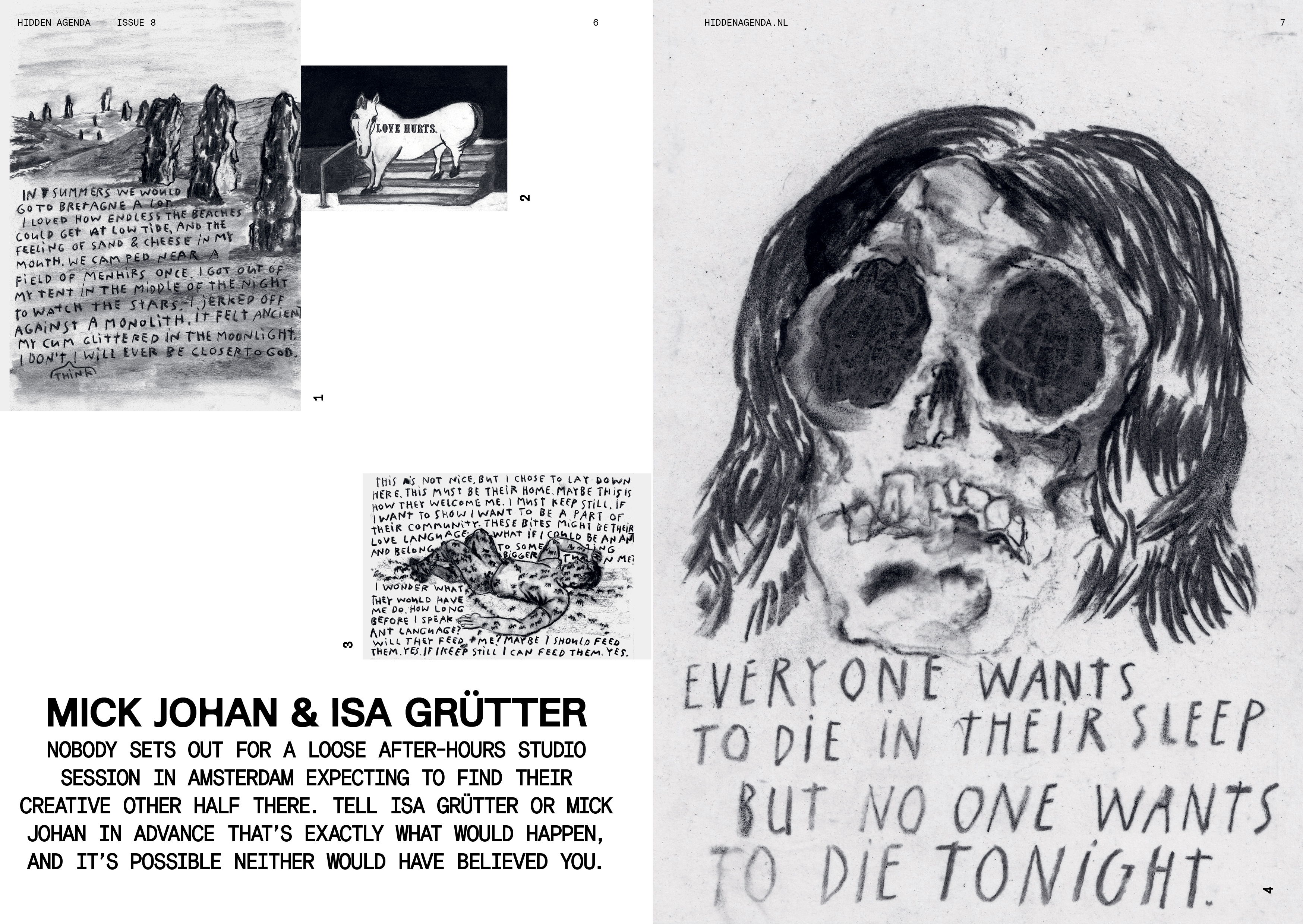
Mick Johan & Isa Grütter
By Patou J. FoetischNobody sets out for a loose after-hours studio session in Amsterdam expecting to find their creative other half there. Tell Isa Grütter or Mick Johan in advance that’s exactly what would happen, and…
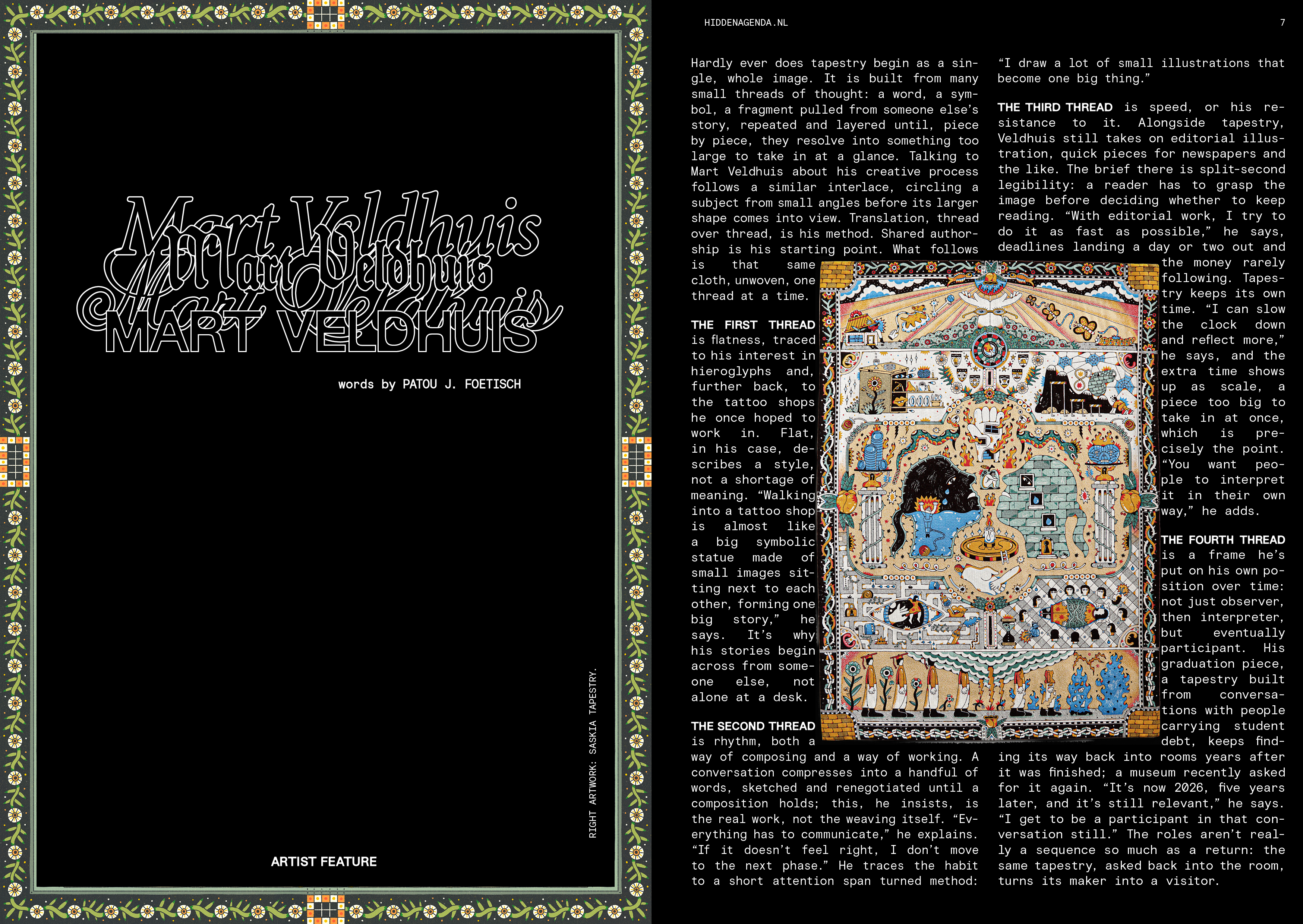
Mart Veldhuis
By Patou J. FoetischHardly ever does tapestry begin as a single, whole image. It is built from many small threads of thought: a word, a symbol, a fragment pulled from someone else's story, repeated and layered until,…
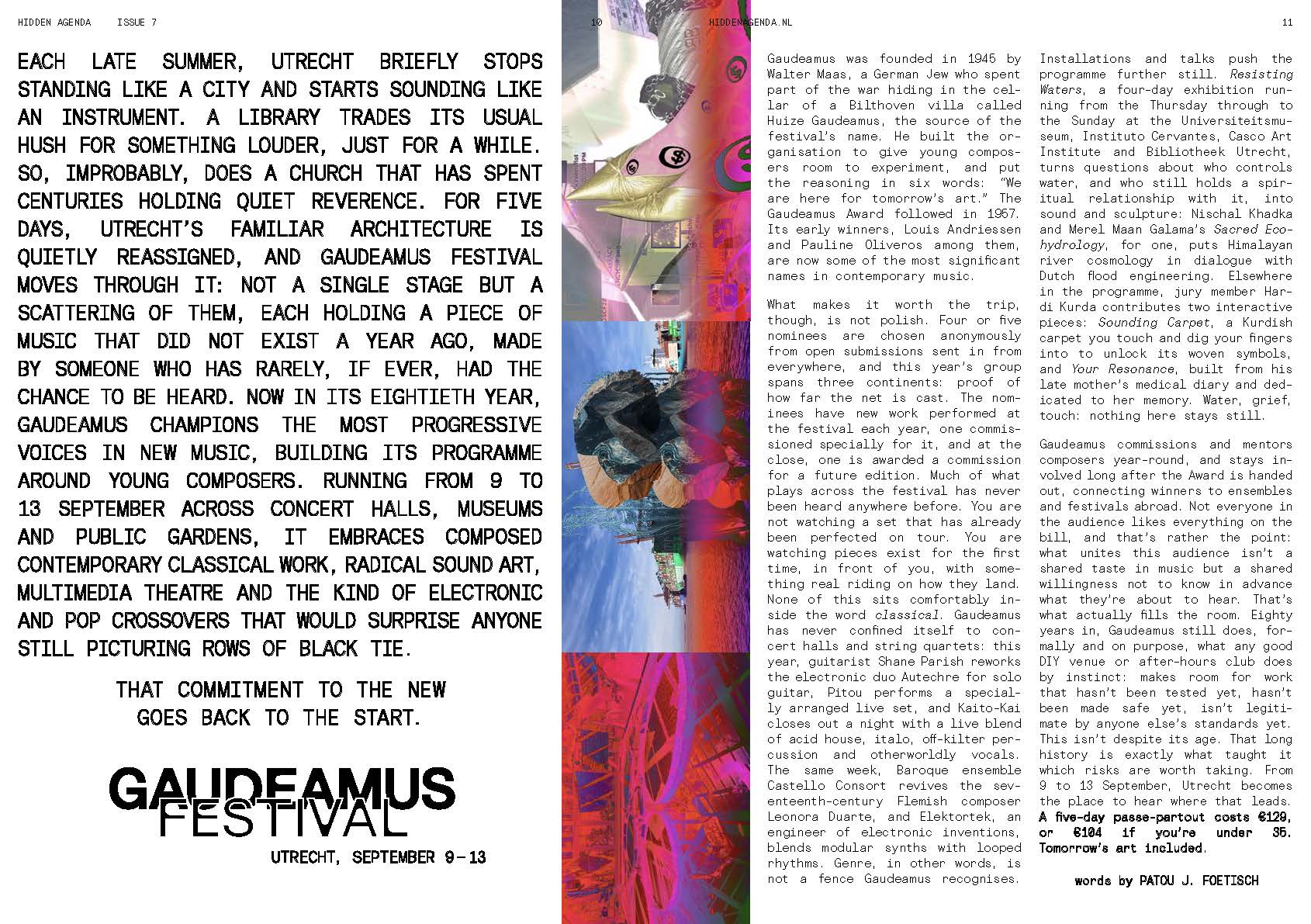
Gaudeamus Festival 2026
By Patou J. FoetischEach late summer, Utrecht briefly stops standing like a city and starts sounding like an instrument. A library trades its usual hush for something louder, just for a while. So, improbably, does a…
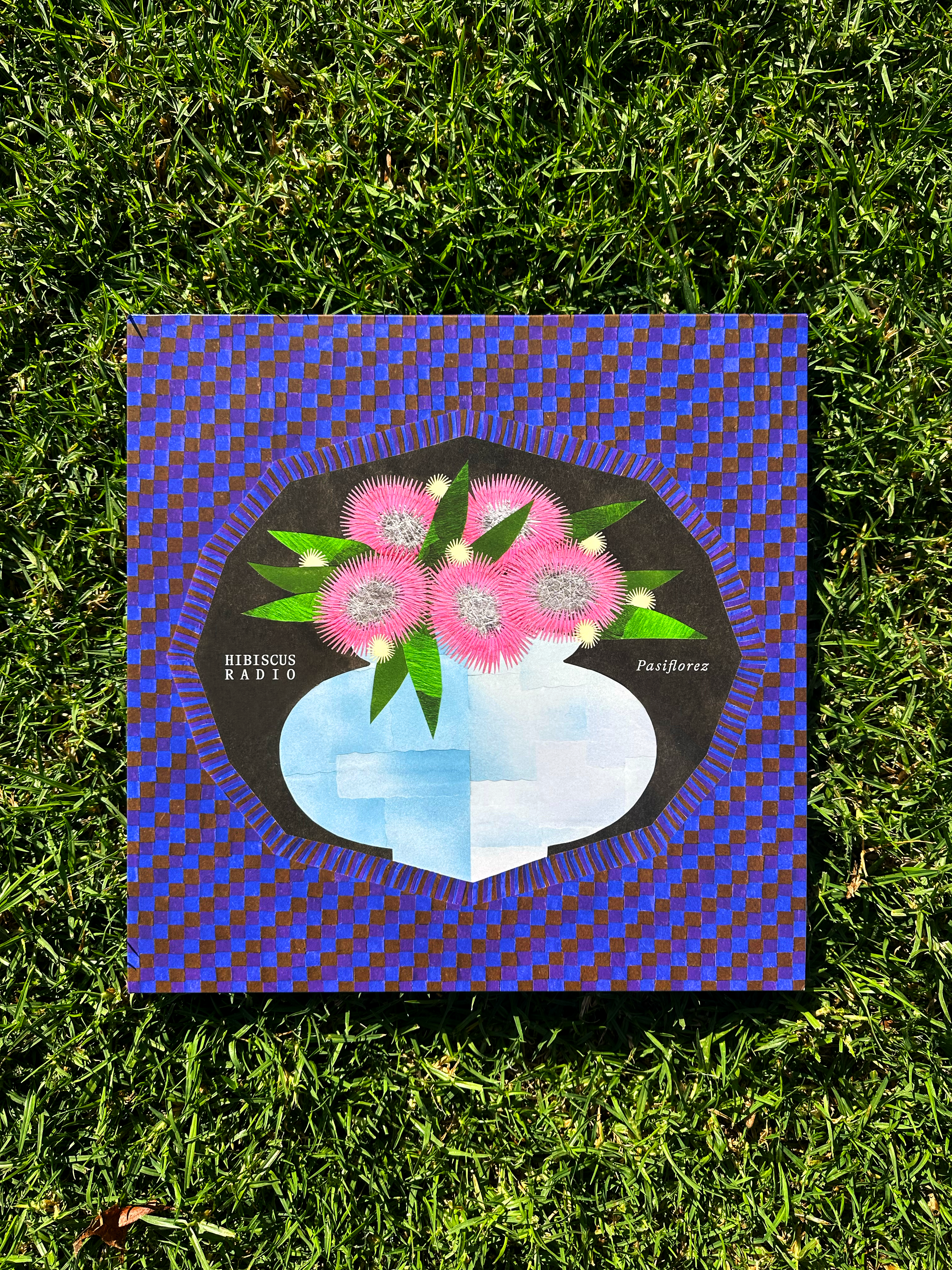
Juna Horstmans
By Patou J. FoetischJuna Horstmans' work often feels suspended between two recurring forms: the window and the flower. One frames perception, offering a partial view into something beyond itself; the other unfolds…
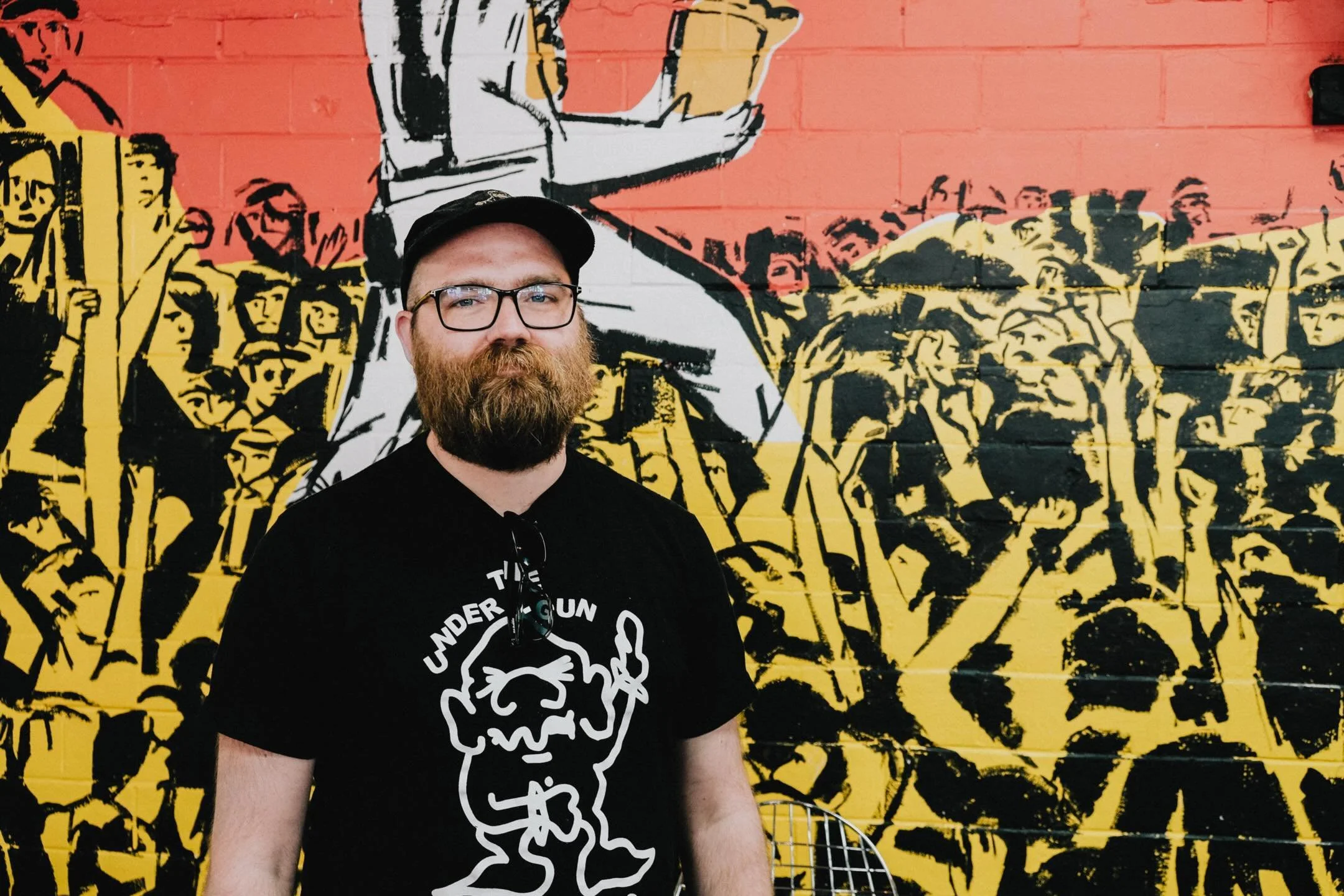
Meet your new favourite small-town punk
By Julia de Oliveira MoritzHere’s what it’s like chatting with Evan: he is almost perpetually excited, and the main way to tell if he’s smiling is through the slight movement of his moustache, unless he lets out his hearty…
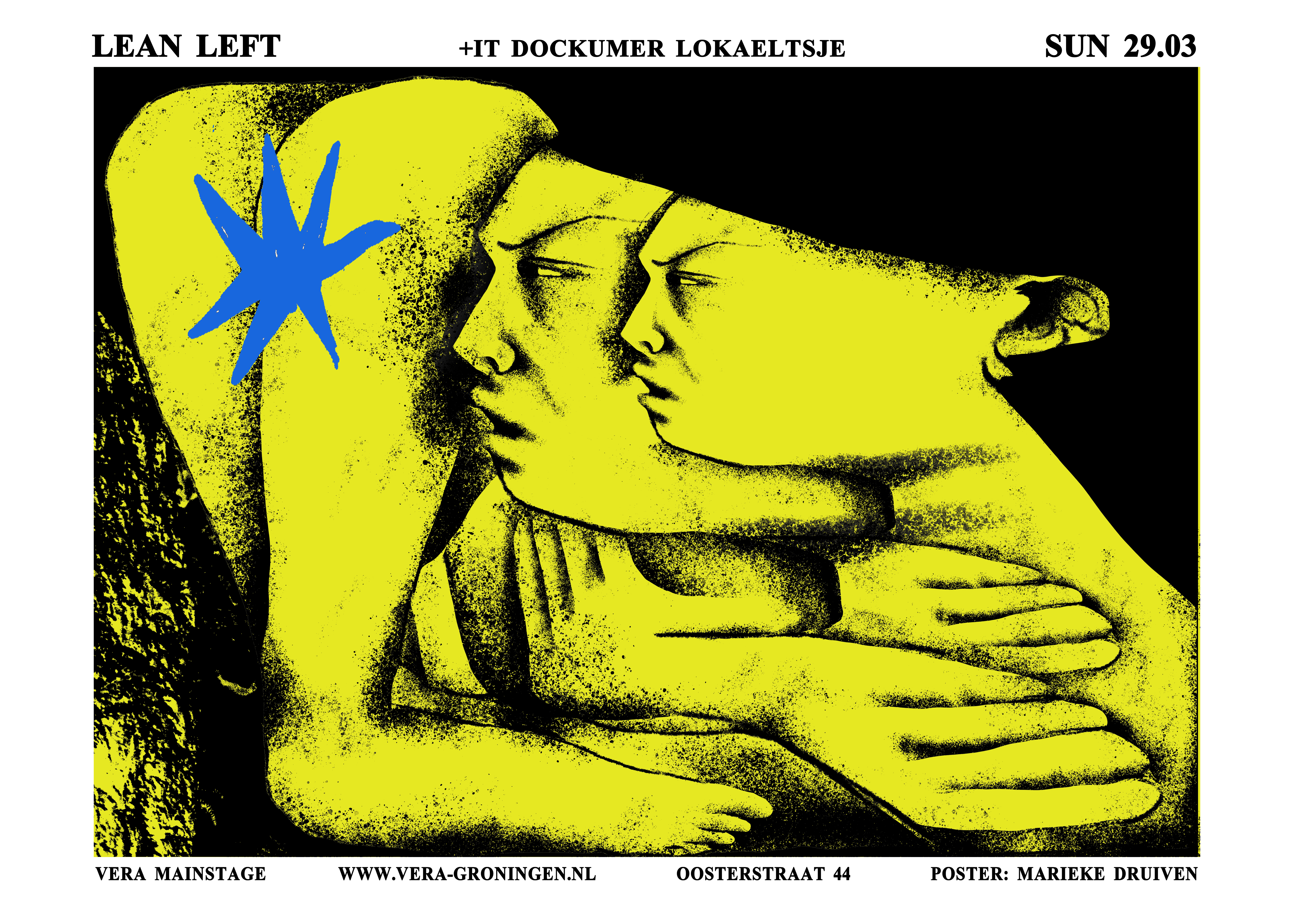
Marieke Druiven
By Patou J. FoetischMarieke Druiven's work feels suspended somewhere between the familiar and the unreal. Her figures and environments carry the strange familiarity of something half-recognised, as though ordinary…
The cultural hangover following the Spotify boycotts
By Julia de Oliveira MoritzSpotify has faced criticism before. Taylor Swift, Joni Mitchell, and Thom Yorke have all removed their music from the platform in the past, only to sneak back in. It’s happening again now, seemingly…
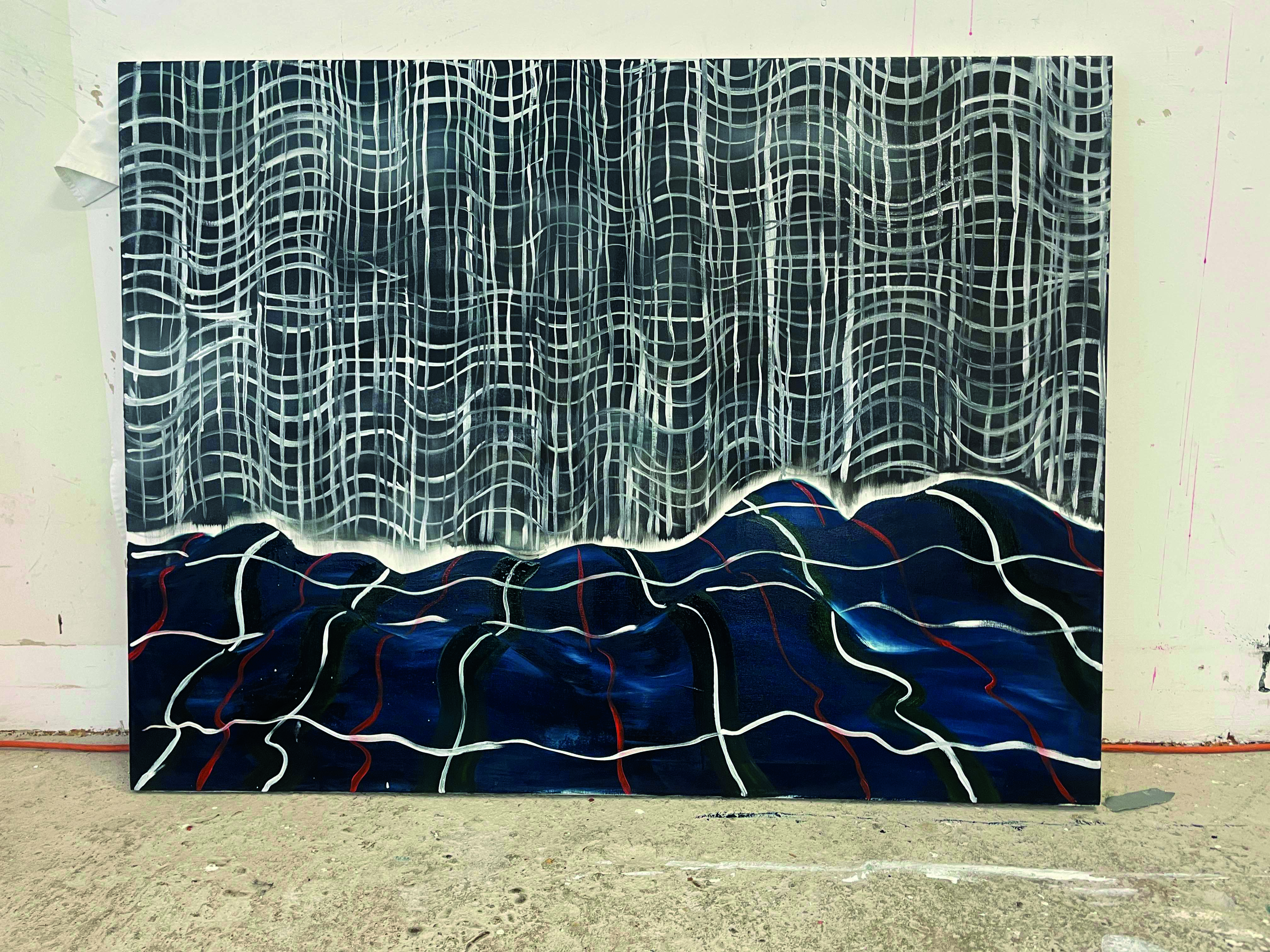
Una Jongenelis
By Patou J. FoetischNot everything moves in a straight line. Some processes unfold through hesitation and repetition that are never quite the same. What first may appear as a digression begins to fall into its own…
Strip Fest 2026
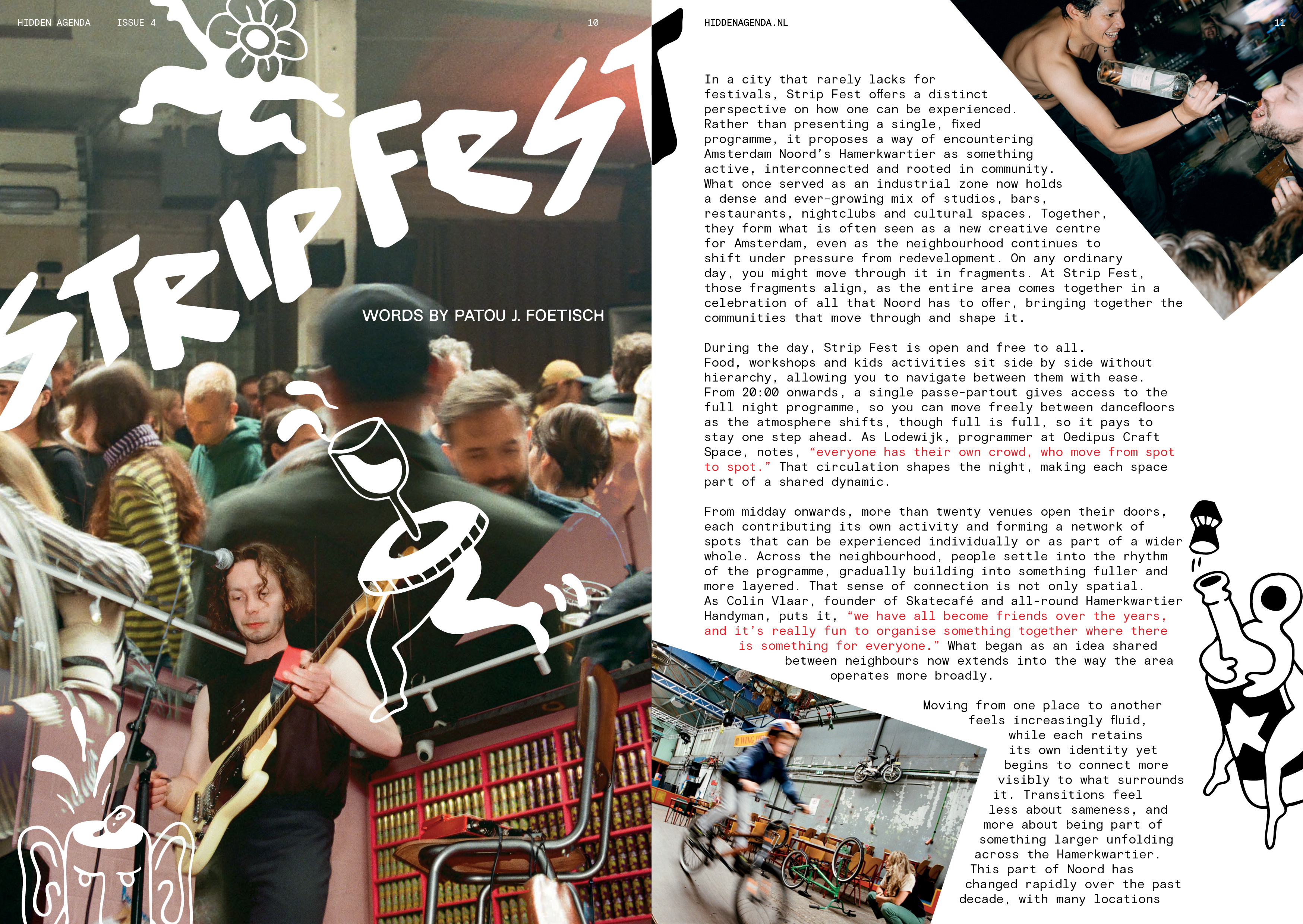
By Patou J. FoetischIn a city that rarely lacks for festivals, Strip Fest offers a distinct perspective on how one can be experienced. Rather than presenting a single, fixed programme, it proposes a way of encountering…
Hope Lives Next Door
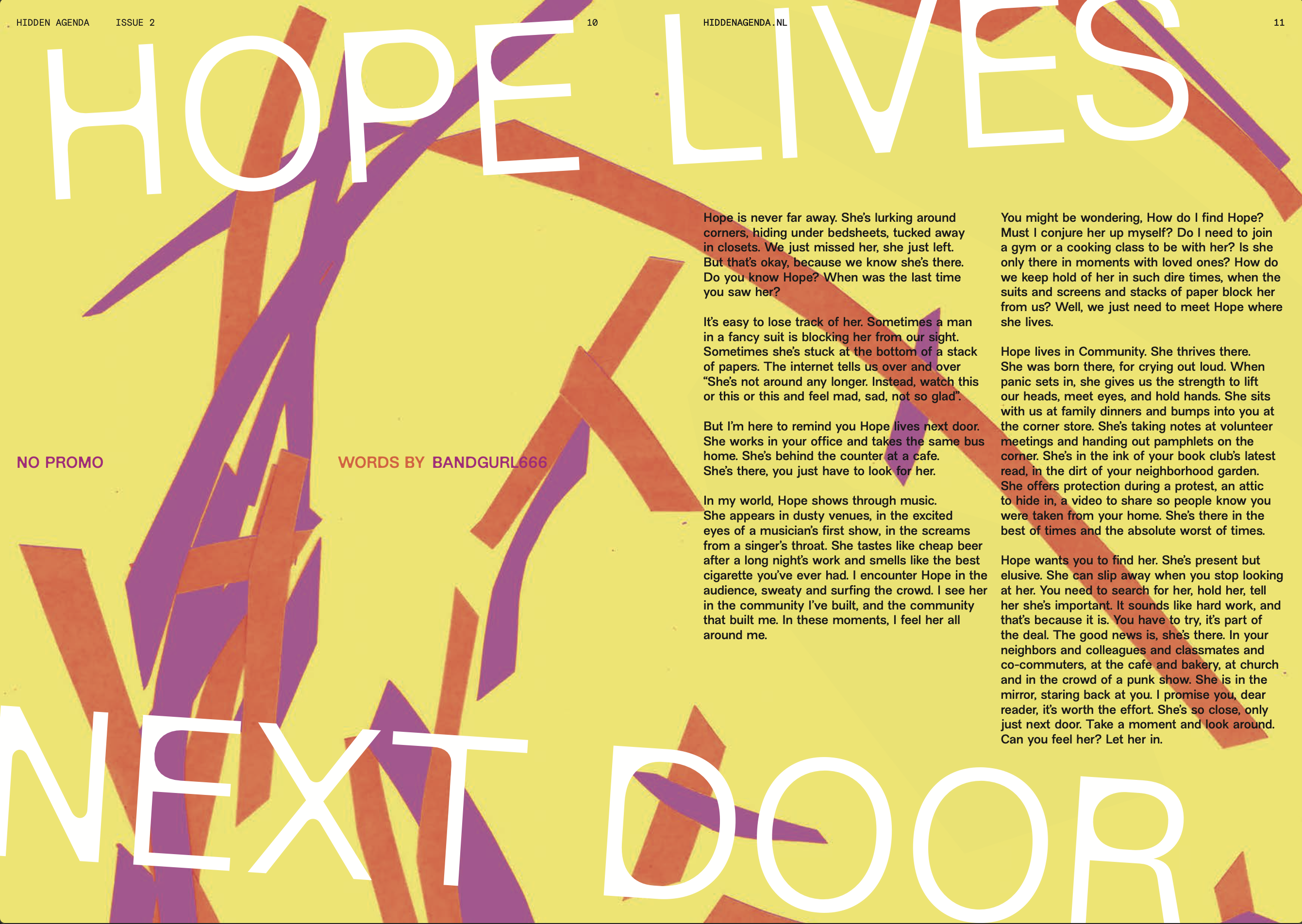
By Bandgurl666Hope is never far away. She’s lurking around corners, hiding under bedsheets, tucked away in closets. We just missed her, she just left. But that’s okay, because we know she’s there. Do you know…