The first time I edited an interview, I realised how easy it was to reshape someone else’s words. A small cut here, a shift in phrasing there, and suddenly, the tone changed. Especially when translating from a foreign language, things get lost—nuance, intent, cultural meaning. What stays intact, and what gets altered? Who decides what withstands?
Radio has always been an amplifier of voices, but also an interpreter of them. The way a song is introduced, the questions a host chooses to ask, the snippets that make it to air—each decision shapes perception. And once it’s out there, it’s out there—especially in today’s digital realm, where distortions and misinterpretations spread faster than ever. Information, whether true or skewed, ripples outward.
How do you preserve a story without unintentionally rewriting it? How do you translate an artist’s experience without imposing your own lens?
It’s an eerie parallel to the role of a DJ, a broadcaster, a translator, an interviewer—anyone entrusted with carrying someone else’s truth. That’s the weight of curation. If you’re going to speak, you’d better be sure you’re good at listening too.
I once interviewed an artist whose work pulsed with loss and resilience. As I shaped the piece, I instinctively reached for a tidy arc—struggle, triumph, resolution. But that wasn’t the truth. Their art wasn’t a victory lap; it was an ongoing conversation with grief. My impulse to make it palatable would have been a betrayal.
Curation is dangerous that way. The urge to clean up the edges, to fit stories into familiar rhythms, risks distorting them. But art isn’t supposed to be comfortable. Stewardship means resisting that impulse, knowing that the way we present someone’s work alters its meaning. It means stepping back and letting the artist’s voice stand on its own.
Creative communities survive on trust, and trust is built on acknowledgment. An album isn’t just the musician’s—it’s the producer’s, the engineer’s, the session players’. A radio station isn’t just a brand—it’s the selectors, the technicians, the voices filling dead air. To erase them is to erode the very foundation of the scene.
I’ve seen what happens when credit isn’t given. A producer’s work swallowed by a label’s branding. A photographer’s images lifted without acknowledgment. These aren’t just oversights; they corrode. They make people withdraw, question whether their work is worth offering. When we talk about family in the arts, it’s not just camaraderie—it’s survival. It’s ensuring no one is erased.
There’s a reason pirate radio still holds mythic weight. Stations like Echobox exist because cities need them—because scenes need mirrors, spaces to reflect their own identities. The best radio isn’t just an archive; it’s a lifeline. It gives shape to a city’s noise, its whispers, its underground transmissions.
But even radio isn’t free from curation’s weight. Who gets the prime slot? Whose voices are deemed "accessible," "relevant"? Every choice is a form of authorship. And with that comes responsibility—to resist the easy narrative, to uplift without distorting, to create a platform that isn’t just an echo chamber of familiar names.
I’ve seen how cities and stations shape each other. A DJ mapping a city’s sonic terrain, pulling in forgotten histories. A label stitching disparate sounds into a moment that could only exist here, now. The best curators understand this reciprocity: the city feeds the radio, and the radio amplifies the city. It’s not just broadcasting; it’s belonging.
What we choose to amplify, we make real. What we erase, we condemn to silence. The ethics of storytelling and curation aren’t just theoretical—they have consequences. We’ve all seen the alternative. The label that mines underground scenes for aesthetics but never invests in them. The festival that books diverse lineups for optics but fails to create safe spaces. The media that flattens complex histories into digestible soundbites.
Real stewardship is slower, messier. It means crediting the uncredited. Resisting the urge to smooth things over. Amplifying without consuming. Platforming without possessing. Remembering that we don’t own the stories we tell—we are just borrowing them for a while.
As Solid Snake in Metal Gear Solid 2 puts it: "We’re all born with an expiration date. No one lasts forever. Life is nothing but a trail of memories—some true, some false. But if we can pass those memories on to the next generation… just maybe, we can keep history alive."
The weight of that should keep us up at night. If it doesn’t, we’re doing it wrong.
Wishing you a lovely day,
-Dee Dee
More Editorials
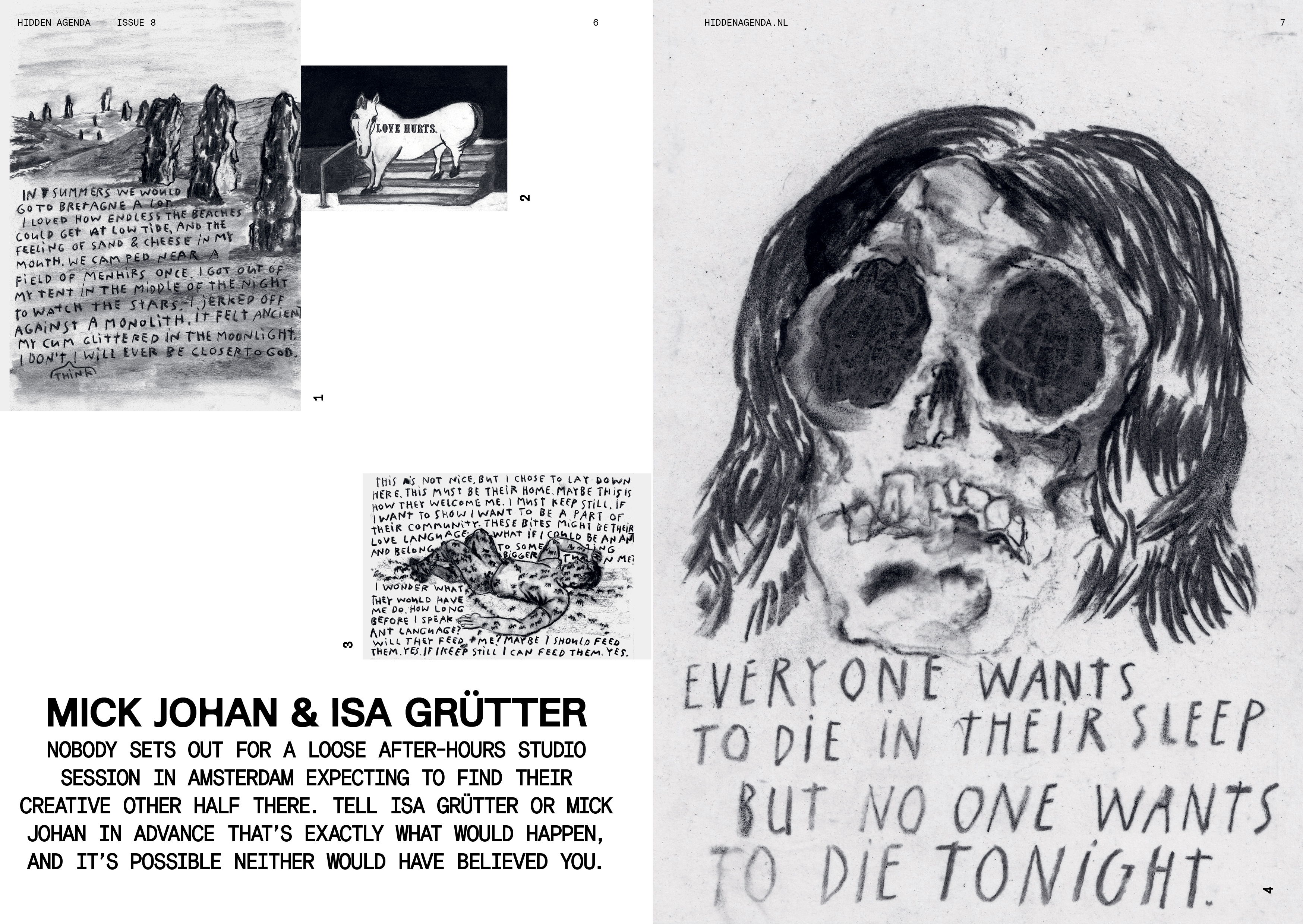
Mick Johan & Isa Grütter
By Patou J. FoetischNobody sets out for a loose after-hours studio session in Amsterdam expecting to find their creative other half there. Tell Isa Grütter or Mick Johan in advance that’s exactly what would happen, and…
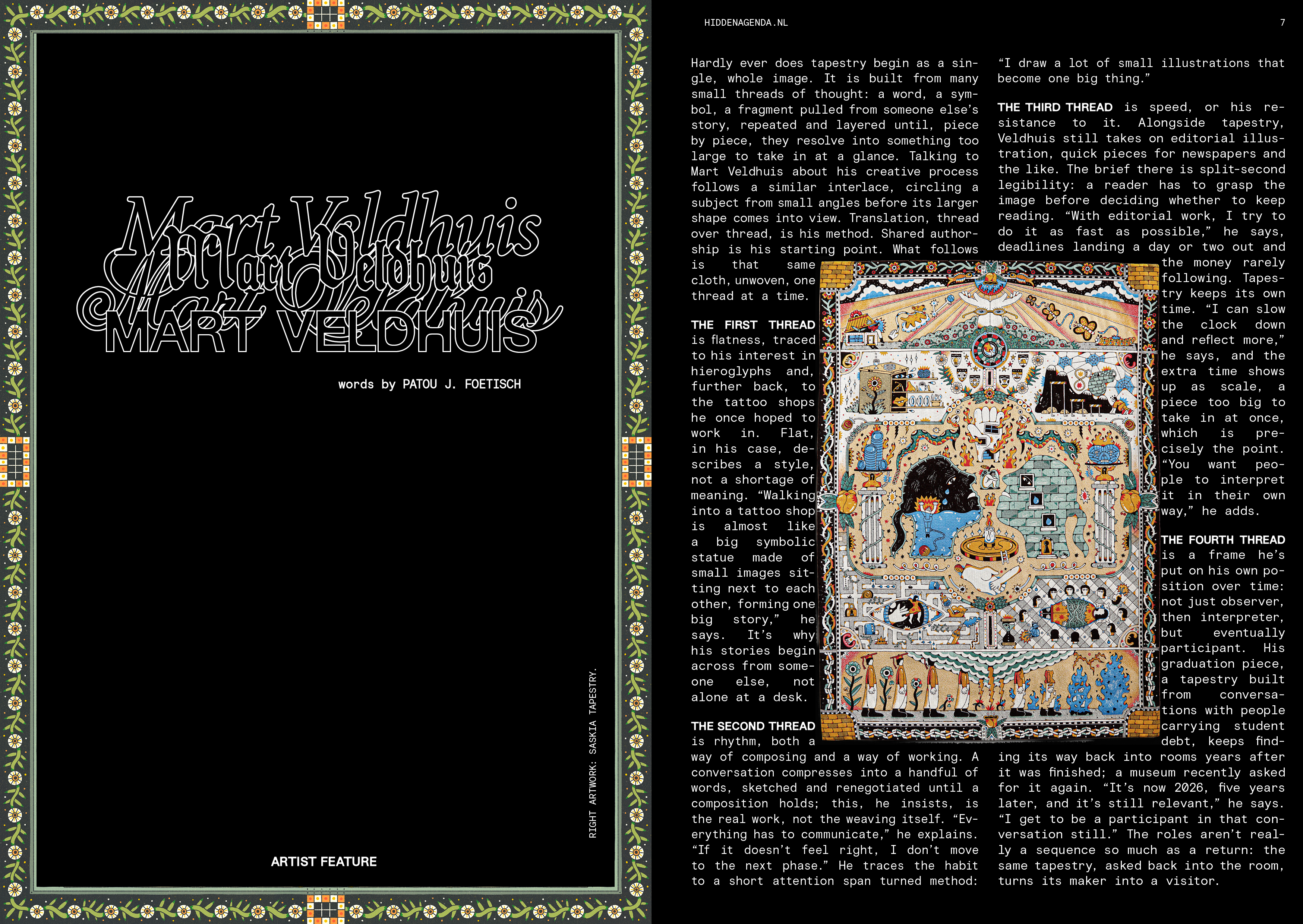
Mart Veldhuis
By Patou J. FoetischHardly ever does tapestry begin as a single, whole image. It is built from many small threads of thought: a word, a symbol, a fragment pulled from someone else's story, repeated and layered until,…
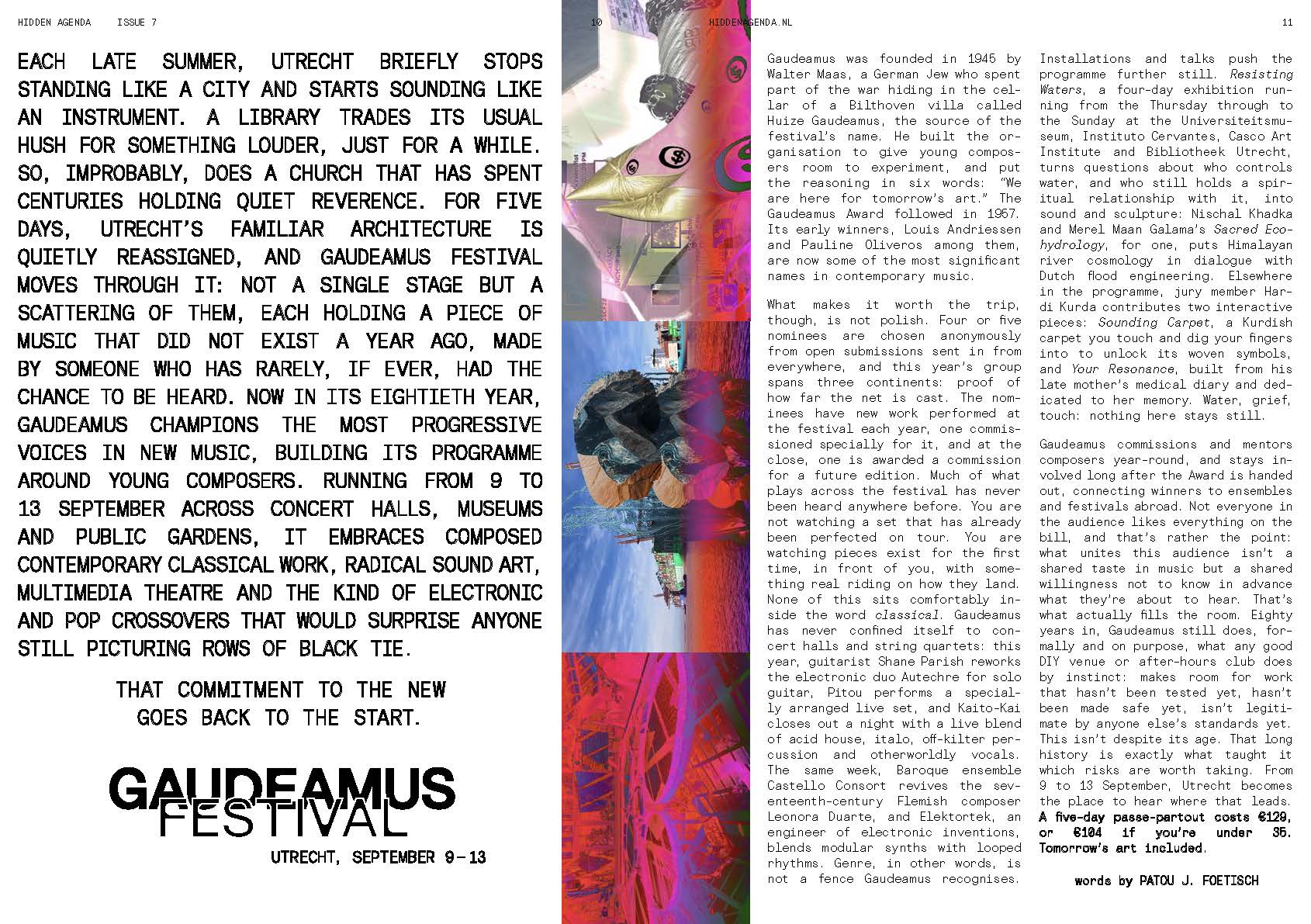
Gaudeamus Festival 2026
By Patou J. FoetischEach late summer, Utrecht briefly stops standing like a city and starts sounding like an instrument. A library trades its usual hush for something louder, just for a while. So, improbably, does a…
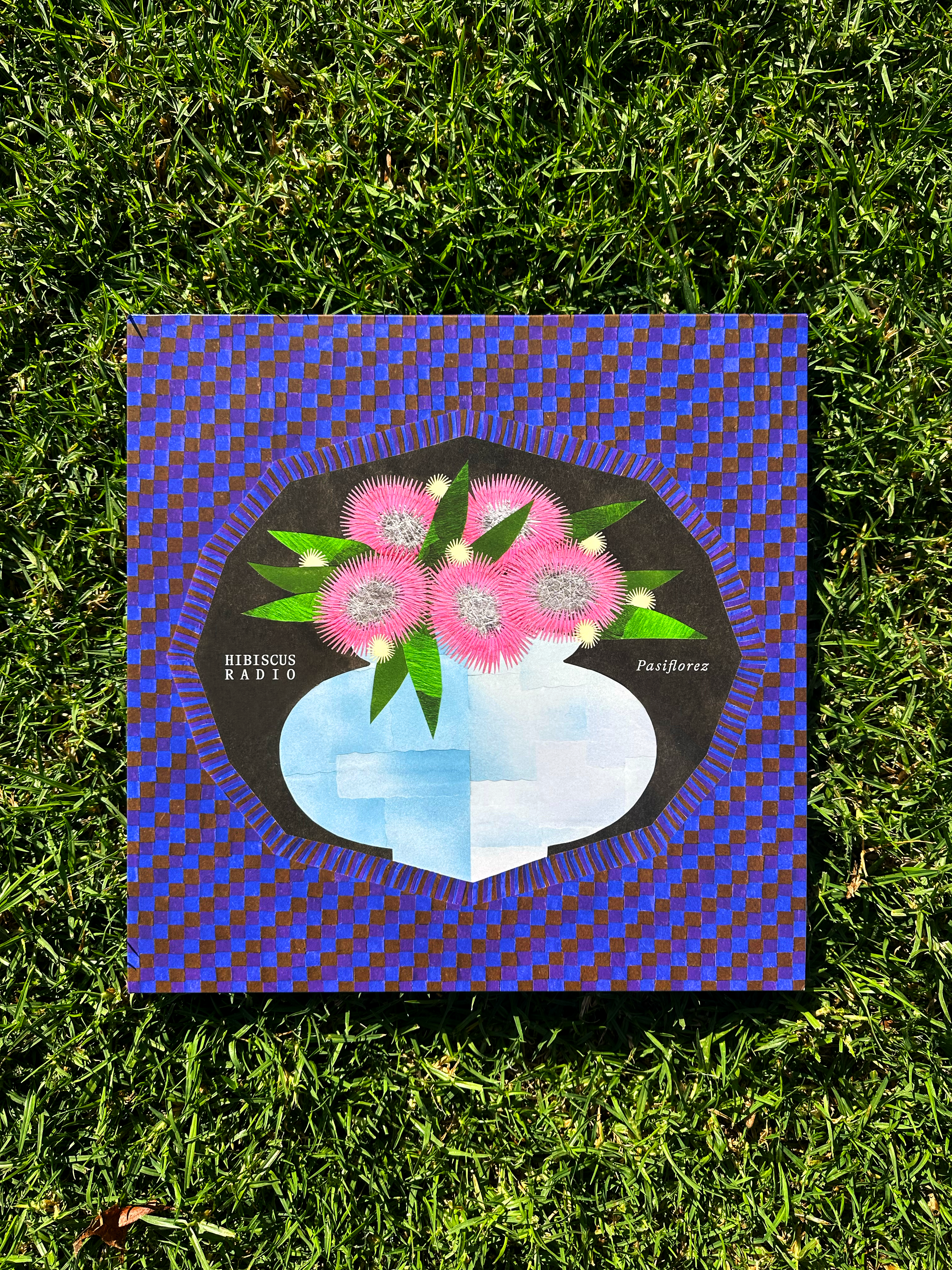
Juna Horstmans
By Patou J. FoetischJuna Horstmans' work often feels suspended between two recurring forms: the window and the flower. One frames perception, offering a partial view into something beyond itself; the other unfolds…
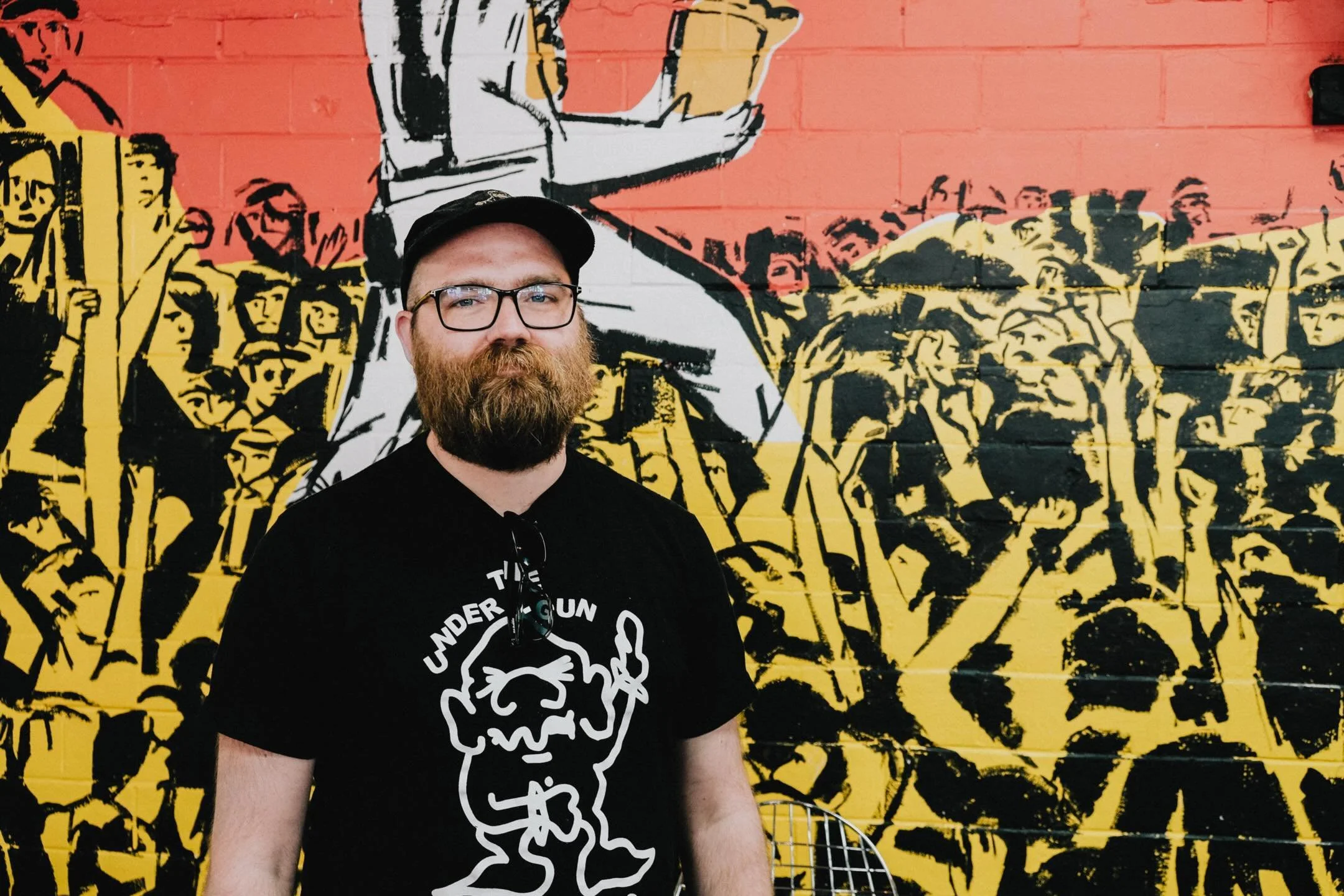
Meet your new favourite small-town punk
By Julia de Oliveira MoritzHere’s what it’s like chatting with Evan: he is almost perpetually excited, and the main way to tell if he’s smiling is through the slight movement of his moustache, unless he lets out his hearty…
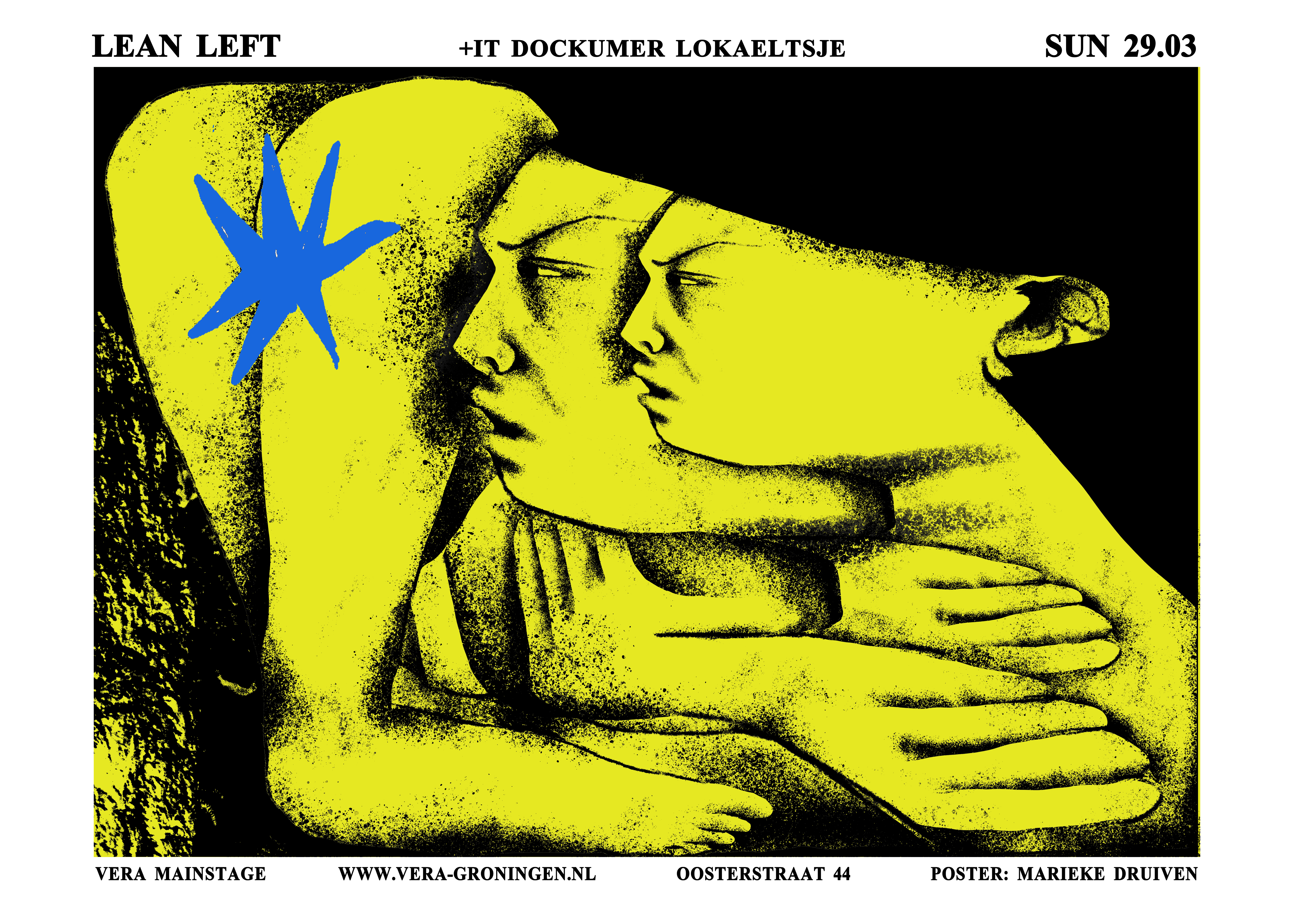
Marieke Druiven
By Patou J. FoetischMarieke Druiven's work feels suspended somewhere between the familiar and the unreal. Her figures and environments carry the strange familiarity of something half-recognised, as though ordinary…
The cultural hangover following the Spotify boycotts
By Julia de Oliveira MoritzSpotify has faced criticism before. Taylor Swift, Joni Mitchell, and Thom Yorke have all removed their music from the platform in the past, only to sneak back in. It’s happening again now, seemingly…
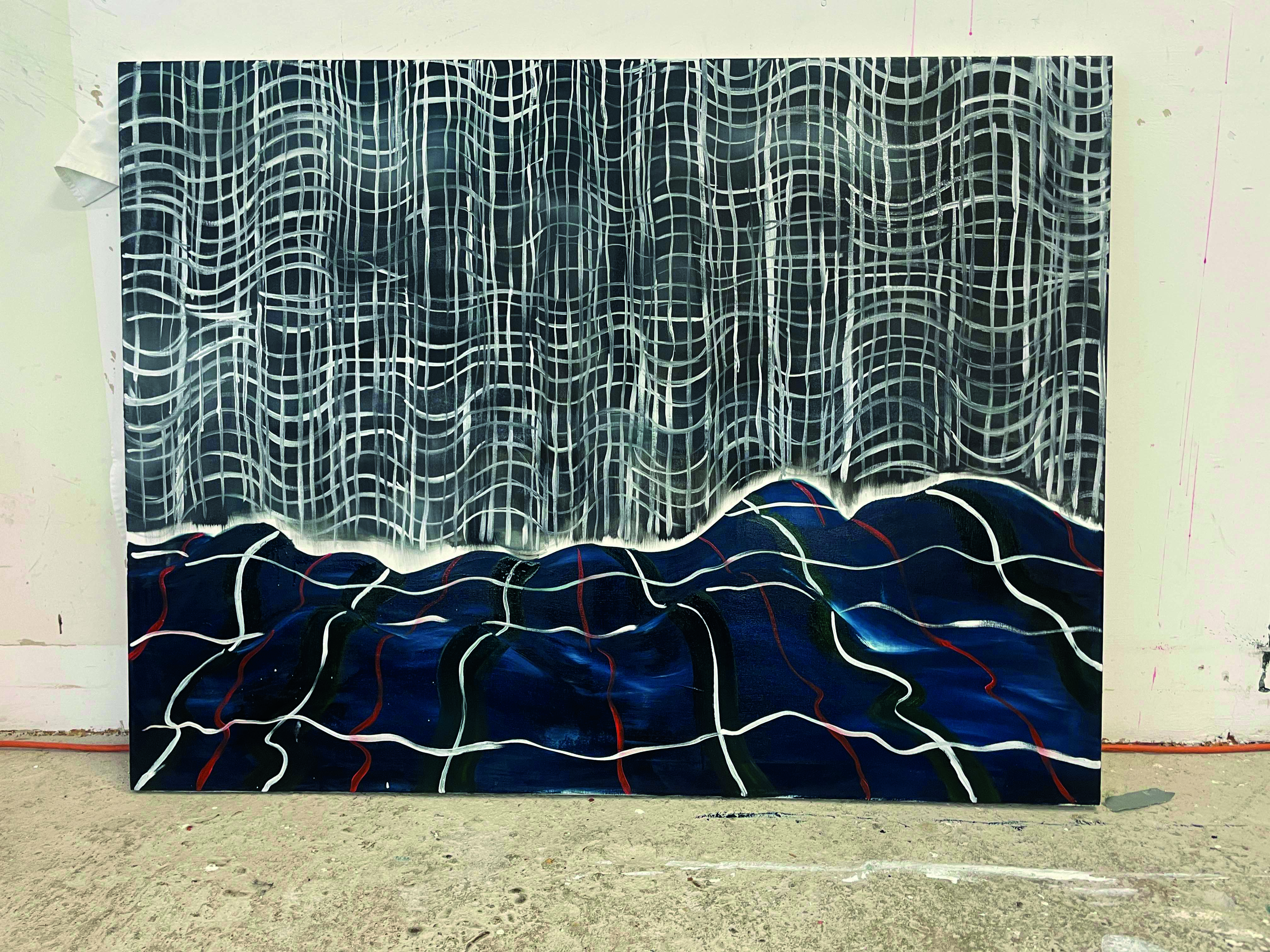
Una Jongenelis
By Patou J. FoetischNot everything moves in a straight line. Some processes unfold through hesitation and repetition that are never quite the same. What first may appear as a digression begins to fall into its own…
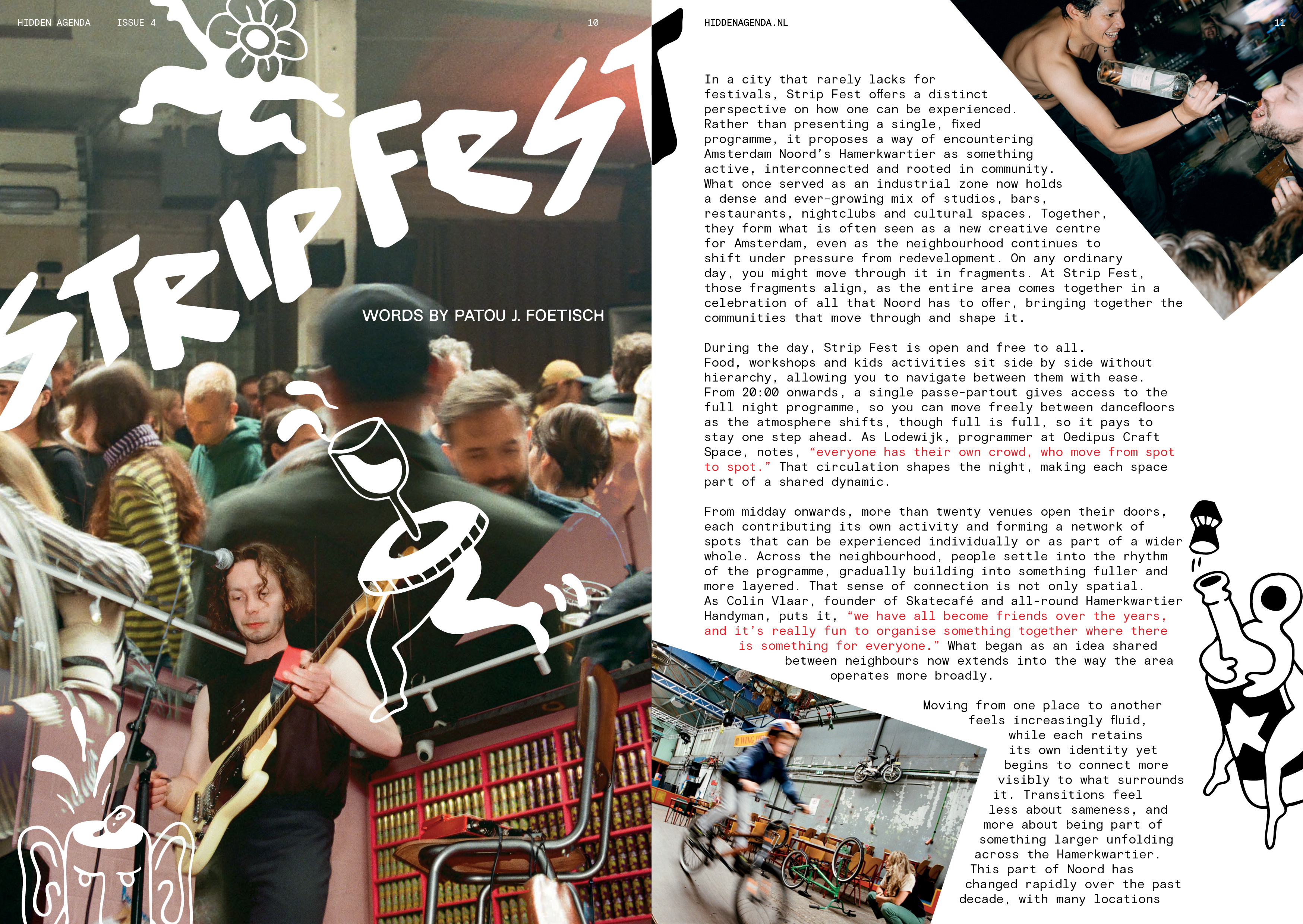
Strip Fest 2026
By Patou J. FoetischIn a city that rarely lacks for festivals, Strip Fest offers a distinct perspective on how one can be experienced. Rather than presenting a single, fixed programme, it proposes a way of encountering…
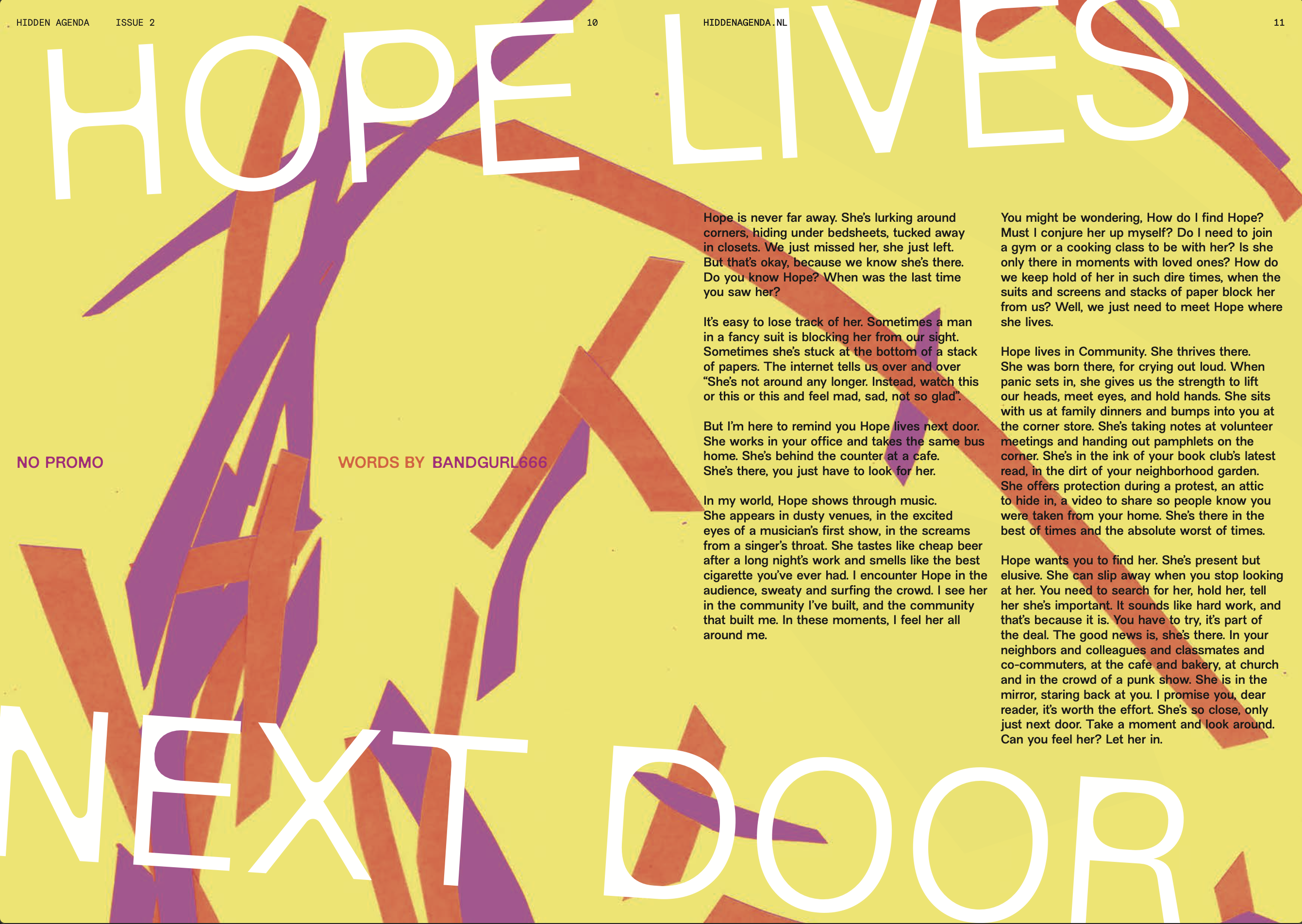
Hope Lives Next Door
By Bandgurl666Hope is never far away. She’s lurking around corners, hiding under bedsheets, tucked away in closets. We just missed her, she just left. But that’s okay, because we know she’s there. Do you know…