Farida Sedoc
Hidden Agenda Monthly: Edition #9 - November 2026
By Patou J. Foetisch // 02 NOV 2026
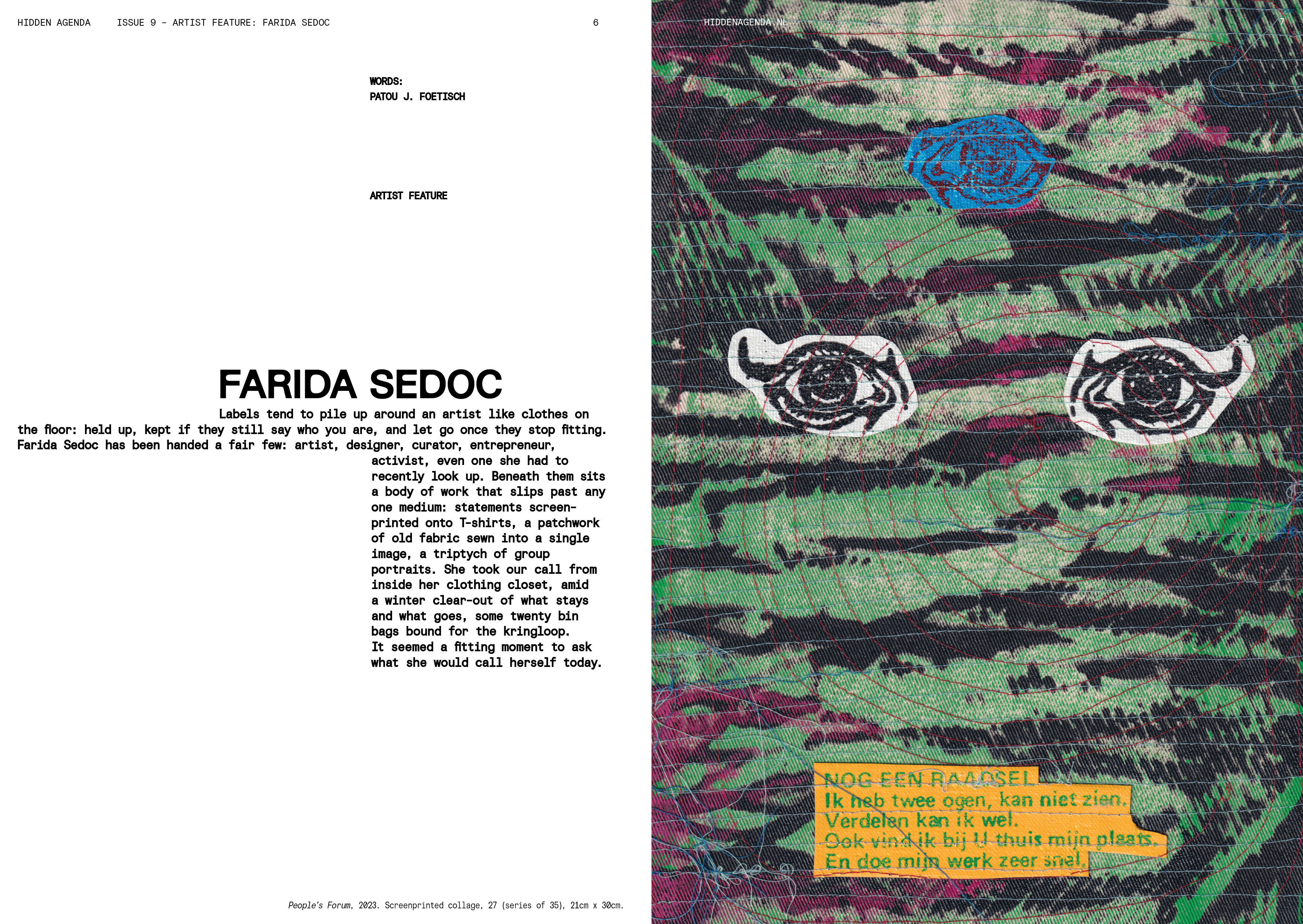
Image: People’s Forum, 2023, screenprinted collage, 27 (series of 35), 21cm x 30cm. Layout by Frédérique Gagnon.
Labels tend to pile up around an artist like clothes on the floor: held up, kept if they still say who you are, and let go once they stop fitting. Farida Sedoc has been handed a fair few: artist, designer, curator, entrepreneur, activist, even one she had to recently look up. Beneath them sits a body of work that slips past any one medium: statements screen-printed onto T-shirts, a patchwork of old fabric sewn into a single image, a triptych of group portraits. She took our call from inside her clothing closet, amid a winter clear-out of what stays and what goes, some twenty bin bags bound for the kringloop. It seemed a fitting moment to ask what she would call herself today.
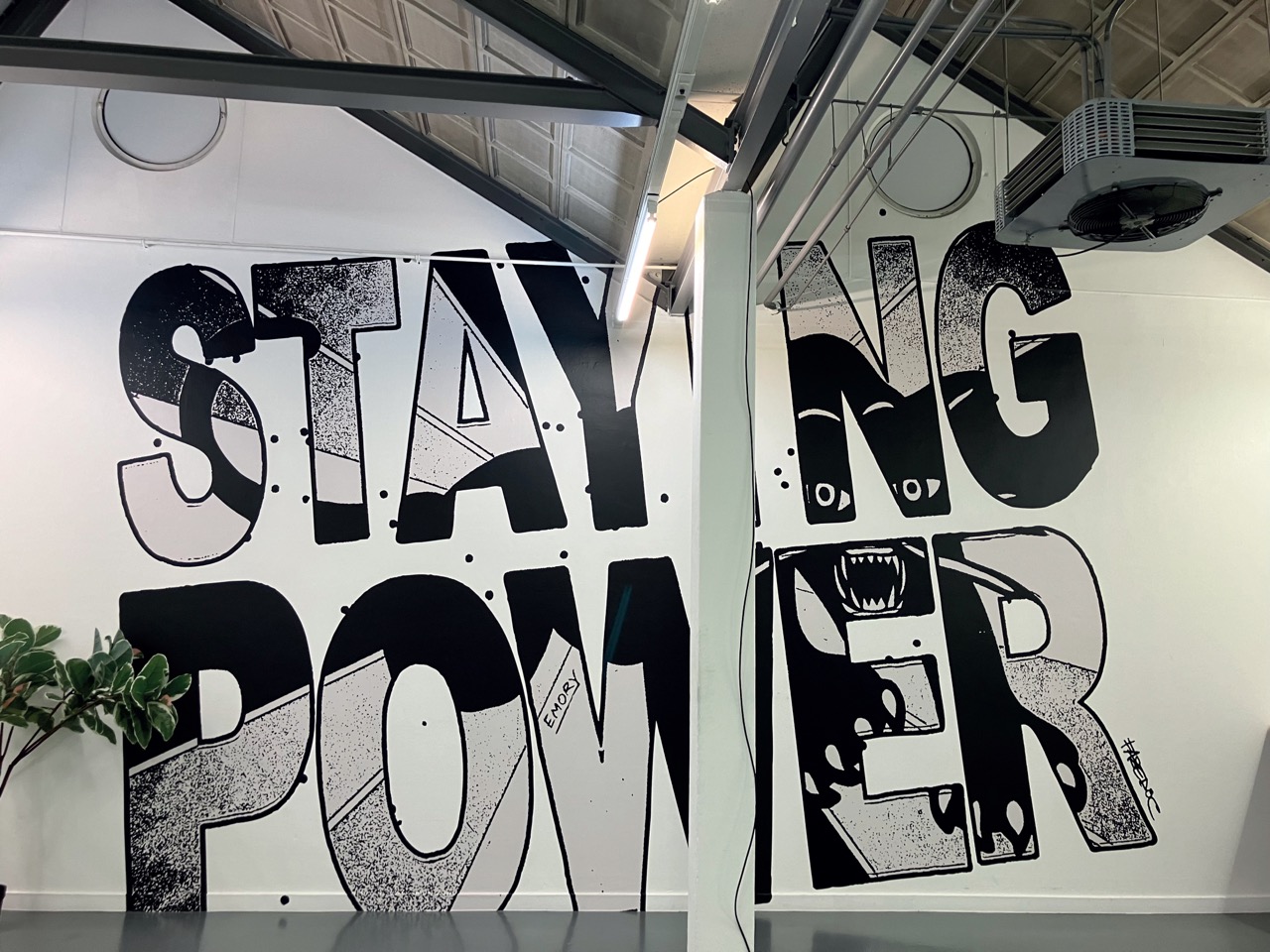
Staying Power, 2024, Mural, Farida Sedoc and Emory Douglas
Her answer was short: “You’re speaking to Farida, the person. Just the person.” She finds the titles practical: visual artist when a project is her own, fashion designer for a T-shirt. Even when looking her up, Google pins “plastician” under her name. Unbeknownst to her, she finds it accurate. “I adapt to the context,” she reasons. Adapting starts with listening to whoever is asking: an institution, a magazine, a corporate or independent entity, how big it is and what history and legacy it carries. For her 2025 Stedelijk commission, Social Capital, that meant scale across one of the museum’s largest in-between spaces. However, one label she hands straight back, asking, “Why do people think I’m an activist?” For Farida, it comes with her position in the world, as a Black woman in a Western society. “Everything I make is through this political lens,” she notes, the talk turning to identity, colonialism or racism, none of which she rules out. Had a white, straight man made the same work, she says, the talk would stay on the work. “He would just be the graphic designer nobody knows that made that poster.” Reflecting further on being called an activist, she points to longtime collaborator Emory Douglas, whom she recently interviewed in San Francisco. “If it’s for the benefit of all human beings on earth, then I don’t care what they call me,” he told her, an answer she calls inspiring. “It keeps the focus on the work,” she explains, “and not so much on what people think about who you are and what you do.”
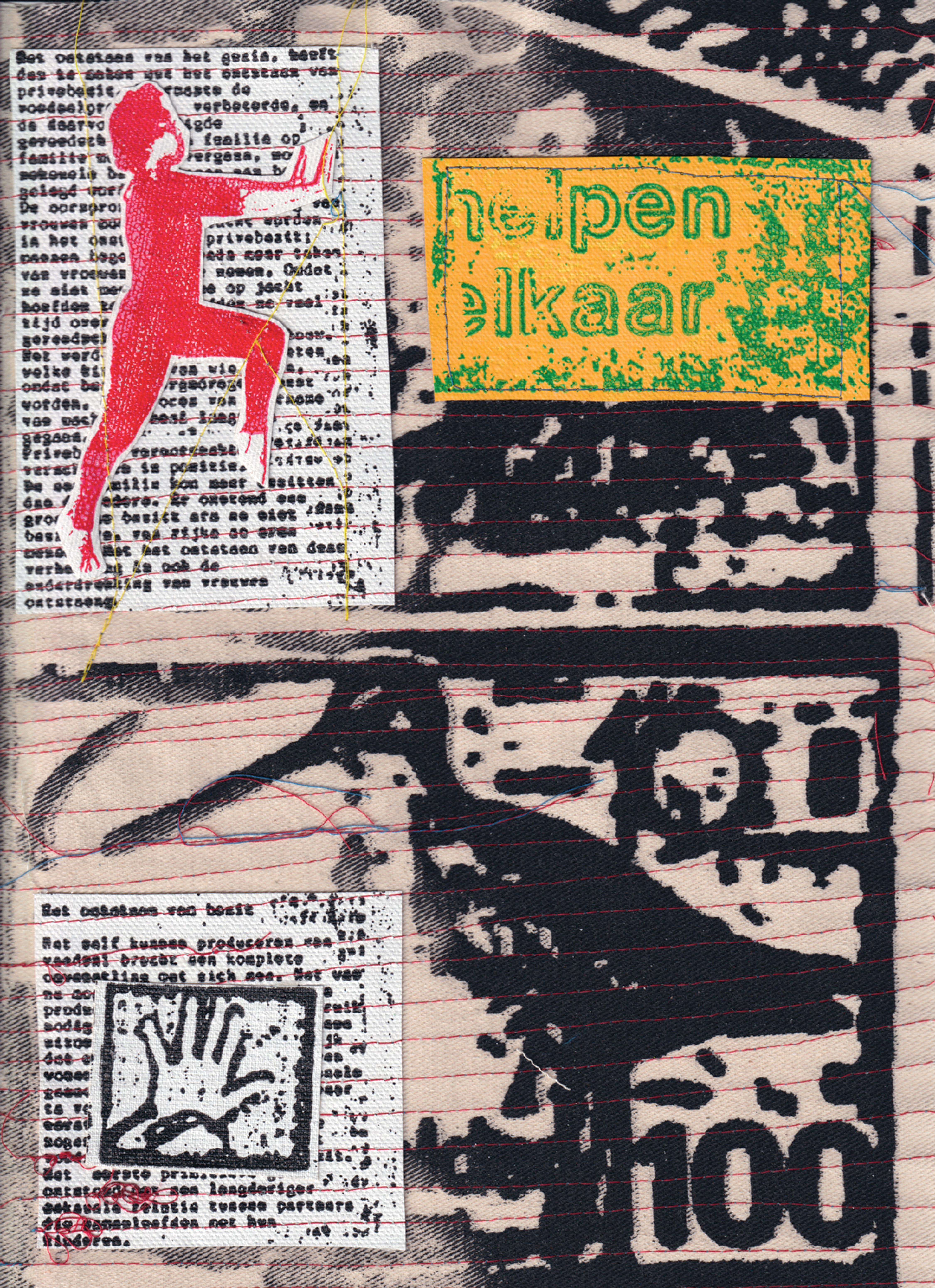
People’s Forum, 2023, screenprinted collage, 11 (series of 35), 21cm x 30cm
Does the work develop an identity rather than speak for a community? “It’s exactly that, but it’s also the opposite,” Farida says. It comes from her, yet given who she is, it becomes everyone’s automatically. Her range has a plainer source. “I’ve always done it all because I never had the privilege to do one thing.” Privilege, here, is the luxury of living from one practice; without it came jobs in places like the indie record shop, bookshop, second-hand clothing shop and art house cinema. “I call it,” she adds, “the good shitty job.” Good for the like-minded people and the critical conversations. “The ideal setup is a little bit of everything,” she says. At NEST in The Hague in 2022 she curated a group show of artists who all had other jobs. Elsewhere she has likened her practice to a hip hop producer digging for samples. A move into sound? Not so much, she answers. The music is already in the work, from her parents’ record collection to the song titles her pieces borrow. That is sampling without a sampler, the digging done by eye and ear.
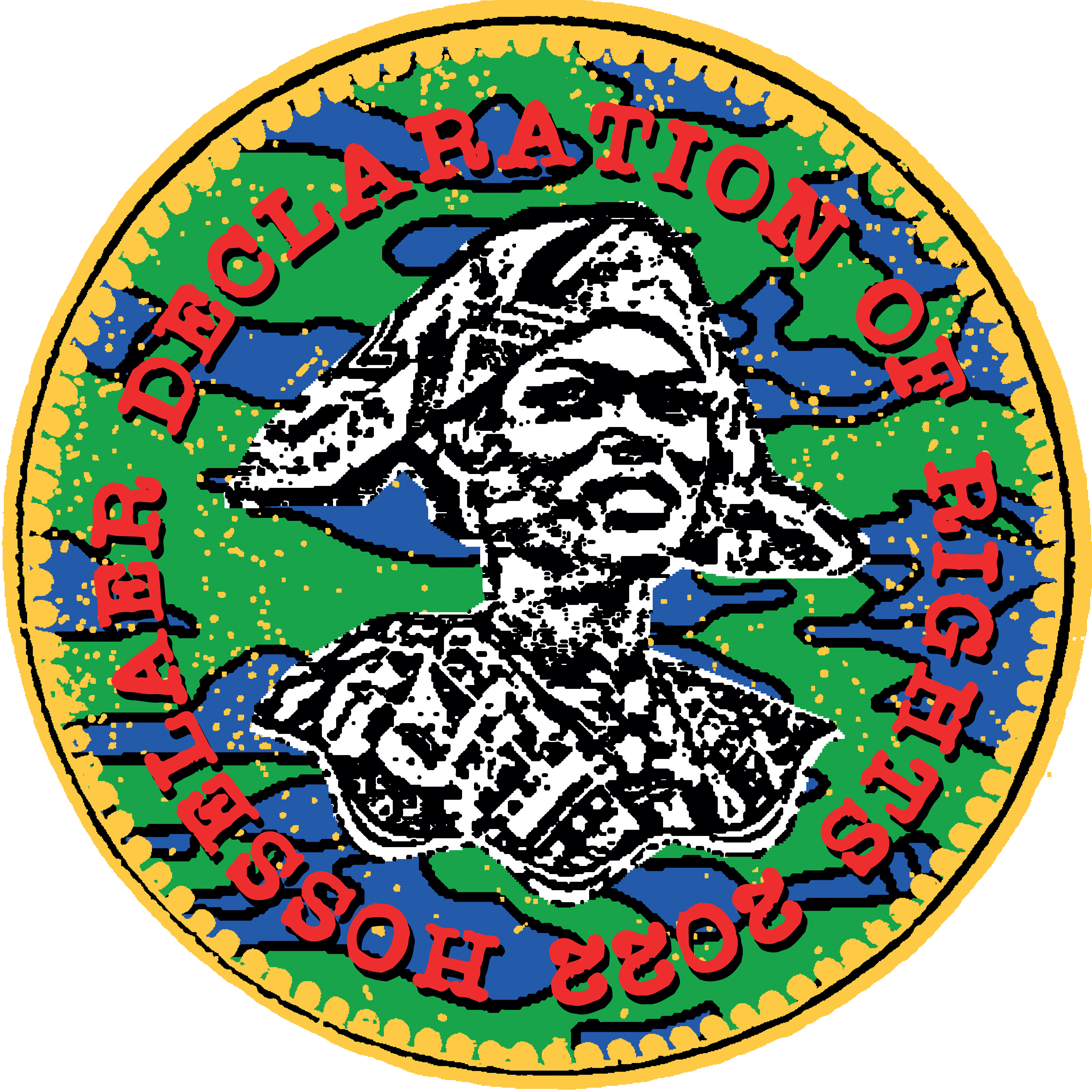
Declaration of rights, 2022, Mural
Making a living from art, she says, means constantly being asked who you are, and even painter or graphic designer is already a box. Rather than feed the machine, confirm stereotypes or please the gaze, she asks herself, “How do I counter it?” By her account it is no strategy, only a way of life. Every influence, fashion included, gets the same check. “Is this me, or is this the trend?” What survives that question is hers, though “I feel it’s all in us,” she reflects, seeing us all carrying pieces of each other. So recognition can run both ways, between her and whoever faces the work. Read that way, being just the person, whatever she has been handed, is less a modest answer than a position.
More Editorials
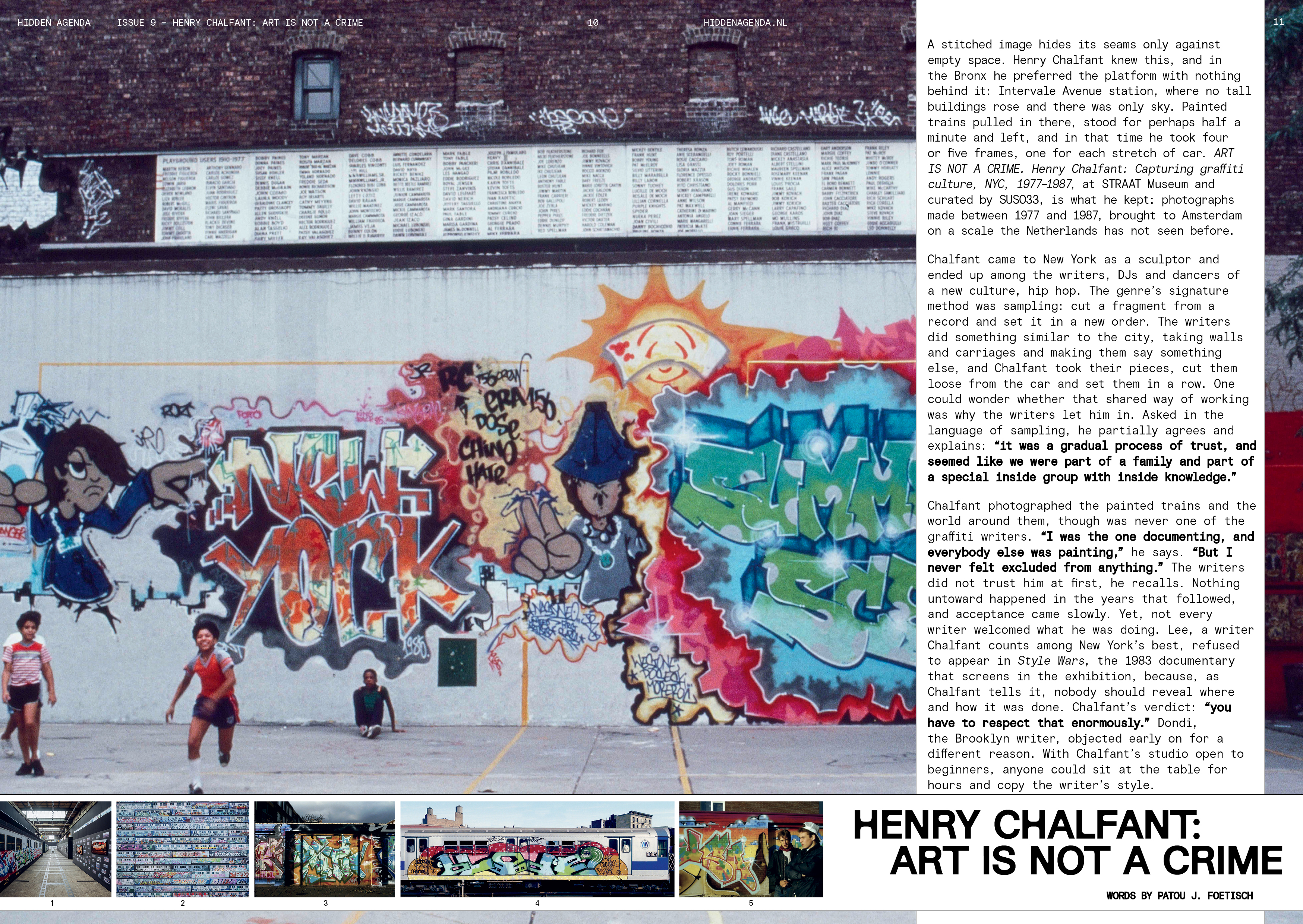
Henry Chalfant: Art Is Not A Crime
By Patou J. FoetischA stitched image hides its seams only against empty space. Henry Chalfant knew this, and in the Bronx he preferred the platform with nothing behind it: Intervale Avenue station, where no tall…
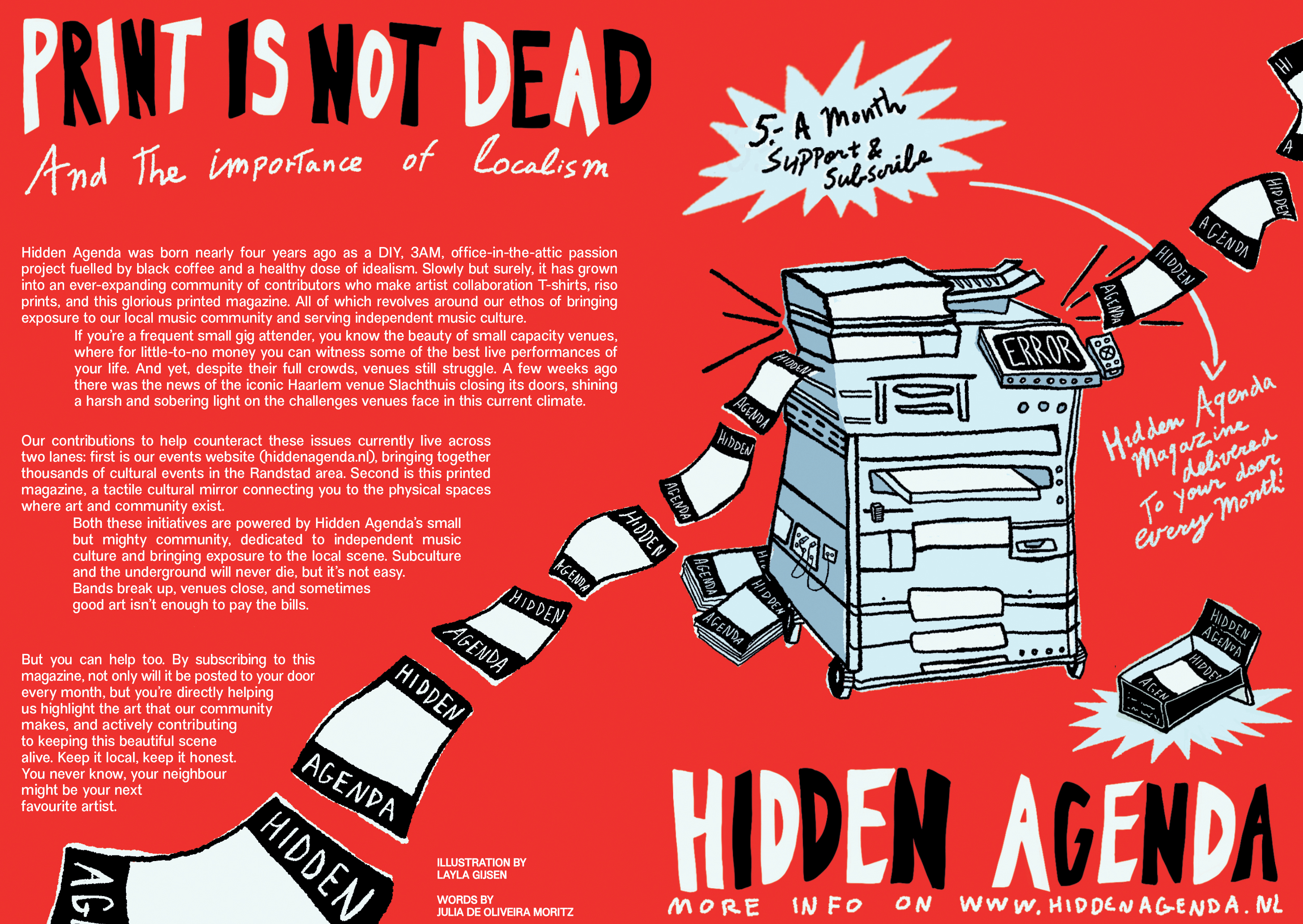
Print Is Not Dead
By Julia de Oliveira MoritzHidden Agenda was born nearly four years ago as a DIY, 3AM, office-in-the-attic passion project fuelled by black coffee and a healthy dose of idealism. Slowly but surely, it has grown into an…
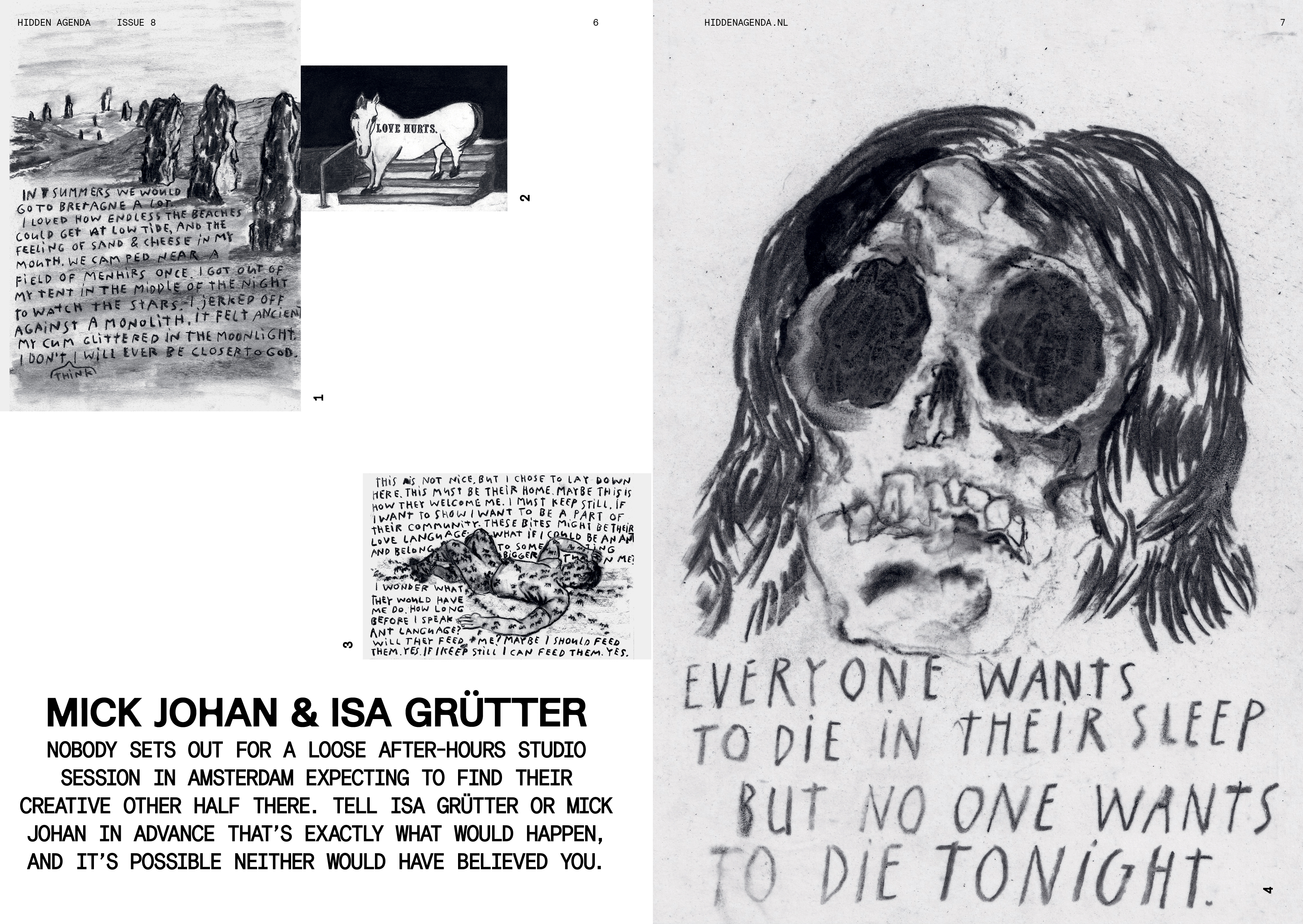
Mick Johan & Isa Grütter
By Patou J. FoetischNobody sets out for a loose after-hours studio session in Amsterdam expecting to find their creative other half there. Tell Isa Grütter or Mick Johan in advance that’s exactly what would happen, and…
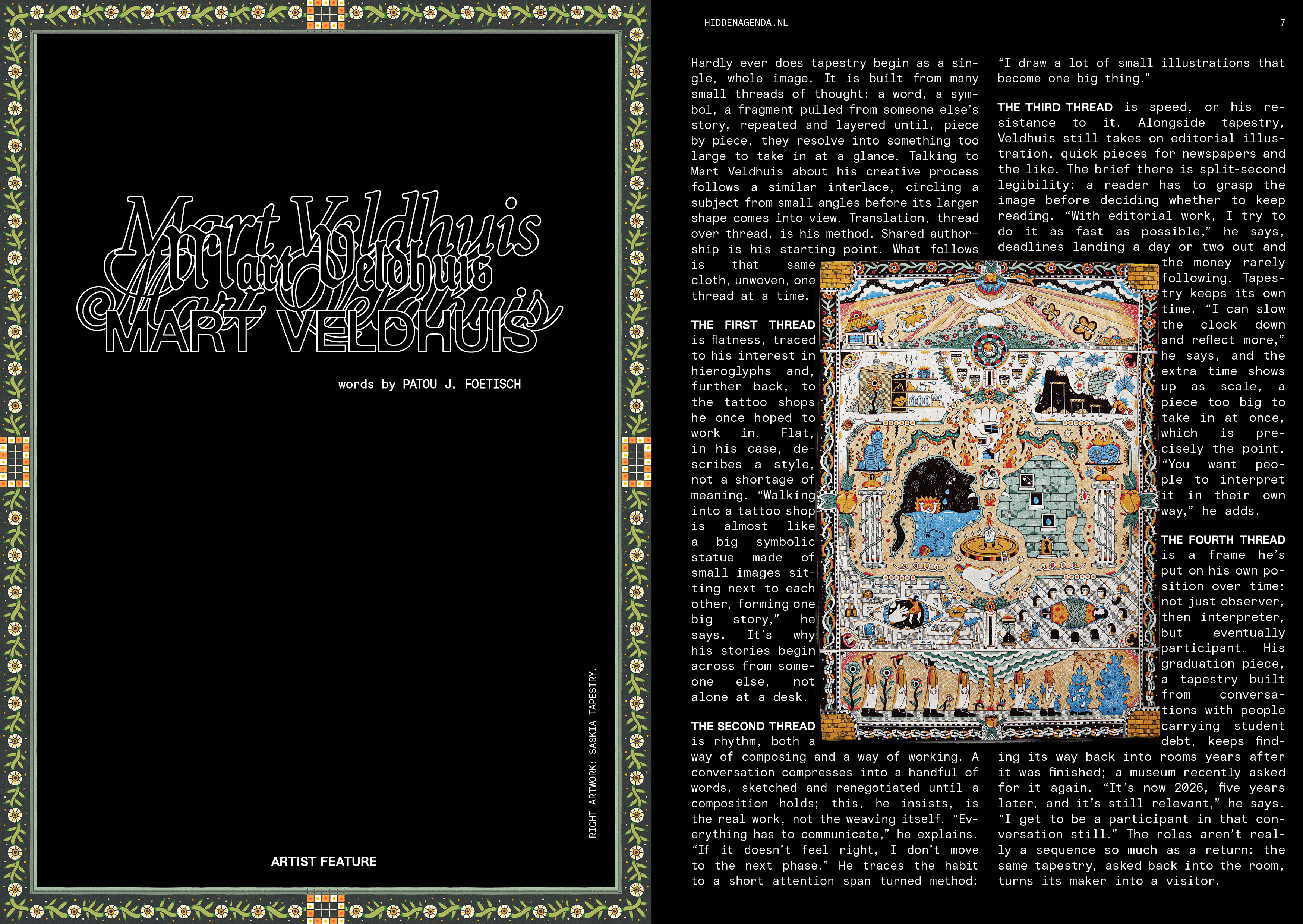
Mart Veldhuis
By Patou J. FoetischHardly ever does tapestry begin as a single, whole image. It is built from many small threads of thought: a word, a symbol, a fragment pulled from someone else's story, repeated and layered until,…
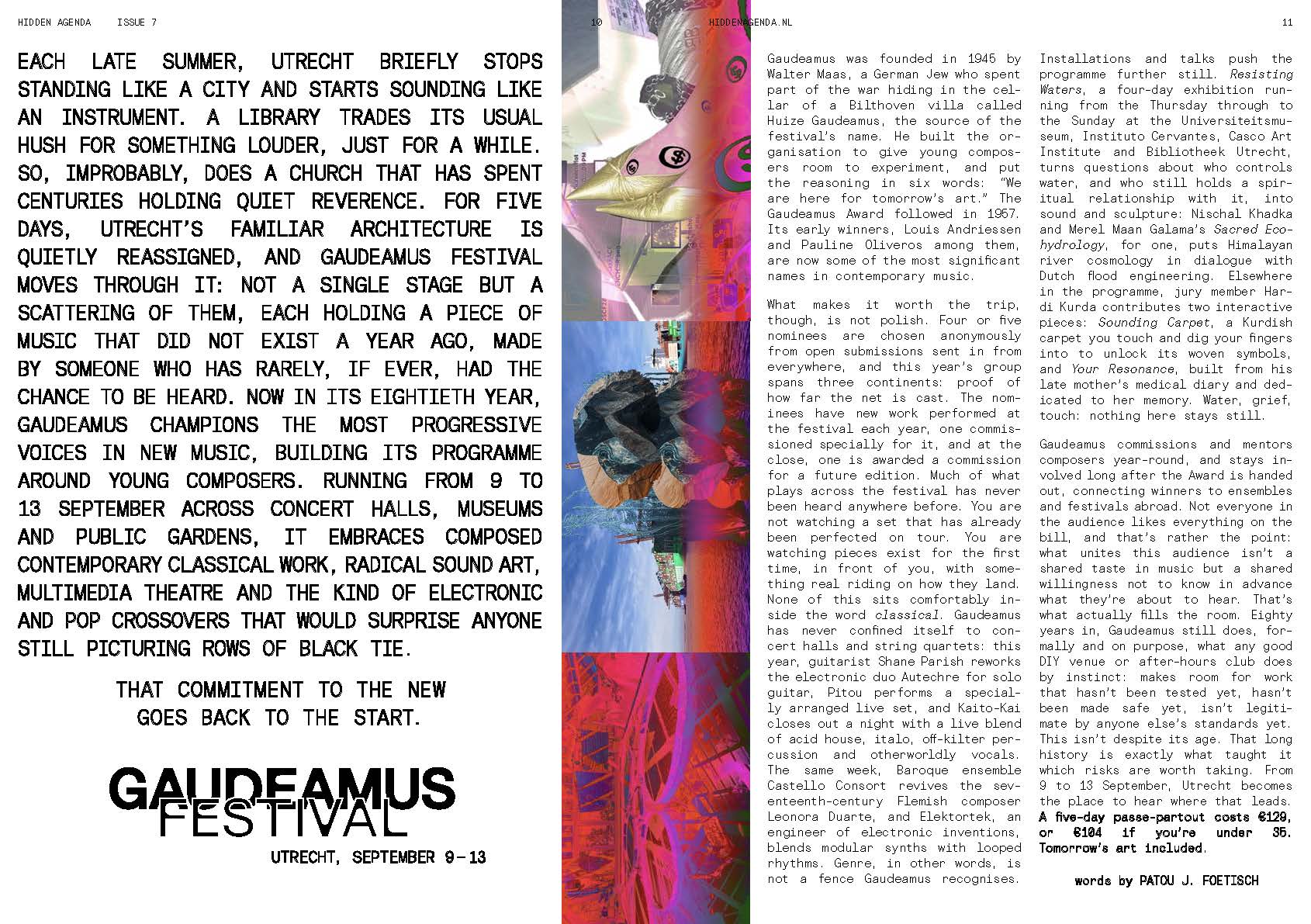
Gaudeamus Festival 2026
By Patou J. FoetischEach late summer, Utrecht briefly stops standing like a city and starts sounding like an instrument. A library trades its usual hush for something louder, just for a while. So, improbably, does a…
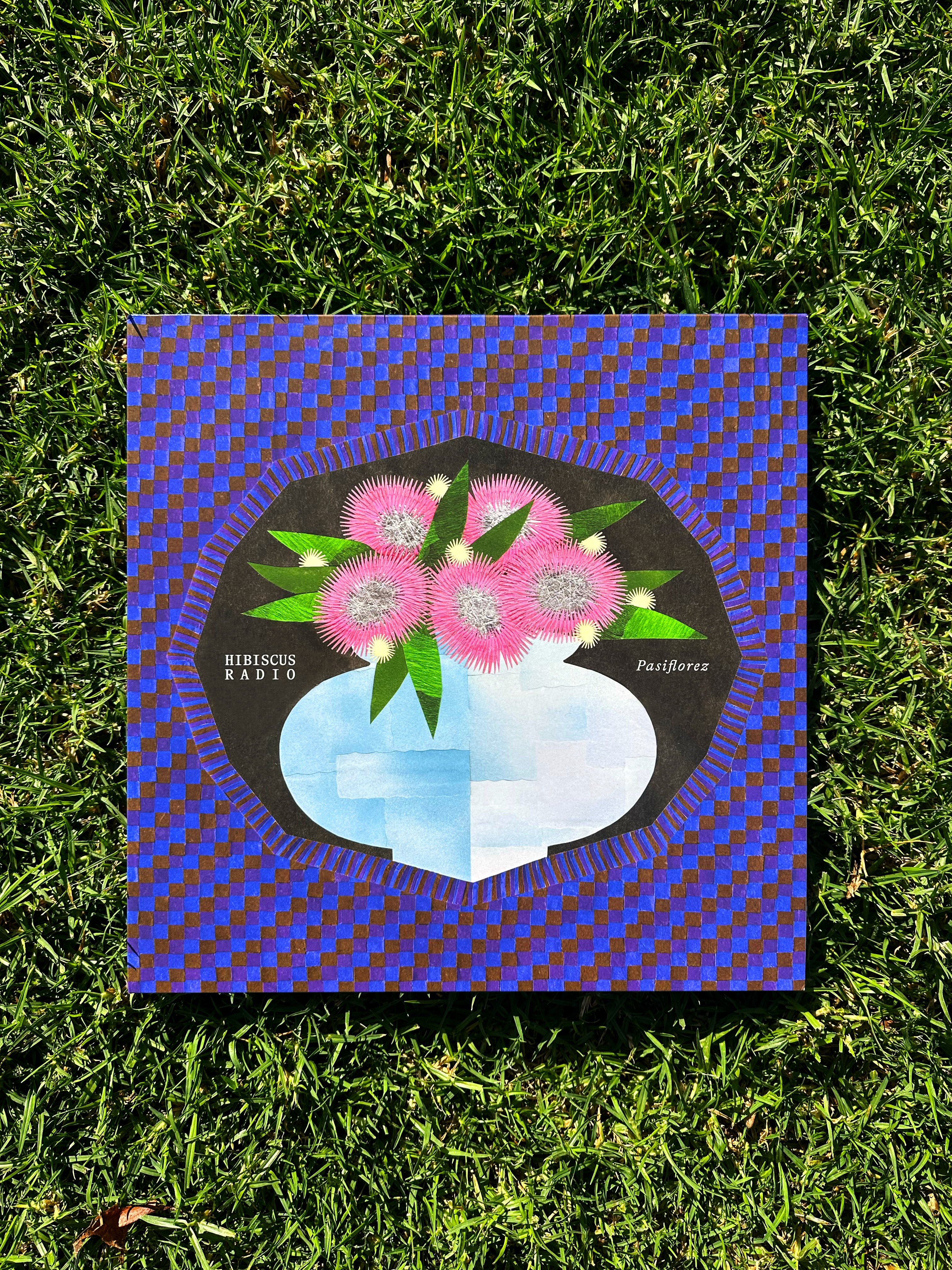
Juna Horstmans
By Patou J. FoetischJuna Horstmans' work often feels suspended between two recurring forms: the window and the flower. One frames perception, offering a partial view into something beyond itself; the other unfolds…
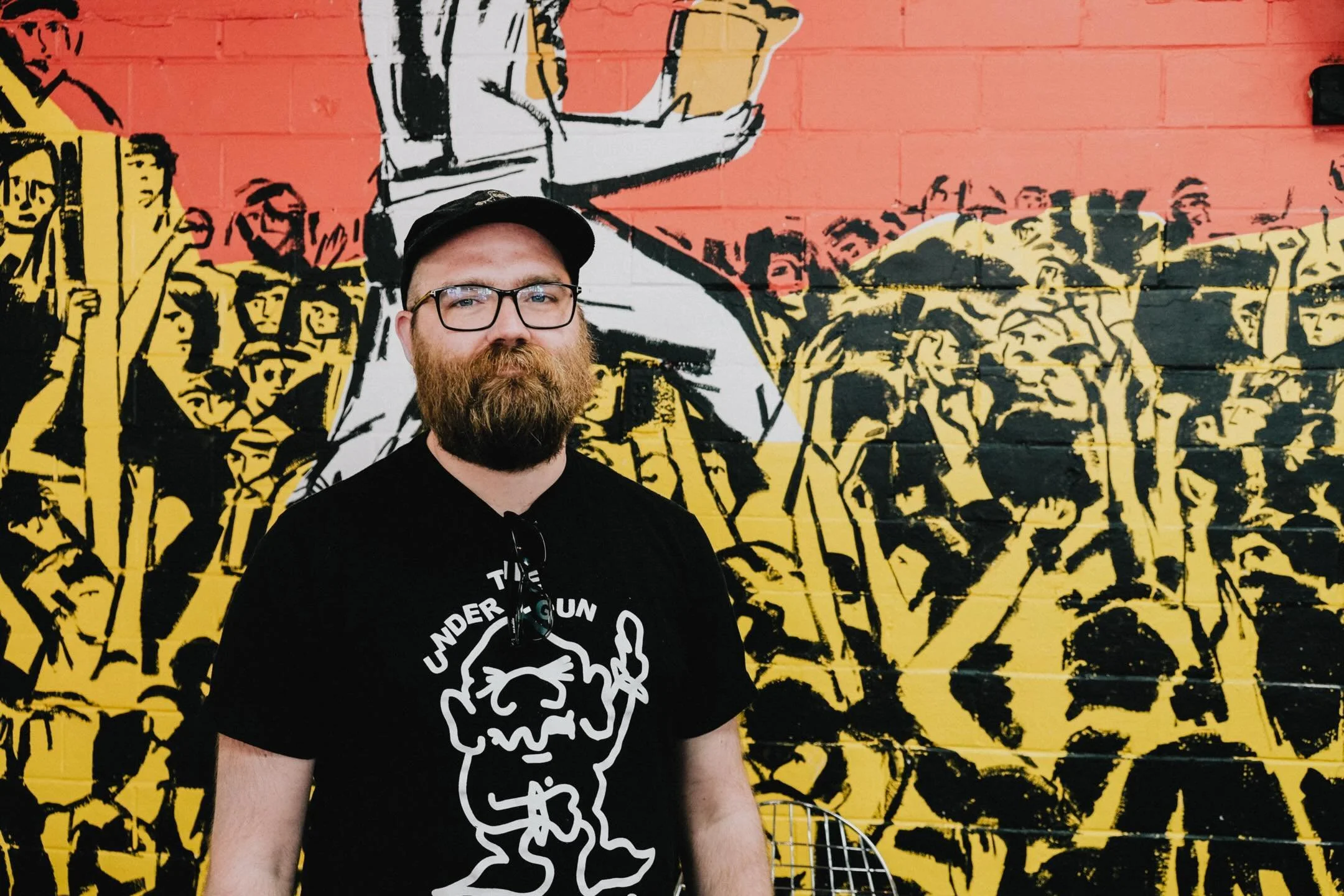
Meet your new favourite small-town punk
By Julia de Oliveira MoritzHere’s what it’s like chatting with Evan: he is almost perpetually excited, and the main way to tell if he’s smiling is through the slight movement of his moustache, unless he lets out his hearty…
Marieke Druiven
By Patou J. FoetischMarieke Druiven's work feels suspended somewhere between the familiar and the unreal. Her figures and environments carry the strange familiarity of something half-recognised, as though ordinary…
The cultural hangover following the Spotify boycotts
By Julia de Oliveira MoritzSpotify has faced criticism before. Taylor Swift, Joni Mitchell, and Thom Yorke have all removed their music from the platform in the past, only to sneak back in. It’s happening again now, seemingly…
Una Jongenelis
By Patou J. FoetischNot everything moves in a straight line. Some processes unfold through hesitation and repetition that are never quite the same. What first may appear as a digression begins to fall into its own…