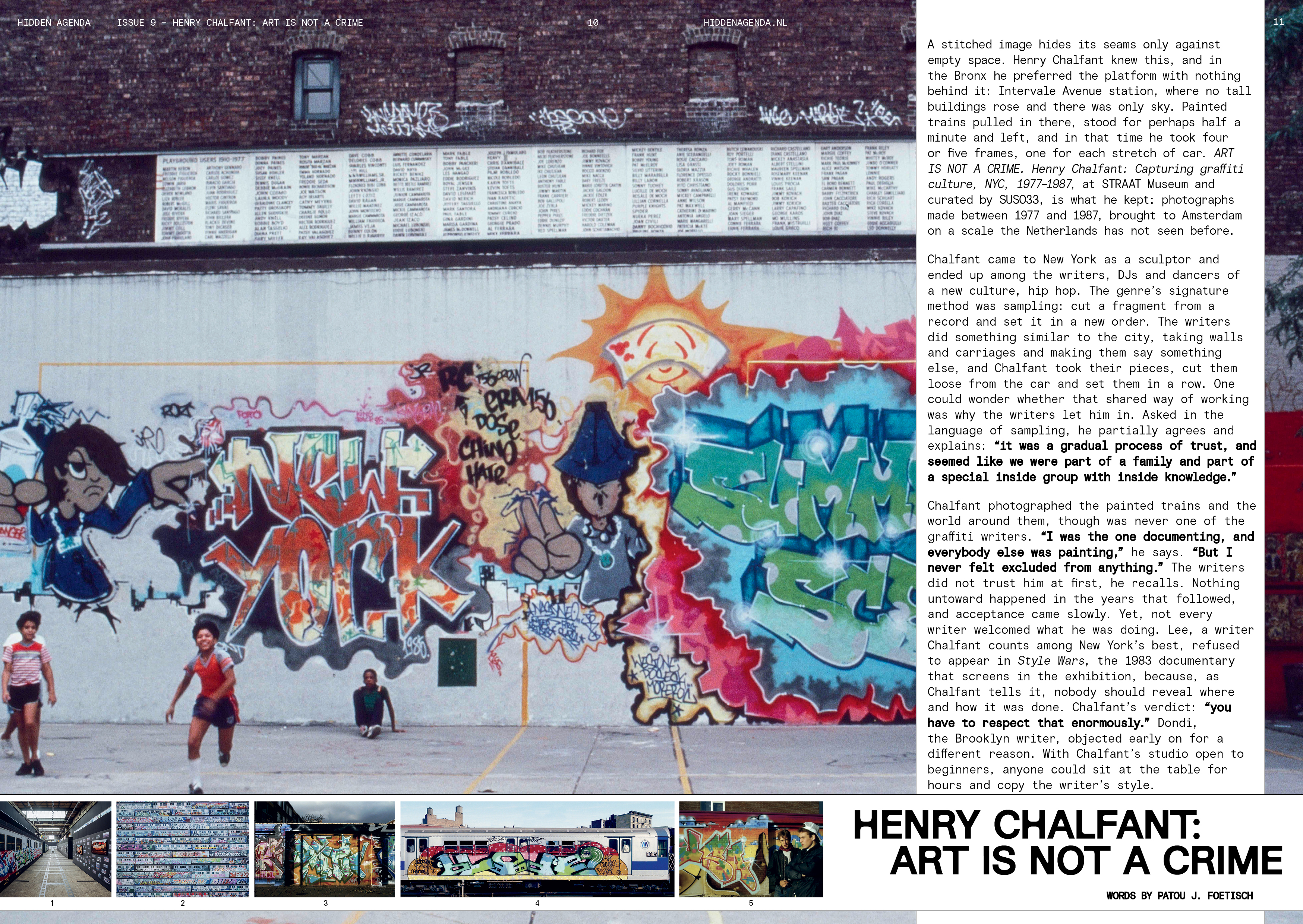
Henry Chalfant: Art Is Not A Crime
Hidden Agenda Monthly: Edition #9 - November 2026
By Patou J. Foetisch // 02 NOV 2026
Image: Henry Chalfant, Wall. Layout by Frédérique Gagnon.
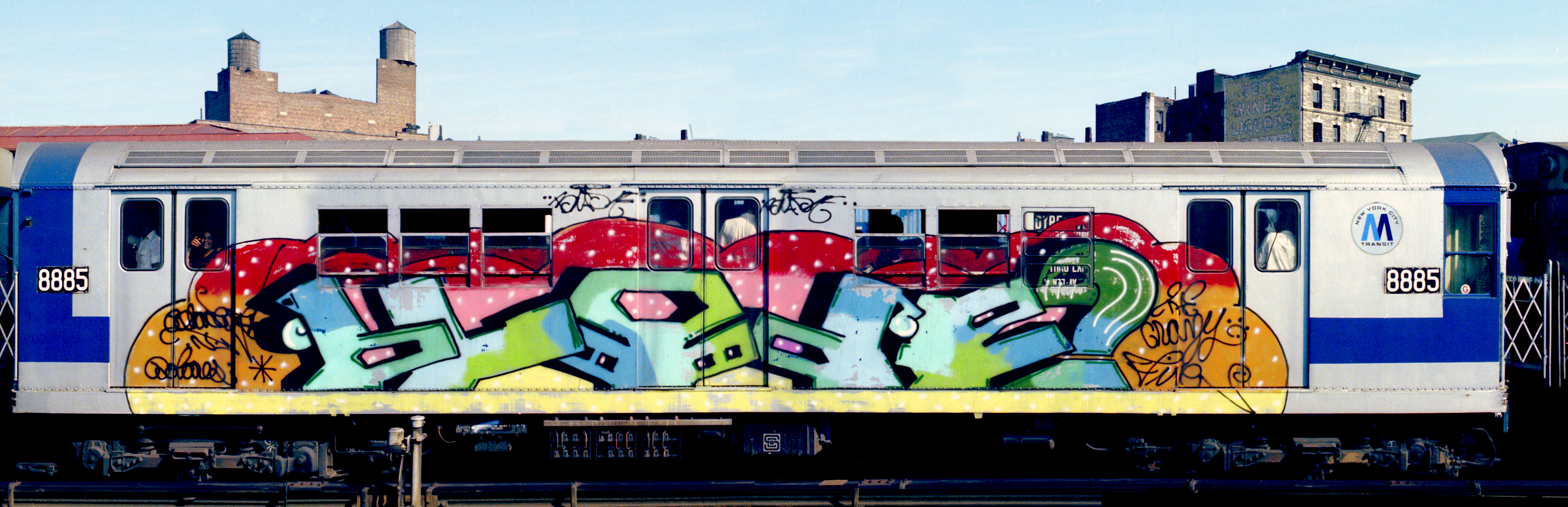
A stitched image hides its seams only against empty space. Henry Chalfant knew this, and in the Bronx he preferred the platform with nothing behind it: Intervale Avenue station, where no tall buildings rose and there was only sky. Painted trains pulled in there, stood for perhaps half a minute and left, and in that time he took four or five frames, one for each stretch of car. ART IS NOT A CRIME. Henry Chalfant: Capturing graffiti culture, NYC, 1977–1987, at STRAAT Museum and curated by SUSO33, is what he kept: photographs made between 1977 and 1987, brought to Amsterdam on a scale the Netherlands has not seen before.
AlgemeneFotografie_©JelleDrape
Chalfant came to New York as a sculptor and ended up among the writers, DJs and dancers of a new culture, hip hop. The genre's signature method was sampling: cut a fragment from a record and set it in a new order. The writers did something similar to the city, taking walls and carriages and making them say something else, and Chalfant took their pieces, cut them loose from the car and set them in a row. One could wonder whether that shared way of working was why the writers let him in. Asked in the language of sampling, he partially agrees and explains: "it was a gradual process of trust, and seemed like we were part of a family and part of a special inside group with inside knowledge."
Henry Chalfant, Blade
Chalfant photographed the painted trains and the world around them, though was never one of the graffiti writers. "I was the one documenting, and everybody else was painting," he says. "But I never felt excluded from anything." The writers did not trust him at first, he recalls. Nothing untoward happened in the years that followed, and acceptance came slowly. Yet, not every writer welcomed what he was doing. Lee, a writer Chalfant counts among New York's best, refused to appear in Style Wars, the 1983 documentary that screens in the exhibition, because, as Chalfant tells it, nobody should reveal where and how it was done. Chalfant's verdict: "you have to respect that enormously." Dondi, the Brooklyn writer, objected early on for a different reason. With Chalfant’s studio open to beginners, anyone could sit at the table for hours and copy the writer’s style.
Henry Chalfant, Delta, Amsterdam, 1985
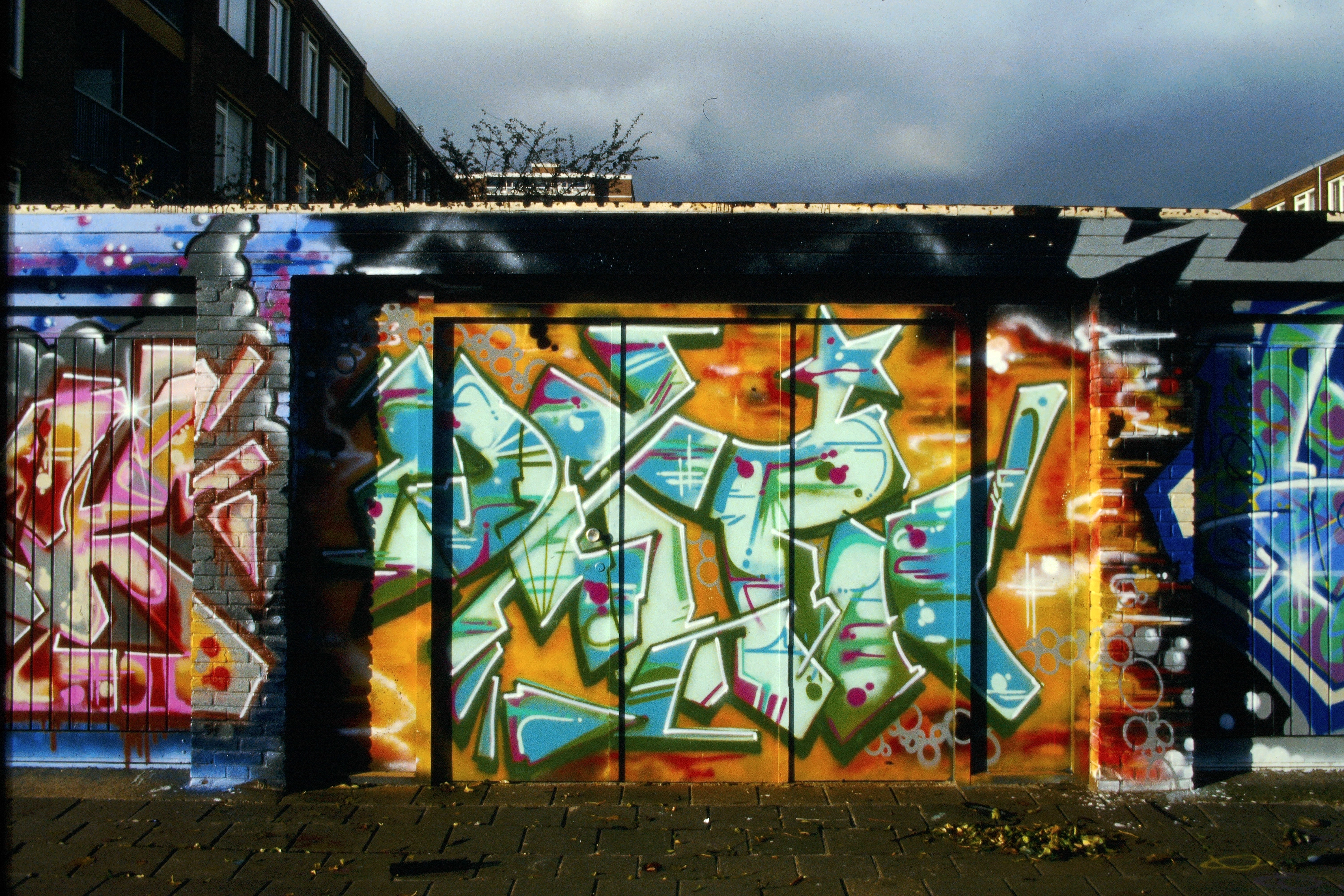
The images travelled all the same. Caution in New York was not the whole story. In the Dutch chapter, Chalfant observes, "Netherlands was the first, and it spread all over Europe." The Dutch Graffiti Library, the show's guest curator, shows what Amsterdam did with his work. In 1984 Chalfant's photographs went up in a gallery in Amsterdam-Zuid, where a small group of teenagers who had met graffiti on canvas the year before found, in STRAAT's words, a photographic window onto reality: the canvas that moved. They photographed the exhibition and passed the copies from hand to hand. A year later Subway Art, his book with the photographer Martha Cooper, reached Dutch shops, and in libraries readers copied its pages, cut them up or tagged over them. On the press tour, Chalfant passed his stories on in much the same way, from stop to stop.
Early on, the exhibition turns into a platform. Sit on a replica of the Writers' Bench, where writers watched their pieces pass, and life-size trains glide onto an LED wall, hold for a few seconds and vanish. "This was the view I had from the opposite platform when I took the pictures," Chalfant points out. Further on, the trains stay: first at real size, then in more than 500 photographs hung edge to edge across more than 25 metres. STRAAT describes Chalfant's way of looking as without judgement. Asked about the phrase, and how he judged what to keep, he answers that the choosing happened at the shutter. "I didn't take pictures of stuff I didn't like or wasn't interested in."
At the last stop, two display cases of sketchbooks, flyers and invitations could be read as a way of sharing information and art before the internet. The trains did the same across a whole city, carrying names from platform to platform. Eventually a writer put Chalfant's own name on one, and not from generosity alone. As Chalfant puts it, "they knew that if they put my name on it, that I would really work hard to try to catch the train."
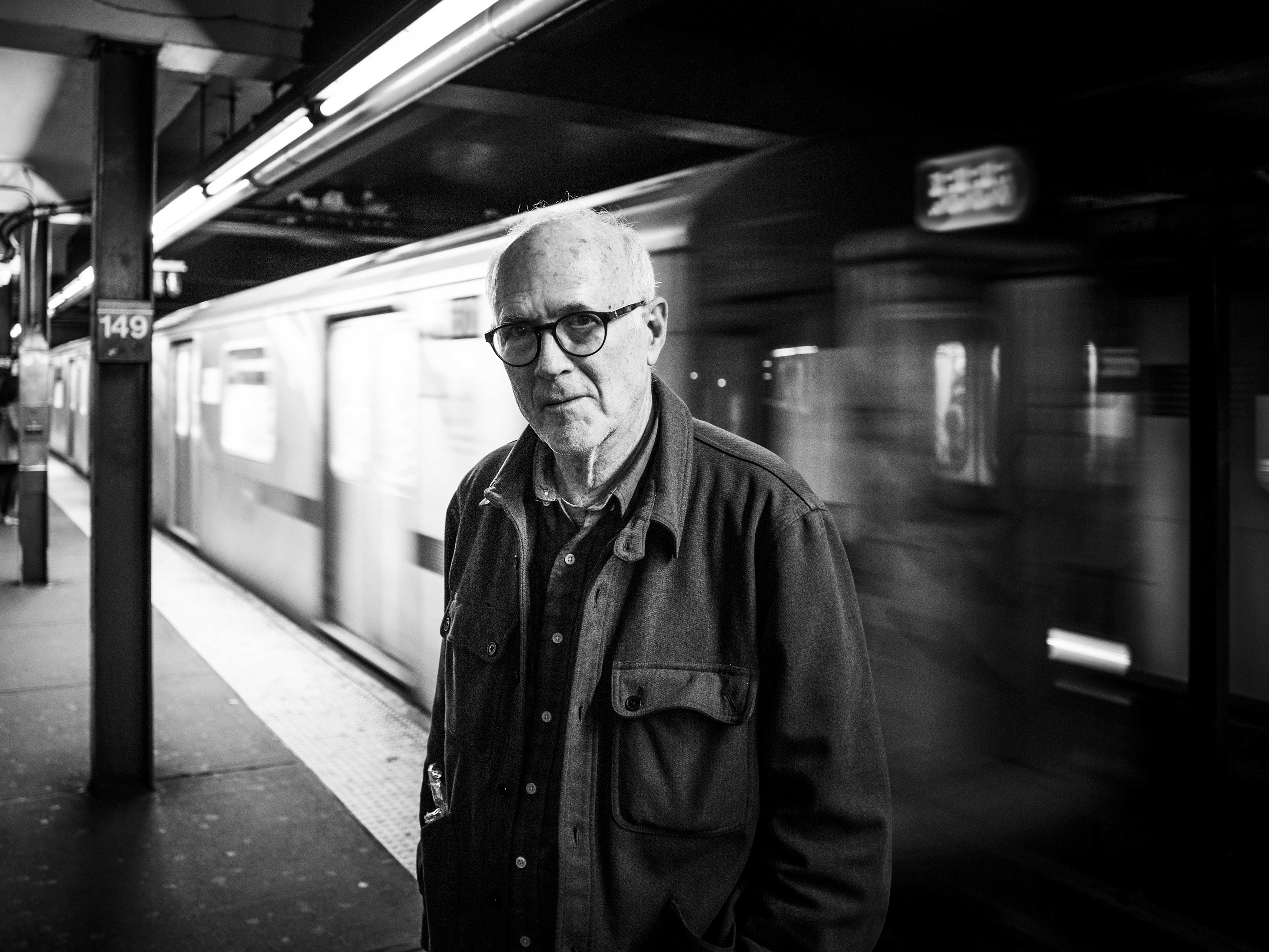
Portrait Henry Chalfant, photo Jeosm
ART IS NOT A CRIME runs until 13 March 2027, and from 15 October STRAAT by NIGHT keeps the warehouse open on Thursdays until 21:00 (evening ticket €15, €8 for ages 13 to 18, valid from 17:00). For years Chalfant waited on platforms for trains that were already leaving. For the next five months, you can arrive at one that isn't.
More Editorials
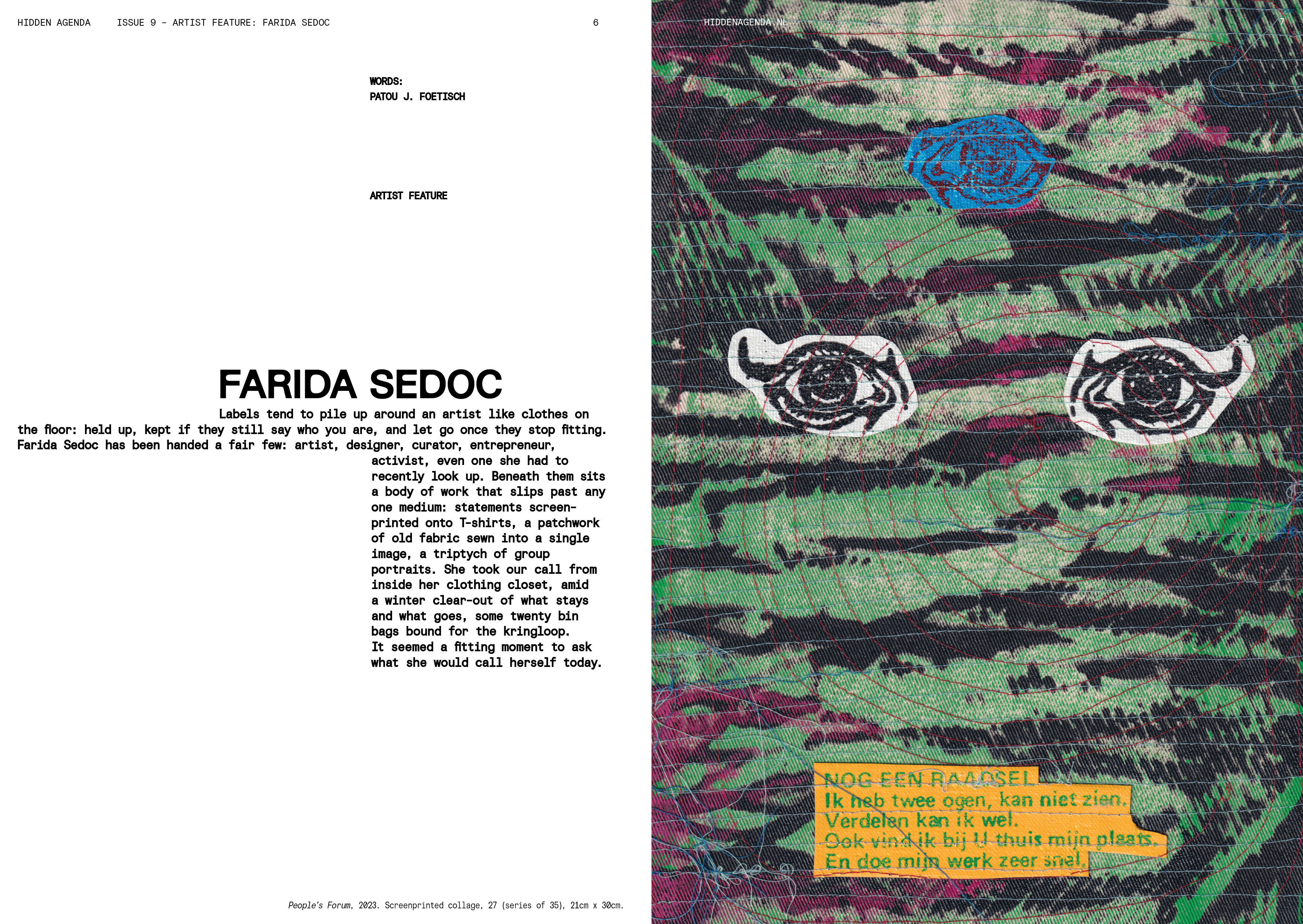
Farida Sedoc
By Patou J. FoetischLabels tend to pile up around an artist like clothes on the floor: held up, kept if they still say who you are, and let go once they stop fitting. Farida Sedoc has been handed a fair few: artist,…
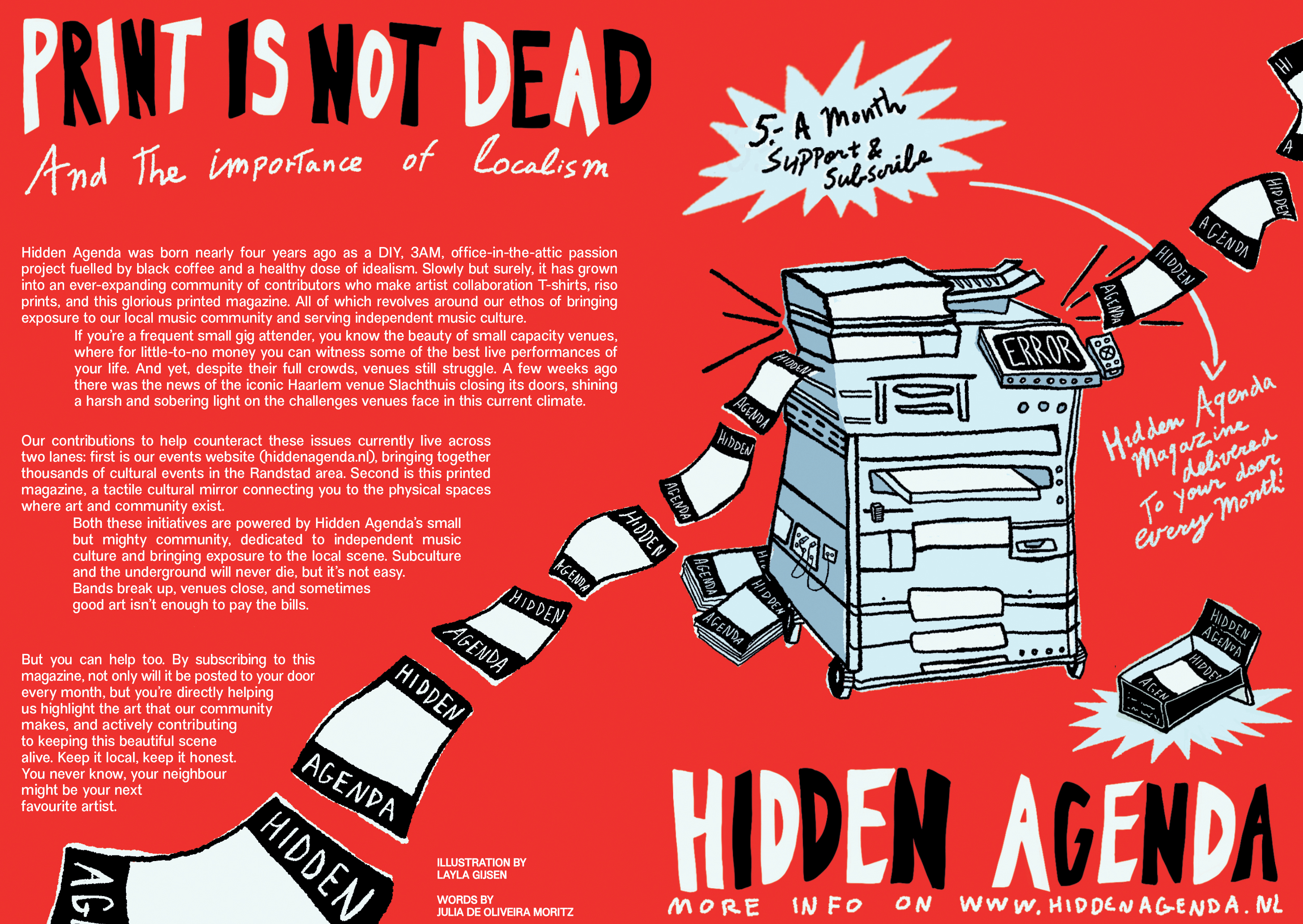
Print Is Not Dead
By Julia de Oliveira MoritzHidden Agenda was born nearly four years ago as a DIY, 3AM, office-in-the-attic passion project fuelled by black coffee and a healthy dose of idealism. Slowly but surely, it has grown into an…
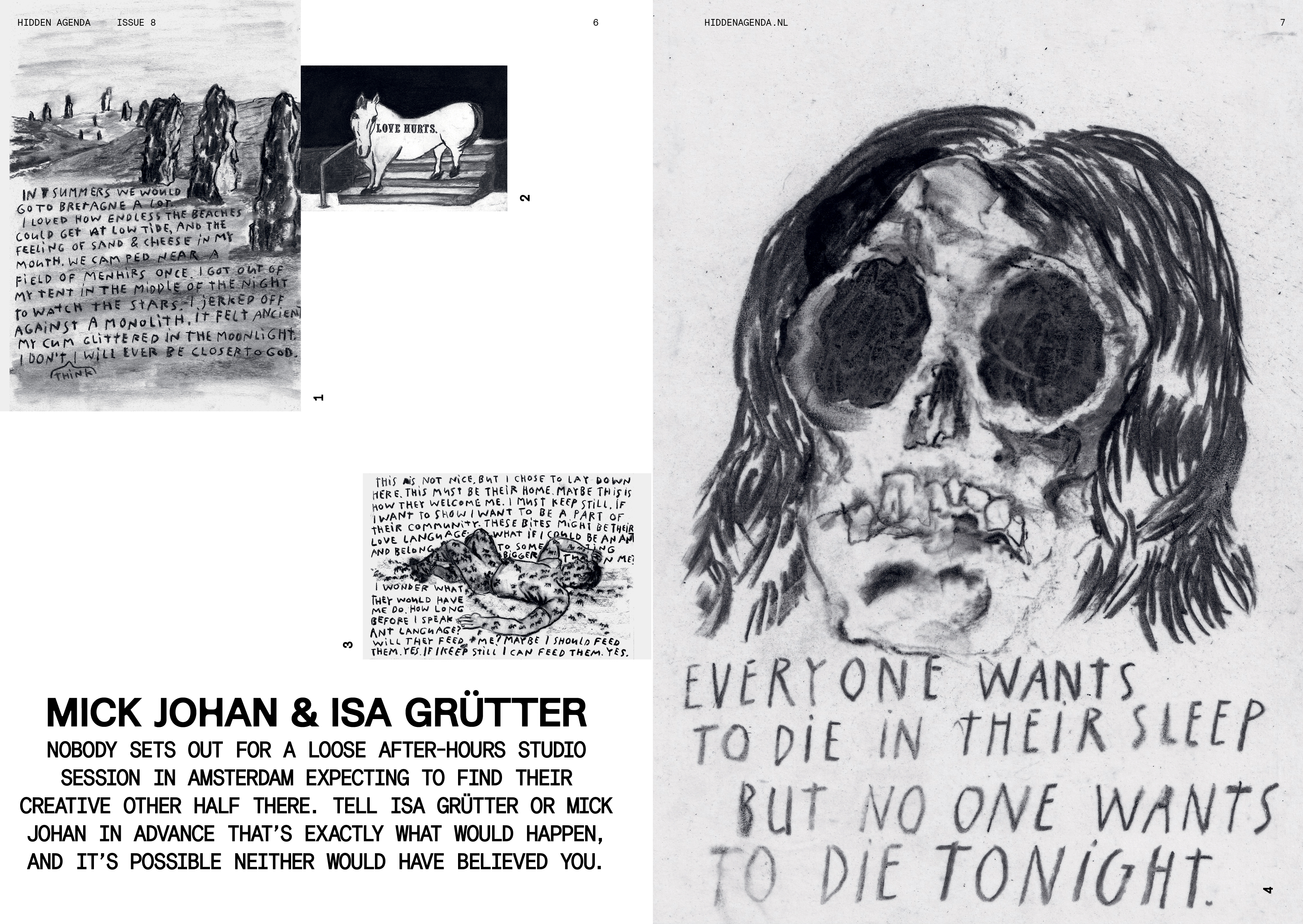
Mick Johan & Isa Grütter
By Patou J. FoetischNobody sets out for a loose after-hours studio session in Amsterdam expecting to find their creative other half there. Tell Isa Grütter or Mick Johan in advance that’s exactly what would happen, and…
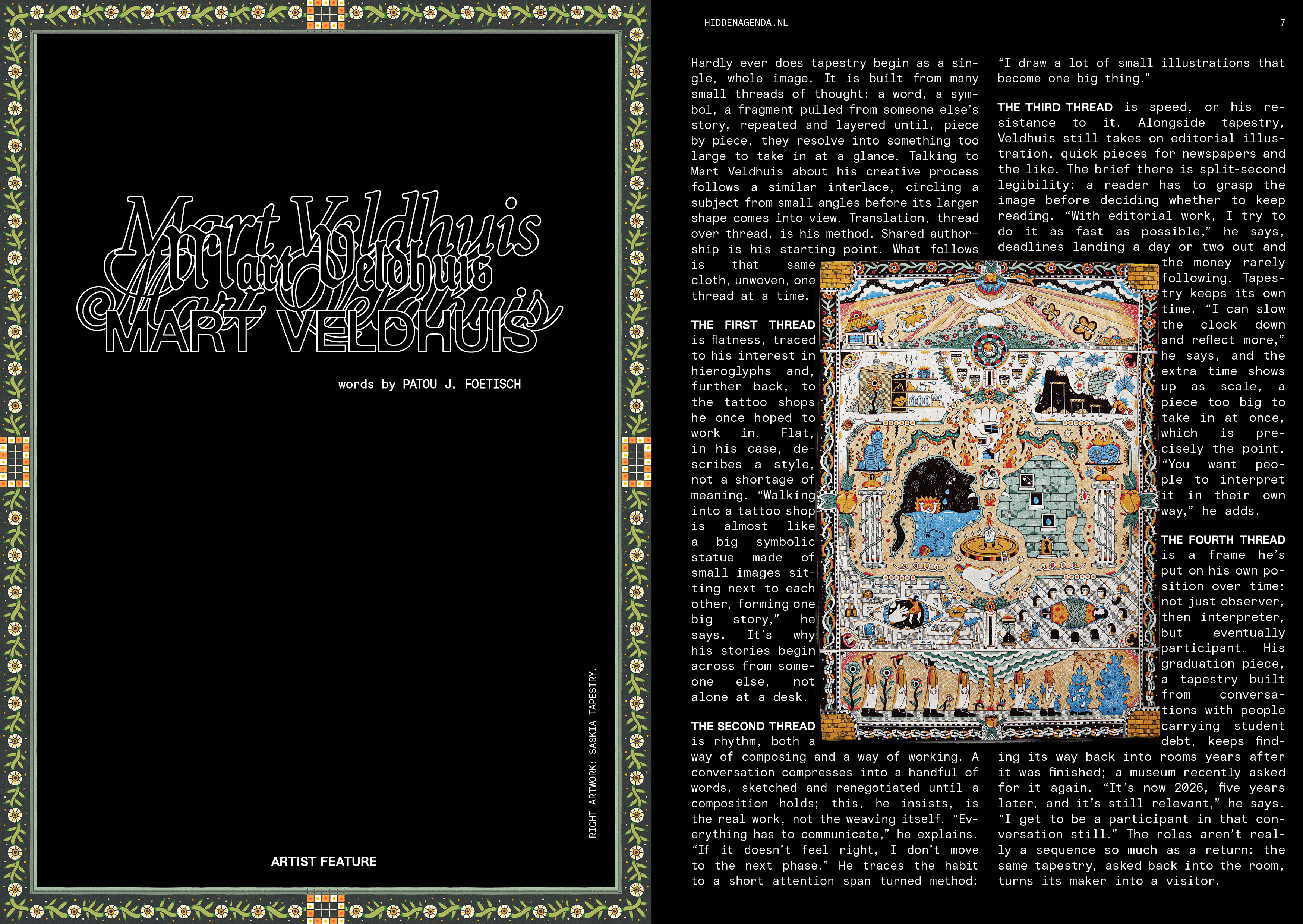
Mart Veldhuis
By Patou J. FoetischHardly ever does tapestry begin as a single, whole image. It is built from many small threads of thought: a word, a symbol, a fragment pulled from someone else's story, repeated and layered until,…
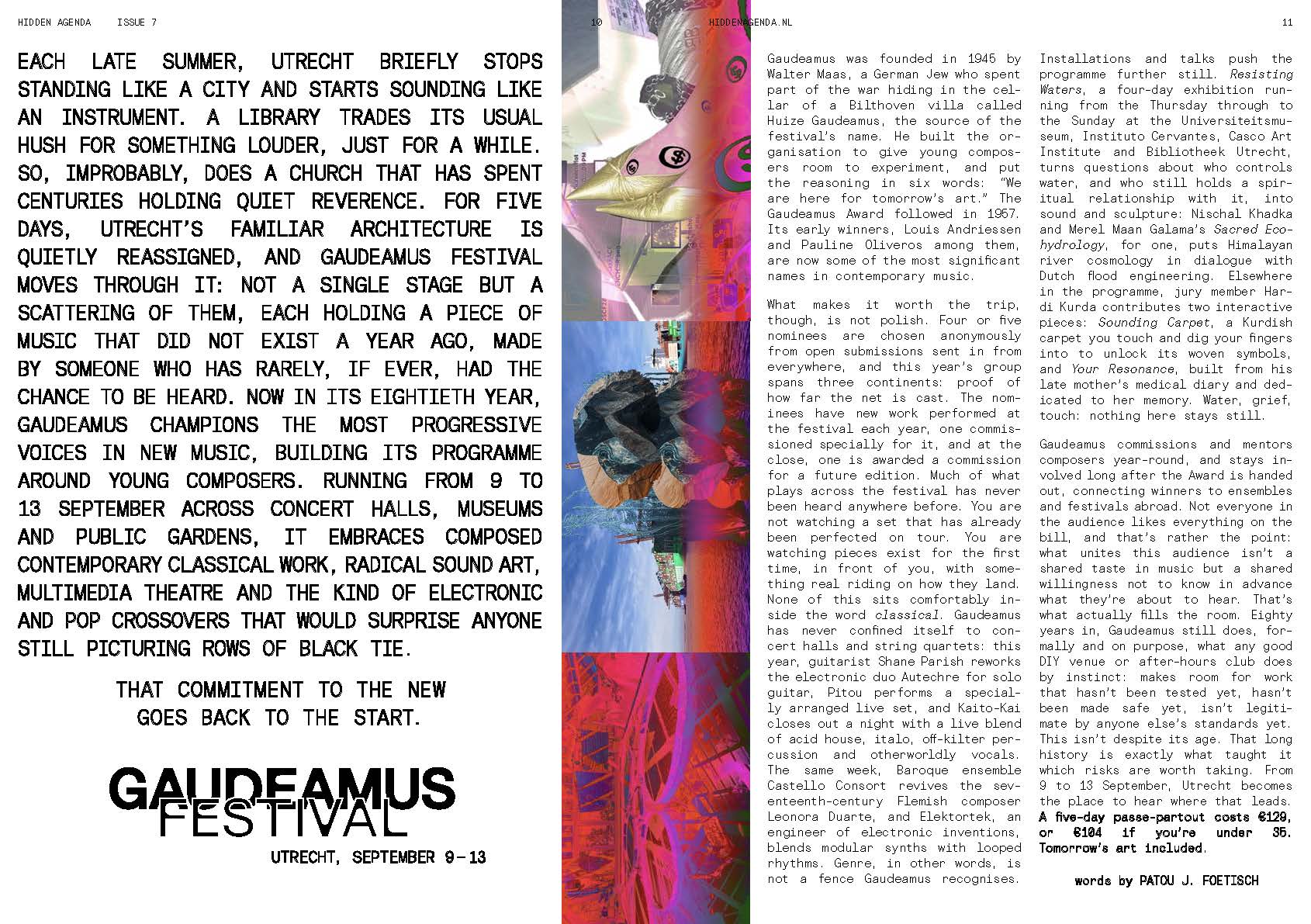
Gaudeamus Festival 2026
By Patou J. FoetischEach late summer, Utrecht briefly stops standing like a city and starts sounding like an instrument. A library trades its usual hush for something louder, just for a while. So, improbably, does a…
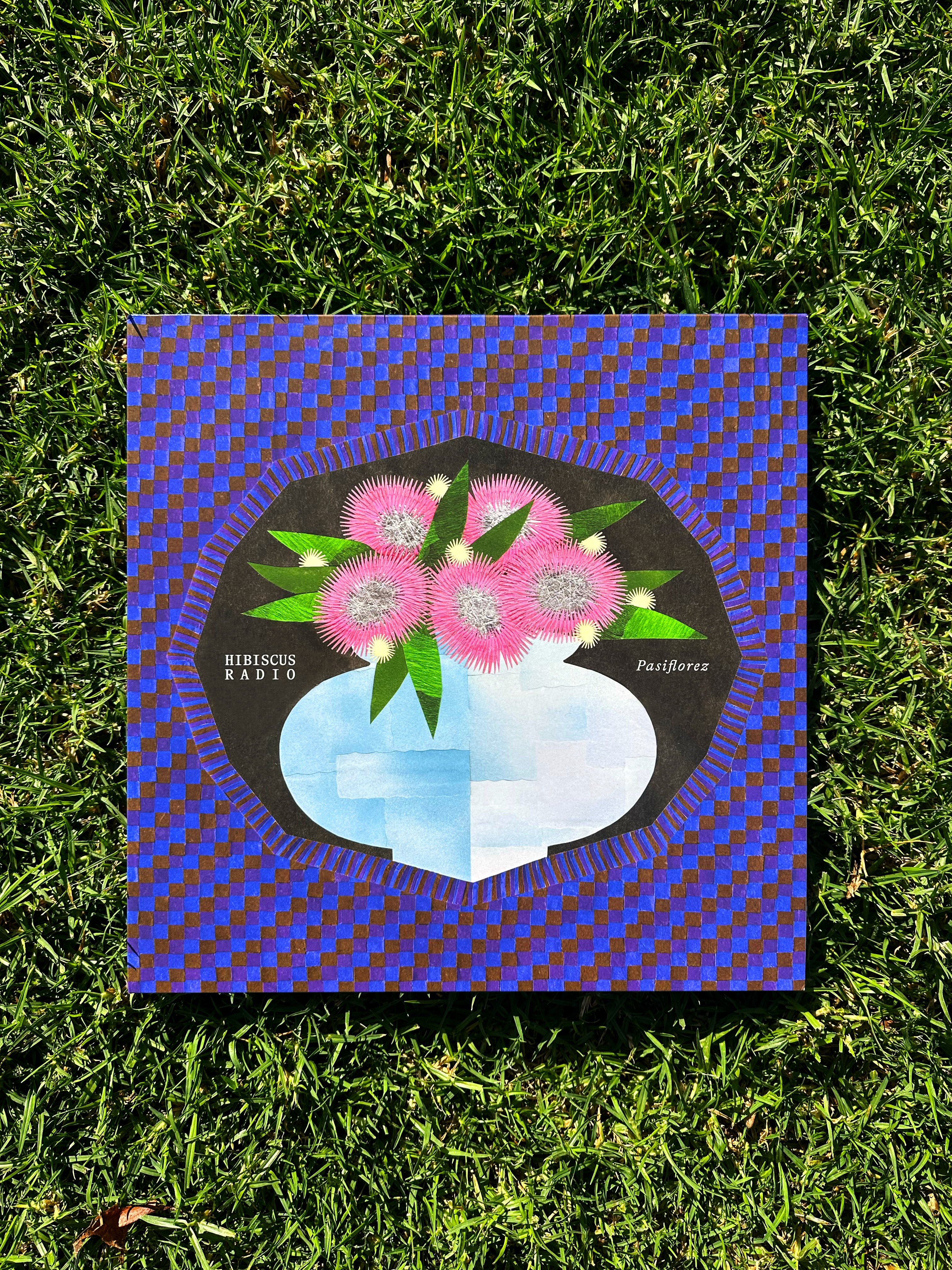
Juna Horstmans
By Patou J. FoetischJuna Horstmans' work often feels suspended between two recurring forms: the window and the flower. One frames perception, offering a partial view into something beyond itself; the other unfolds…
Meet your new favourite small-town punk
By Julia de Oliveira MoritzHere’s what it’s like chatting with Evan: he is almost perpetually excited, and the main way to tell if he’s smiling is through the slight movement of his moustache, unless he lets out his hearty…
Marieke Druiven
By Patou J. FoetischMarieke Druiven's work feels suspended somewhere between the familiar and the unreal. Her figures and environments carry the strange familiarity of something half-recognised, as though ordinary…
The cultural hangover following the Spotify boycotts
By Julia de Oliveira MoritzSpotify has faced criticism before. Taylor Swift, Joni Mitchell, and Thom Yorke have all removed their music from the platform in the past, only to sneak back in. It’s happening again now, seemingly…
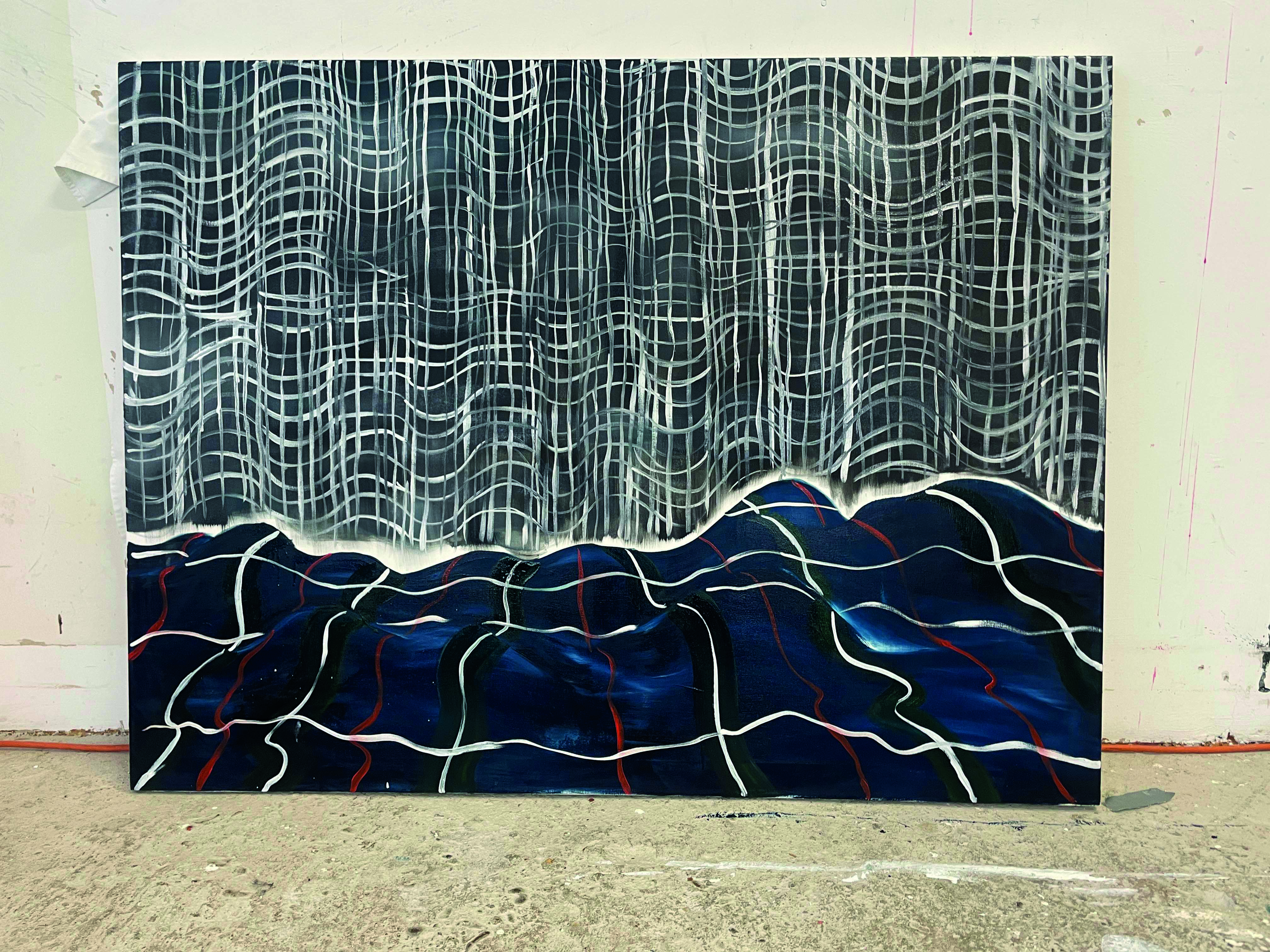
Una Jongenelis
By Patou J. FoetischNot everything moves in a straight line. Some processes unfold through hesitation and repetition that are never quite the same. What first may appear as a digression begins to fall into its own…